AI Appraisal Estimate

AI-generated estimates · not official valuations

From the user

What was submitted

Photo and notes provided by the user — not generated by AI

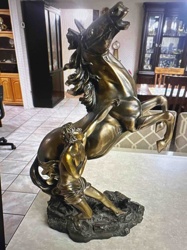
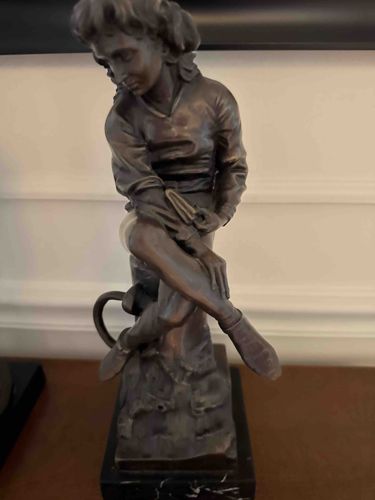
Submitted item photo
Submitted photo · May 27, 2026

User's notes

No additional notes provided.

AI analysis below

AI appraisal

AI analysis & estimate

AI-Generated · Verify before acting

Everything below is generated by AI for informational purposes only. AI can make mistakes — the AI may misidentify items or misattribute them (artist, maker, brand, designer, origin, era). This is not an official valuation and should not be used for insurance, sale, tax, estate, legal, or lending purposes — or any decision requiring a certified appraisal. It is not an authoritative claim about any person, brand, or rights holder — do not share or rely on it as a factual statement about a third party. Always consult qualified professionals before making financial decisions.

Read the full disclaimer

AI Identification

·Not independently authenticated·Verify before acting

Seated Jockey Bronze Sculpture after Isidore Jules Bonheur

Fine Art / Decorative Sculpture

AI Estimated Value

·Not an official valuation·Verify before acting

$400 - $800

As of May 27, 2026

AI Item Analysis

·AI can make mistakes·Verify before acting
A figurative bronze sculpture of a seated jockey, modeled after the mid-19th-century French Romantic style popularized by Isidore Jules Bonheur. The figure is depicted in a moment of rest, seated atop a fence or post with legs crossed comfortably. The jockey wears authentic period racing attire, including a long-sleeved jacket with realistic fabric folds, a cap, and tall riding boots. The physical construction appears to be cast bronze with a dark brown chemical patina that shows lighter, coppery highlights on high-relief areas such as the knees and shoulders. The sculpture is mounted on a rectangular black marble base with white veining (Marquina marble or similar), which adds substantial weight and stability. Notable features include the detailed textures of the clothing and the expressive, downward-cast gaze of the figure. Condition-wise, the bronze displays a healthy aged patina with minor surface dust in the crevices and light scuffing on the protruding toe of the boot. No major fractures or repairs are visible. This piece likely dates from the late 19th to early 20th century, following the 'Animalier' school's attention to anatomical detail and equestrian themes. The quality of the casting captures delicate details like the fingers resting on the knee and the buckle of the spur.
AI Appraisal Report

·AI can make mistakes·Verify before acting
Upon examining the images of this seated jockey sculpture, I identify it as a decorative bronze casting modeled after the well-known works of Isidore Jules Bonheur (1827–1901). While Bonheur is famed for his Animalier works, this figurative study of a jockey in repose is a popular model within the genre of equestrian art. The piece appears to be a surmoulage or a later casting, likely from the mid-to-late 20th century rather than a lifetime cast, evidenced by the sharpness of the details which, while competent, lack the crisp definition found in early foundry casts (e.g., Peyrol). The dark brown patina with coppery highlights is typical of commercial decorative bronzes produced for the interior design market. Condition appears stable; the patina is consistent, though the noted scuffing on the boot indicates typical shelf wear. The black marble base adds aesthetic value but is a standard modern mount. Market conditions for "after" casts—meaning works produced posthumously or by unauthorized foundries copying the original model—are significantly lower than authentic 19th-century casts. Collectors are currently selective, prioritizing provenance and foundry marks. To provide a definitive authentication, I would need to physically inspect the piece for specific foundry marks (recast marks can be faint), measure the precise dimensions to compare against known original molds (shrinkage occurs in surmoulage), and examine the underside of the base for mounting hardware age. Without provenance linking this to a 19th-century foundry, it is appraised as a decorative object rather than investment-grade fine art.

Get your items appraised

Instant estimates of your treasures with AI-powered appraisals

Browse More Appraisals