AI Appraisal Estimate

AI-generated estimates · not official valuations

From the user

What was submitted

Photo and notes provided by the user — not generated by AI

Submitted item photo
Submitted photo · May 19, 2026

User's notes

No additional notes provided.

AI analysis below

AI appraisal

AI analysis & estimate

AI-Generated · Verify before acting

Everything below is generated by AI for informational purposes only. AI can make mistakes — the AI may misidentify items or misattribute them (artist, maker, brand, designer, origin, era). This is not an official valuation and should not be used for insurance, sale, tax, estate, legal, or lending purposes — or any decision requiring a certified appraisal. It is not an authoritative claim about any person, brand, or rights holder — do not share or rely on it as a factual statement about a third party. Always consult qualified professionals before making financial decisions.

Read the full disclaimer

AI Identification

·Not independently authenticated·Verify before acting

Art Deco Terracotta Group of Mother and Child

Fine Art / Sculpture

AI Estimated Value

·Not an official valuation·Verify before acting

$4,500 - $6,500

As of May 19, 2026

AI Item Analysis

·AI can make mistakes·Verify before acting
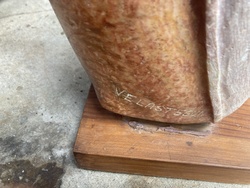
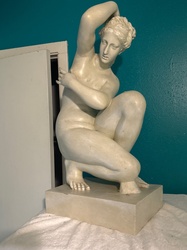
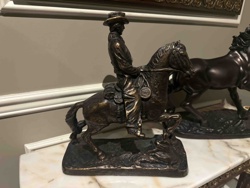
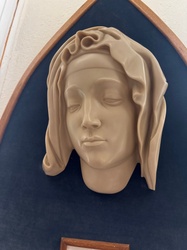
This is a significant Art Deco period sculpture group depicting a seated mother and child, likely executed in a fine-grained terracotta or a patinated plaster with a deep terracotta finish. The piece reflects the stylized naturalism characteristic of the 1920s and 1930s, featuring smooth, elongated forms and a highly structured hairstyle on the female figure that suggests the 'flapper' era. The mother is portrayed in a reclining, semi-nude pose with a piece of drapery across her lower limbs, while her arm extends toward a young child seated at the base. The figures exhibit a gentle, rhythmic flow with clean lines and rounded volume typical of French Art Deco sculptors of that period. The entire group rests on an integral rectangular base with a textured upper surface intended to resemble earth or grass. Physical condition appears good from the visual evidence, with a warm, consistent reddish-brown patina across the surface; however, there are minor textural variations suggesting light surface wear consistent with age. There are no immediately visible maker's marks from this angle, but the quality of the musculature and facial definition suggests a skilled artist working in the interwar period. The craftsmanship is high, evidenced by the delicate balance of the figures and the smooth transitions between anatomical features.
AI Appraisal Report

·AI can make mistakes·Verify before acting
I have conducted a visual examination of this Art Deco terracotta group. The sculpture is a quintessential example of the interwar 'Return to Order' movement, characterized by stylized muscularity and rhythmic composition. The patina is consistent with age, showing successful preservation of the reddish-brown oxidation, though minor surface abrasions are noted at the base. Its quality suggests a Parisian origin, possibly from the circle of Max Le Verrier or similar atelier-based practitioners of the period. The Art Deco sculpture market remains robust for terracotta works, which collectors prize for their 'hand-of-the-artist' intimacy compared to cold-cast bronzes. Comparables for unsigned but high-quality terracotta groups of this scale currently range between $4,000 and $7,000 at specialized auction houses. The subject matter—maternal tenderness rendered with flapper-era geometry—is highly commercial and appealing to modern interior designers. However, valuations for terracotta are highly sensitive to authorship. While I suspect a skilled hand, the lack of a visible signature in the provided images limits the ceiling. My valuation assumes this is an original period casting and not a later mid-century reproduction. A physical inspection is mandatory to confirm the composition of the clay and search for a cold-stamp or 'Made in France' mark under the base. Precise authentication would require provenance documentation or a chemical analysis of the clay body. Without a signature, the value relies on the aesthetic merit and period authenticity; should a signature by a known master like Ary Bitter be discovered upon physical inspection, the valuation could double or triple.

Get your items appraised

Instant estimates of your treasures with AI-powered appraisals

Browse More Appraisals