AI Appraisal Estimate

AI-generated estimates · not official valuations

From the user

What was submitted

Photo and notes provided by the user — not generated by AI

Submitted item photo
Submitted photo · June 10, 2026

User's notes

No additional notes provided.

AI analysis below

AI appraisal

AI analysis & estimate

AI-Generated · Verify before acting

Everything below is generated by AI for informational purposes only. AI can make mistakes — the AI may misidentify items or misattribute them (artist, maker, brand, designer, origin, era). This is not an official valuation and should not be used for insurance, sale, tax, estate, legal, or lending purposes — or any decision requiring a certified appraisal. It is not an authoritative claim about any person, brand, or rights holder — do not share or rely on it as a factual statement about a third party. Always consult qualified professionals before making financial decisions.

Read the full disclaimer

AI Identification

·Not independently authenticated·Verify before acting

Art Nouveau Brass and Pressed Glass Three-Part Candy Dish with Pastoral Repoussé Lid

Antique Tableware and Vanity Accessories

AI Estimated Value

·Not an official valuation·Verify before acting

$125 - $175

As of June 10, 2026

AI Item Analysis

·AI can make mistakes·Verify before acting
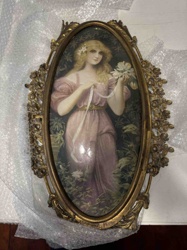
This is a circular, three-compartment vanity or candy dish consisting of a clear pressed glass insert and a decorative metal-rimmed lid. The lid is the primary focal point, featuring a central circular brass-toned panel with a detailed repoussé or stamped scene depicting a pastoral romantic encounter under a tree. A seated figure and a reclining figure are shown in classical attire, rendered with fine stippling and line work typical of late 19th to early 20th-century decorative arts. The panel is set within an outer silver-toned or pewter-finished frame that features two small, ornate handles and a geometric border. The glass insert is molded with a 'starburst' or 'sunburst' geometric pattern on the bottom and is divided into three equal sections by integral glass walls. The rim of the glass dish is bound by a thin metallic band. Condition-wise, the lid shows a significant aged patina with dark oxidation on the outer frame and variations in the golden tone of the central panel. The glass appears intact but shows some smudging and surface dust. Based on the neoclassical subject matter and the construction style, this piece likely dates to the early 1900s, categorized under the Art Nouveau or Edwardian era. The craftsmanship suggests a high-quality mass-produced luxury item of its time, intended for a parlor or dressing table.
AI Appraisal Report

·AI can make mistakes·Verify before acting
Based on my visual inspection of this three-part vanity or candy dish, I have identified it as a high-quality example of early 20th-century decorative metalwork, likely produced circa 1905-1915. The lid showcases a romantic pastoral repoussé scene in the Neoclassical style, common in Art Nouveau and Edwardian parlor accessories. The mixed-metal aesthetic, featuring a brass-toned central medallion against a pewter or silver-tone frame, remains appealing to collectors, though the significant oxidation and patina on the outer rim suggest the original finish has deteriorated, which affects the value. The pressed glass insert, featuring a classic sunburst pattern, appears to be original to the lid and in good condition without significant chips or cracks. The three-compartment configuration is less common than single-well dishes, adding a slight premium for utility and design. Market demand for such items is currently stable but modest; they are frequently sold at specialized antique fairs and online auctions. Similar items by manufacturers like Apollo or Benedict typically realize prices in the $100 to $200 range depending on the clarity of the repoussé work. This piece's value is limited by the lack of a maker's mark and the surface oxidation of the metal. However, as this appraisal is based on digital images, I cannot definitively verify the base metal composition or detect hairline fractures in the glass. A full authentication would require a physical examination to check for acid-etched signatures, metallurgical testing to determine if the frame is sterling or silver-plated, and documentation of provenance to confirm its manufacturing origin.

Get your items appraised

Instant estimates of your treasures with AI-powered appraisals

Browse More Appraisals