Vanity opens up on hinge and has fabric folders inside
These notes were written by the person who submitted this item. Appraiser.AI has not verified them, and the AI's identification and estimate may rely on them.
AI Estimated Value
Not an official valuation
$150 - $225
AI estimate as of July 12, 2025 · verify with a professional before acting
AI-Generated · Verify before acting
Everything on this page is generated by AI for informational purposes only. AI can make mistakes — the AI may misidentify items or misattribute them (artist, maker, brand, designer, origin, era). This is not an official valuation and should not be used for insurance, sale, tax, estate, legal, or lending purposes — or any decision requiring a certified appraisal. It is not an authoritative claim about any person, brand, or rights holder — do not share or rely on it as a factual statement about a third party. Always consult qualified professionals before making financial decisions.
This analysis also relies on unverified notes provided by the user, which may be incomplete or inaccurate and could affect the result.
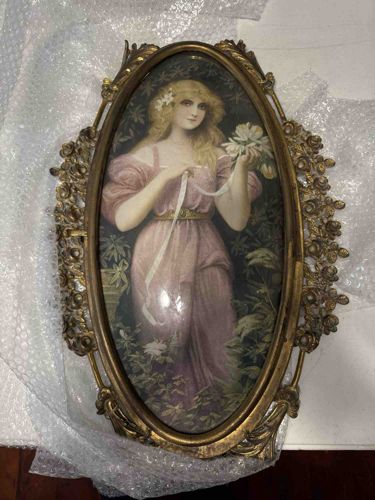
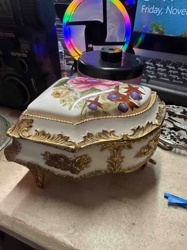
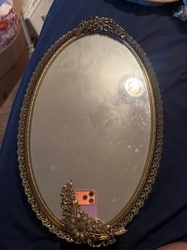
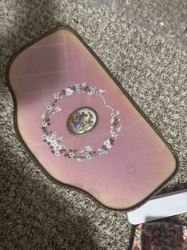
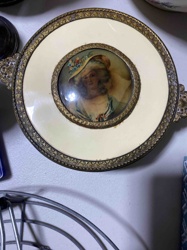
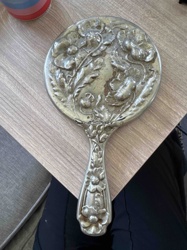
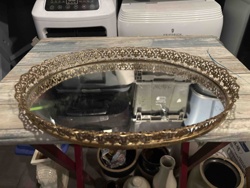
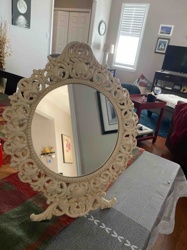
This item is an antique or vintage vanity with an ornate, gilded metal frame and a pictorial insert. The overall form is an elongated oval, featuring a brass or bronze-toned metal frame that is highly decorative, particularly on the outer borders. The frame boasts intricate rococo or Art Nouveau-inspired detailing, including floral motifs, scrolling foliage, and what appear to be small, stylized rosettes or leaves, contributing to a sense of luxuriousness and craftsmanship. The metal exhibits a rich, aged patina, suggesting significant age and authenticity, with some areas appearing darker or oxidized, which is consistent with natural aging. Notably, the frame incorporates a hinged mechanism, visible on the left side, indicating that the piece opens up. The context provided specifies it 'opens up on hinge and has fabric folders inside,' confirming it is a functional vanity with an internal storage or organizational component.
The central pictorial element is a print, likely a lithograph or chromolithograph, depicting a fair-skinned, blonde woman in a pink or lavender-hued flowing gown. She is presented in a lush, natural setting with green foliage and white flowers, suggestive of a garden or idealized landscape. The woman is holding or arranging white flowers and a long, white ribbon, conveying a gentle and ethereal quality. The style of the illustration appears to be late 19th to early 20th century, possibly Edwardian or Art Nouveau, judging by the aesthetic of the woman's portrayal and the soft color palette. There is a visible reflective glare on the surface of the print, suggesting it is protected by glass or a similar transparent material. No specific maker's marks or signatures are visible in the provided image. The craftsmanship, particularly the detailed metalwork, indicates a high level of quality for its type.
AI Appraisal Report
Upon examining the images and description provided, I have assessed this Antique Gilded Metal Pictorial Vanity. The piece presents as a beautiful example of late 19th or early 20th-century decorative art, likely from the Art Nouveau or Edwardian period. The ornate, gilded metal frame features intricate floral and rococo-style scrollwork, which is characteristic of high-quality items from this era. The metal exhibits an aged patina with some oxidation, which I find consistent with its purported age and lends it authenticity. The central pictorial, a chromolithograph print under glass, depicts a classic idealized female figure, a popular motif for the time. Its function as a vanity case with internal fabric folders adds to its charm and historical context.
The overall condition appears to be very good for its age, with the hinge mechanism reportedly intact. The value is driven by its strong decorative appeal, the quality of the metalwork, and its good state of preservation. The market for Art Nouveau decorative accessories is stable, with consistent collector demand for well-preserved and aesthetically pleasing examples like this one. Comparable vanity items with similar ornate metalwork and pictorial elements typically sell in the $125 to $225 range, depending on condition and specific maker, if one can be identified.
However, this appraisal is limited by the use of images alone. A full authentication would require an in-person examination to search for any maker's marks on the metal, assess the precise condition of the hinge and interior fabric, and verify the type of print without the obstruction of glass glare. Without a signature or maker's mark, attributing it to a specific designer is not possible, which tempers the higher end of its value.