AI estimate as of December 15, 2025 · verify with a professional before acting
AI-Generated · Verify before acting
Everything on this page is generated by AI for informational purposes only. AI can make mistakes — the AI may misidentify items or misattribute them (artist, maker, brand, designer, origin, era). This is not an official valuation and should not be used for insurance, sale, tax, estate, legal, or lending purposes — or any decision requiring a certified appraisal. It is not an authoritative claim about any person, brand, or rights holder — do not share or rely on it as a factual statement about a third party. Always consult qualified professionals before making financial decisions.
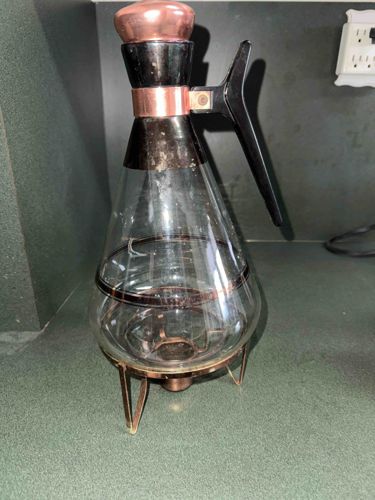
This is a vintage Mid-Century Modern syphon coffee maker, characterized by its distinctive visual design and typical material combination of glass, copper, and bakelite or a similar phenolic resin. The main body of the coffee maker is a clear glass carafe, featuring a conical-to-bulbous shape in the lower portion and narrowing significantly towards the top. A polished copper band encircles the broader part of the glass carafe, likely serving both as a decorative element and potentially as a structural component to secure inner workings or a filter system. Above this, a black, possibly bakelite or plastic, neck transitions to another copper band, which then connects to a contrasting black, angular handle. The handle is prominently shaped for ergonomic grip and extends upward, suggesting it's designed for pouring once the coffeemaker process is complete. The top of the device is capped with a hammered or textured copper lid, adding to its aesthetic appeal. The entire unit rests on a three-legged base made of copper-toned metal, possibly brass or copper-plated steel, which elevates the glass carafe and provides stability. The base's legs are slender and flair outwards slightly, ending in small, flat feet. The overall condition shows signs of age and use, particularly on the black sections which appear faded and possibly scratched, and the copper elements which exhibit some patina and discoloration, suggesting authentic vintage wear rather than severe damage. There are no obvious cracks or chips in the glass, but minor surface wear from cleaning or contact is possible. The style strongly suggests a mid-20th century manufacturing period, likely 1950s or 1960s, a time when syphon coffee makers were popular and design aesthetics leaned towards sleek lines and mixed materials.
AI Appraisal Report
This vintage Mid-Century Modern syphon coffee maker presents as an attractive and authentic piece from the 1950s-1960s era, based on its distinctive design language and material combination. Through visual examination, the glass carafe appears intact without visible chips or cracks, which is crucial for its functionality and aesthetic value. The copper elements show a desirable, age-appropriate patina and some discoloration, indicating genuine vintage wear rather than severe damage. The black phenolic resin (bakelite) sections exhibit fading and minor scratches, consistent with typical use over several decades. These signs of age contribute to its authenticity and vintage charm.
Market conditions for vintage kitchenware, especially Mid-Century Modern design pieces, remain robust. Syphon coffee makers, particularly those with strong visual appeal like this one, have a niche but appreciative collector base. Comparables in similar condition, especially with mixed materials like copper and glass, typically fetch between $150 and $300. Demand is driven by both collectors of coffee paraphernalia and enthusiasts of mid-century aesthetics looking for decorative and functional art. Its rarity is moderate; while not exceptionally scarce, a complete and well-preserved unit like this is less common than more mass-produced items.
Factors significantly impacting value include the good overall condition of the glass, the completeness of the unit (lid, base), and the integrity of the copper and phenolic components. Were the glass cracked or chipped, or significant parts missing, the value would decrease substantially.
However, it's vital to note that this assessment is based purely on visual inspection of the image. A full authentication would require in-person examination to thoroughly check for hairline cracks in the glass, assess the structural integrity of the copper-to-glass connections, identify the exact material of the black components (bakelite vs. plastic), and confirm the absence of subtle repairs. Provenance documentation, though unlikely for such an item, could also add to its historical value. Without a physical inspection, specific material identifications, and confirmation of operational integrity, the higher end of the appraisal range remains a projection.