AI Appraisal Estimate

AI-generated estimates · not official valuations

From the user

What was submitted

Photo and notes provided by the user — not generated by AI

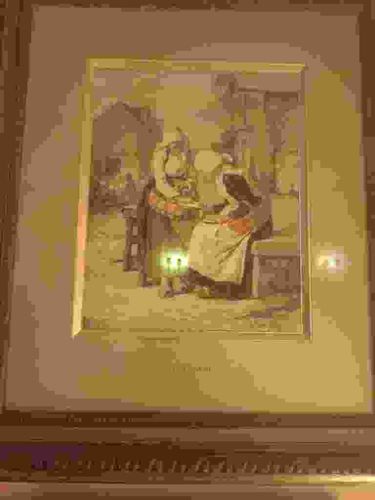
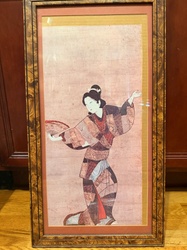
Submitted item photo
Submitted photo · June 25, 2026

User's notes

J Trayer

AI analysis below

AI appraisal

AI analysis & estimate

AI-Generated · Verify before acting

Everything below is generated by AI for informational purposes only. AI can make mistakes — the AI may misidentify items or misattribute them (artist, maker, brand, designer, origin, era). This is not an official valuation and should not be used for insurance, sale, tax, estate, legal, or lending purposes — or any decision requiring a certified appraisal. It is not an authoritative claim about any person, brand, or rights holder — do not share or rely on it as a factual statement about a third party. Always consult qualified professionals before making financial decisions.

Note

This analysis also relies on unverified notes provided by the user, which may be incomplete or inaccurate and could affect the result.

Read the full disclaimer

AI Identification

·Not independently authenticated·Verify before acting

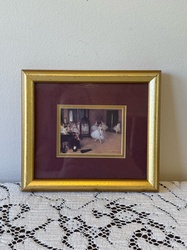
The Convalescent by Jean Jules B. Trayer

Antique Prints & Fine Art

AI Estimated Value

·Not an official valuation·Verify before acting

$150-250

As of June 25, 2026

AI Item Analysis

·AI can make mistakes·Verify before acting
This item is a framed print or engraving based on the work of French genre painter Jean Jules B. Trayer (1824-1909), often titled 'The Convalescent' or a related domestic scene. The artwork depicts two nineteenth-century women in a rustic interior setting, dressed in traditional provincial French attire with bonnets and aprons. One figure is seated while the other tends to her, reflecting the sentimental Realism movement popular in the mid-to-late 19th century. The piece is presented behind glass in a multi-layered mounting, featuring a double mat with a gold-toned inner border. The frame appears to be a traditional wooden moulding, though the low image quality obscures fine details of the grain. Measuring approximately 12x15 inches including the frame, the work shows visible age-related darkening and potential fading or 'foxing' on the matting. The name 'J. Trayer' is reportedly associated with the piece, which aligns with the artist's signature style. There is significant light glare on the glass surface, but the underlying print displays the detailed cross-hatching and tonal depth characteristic of Victorian-era lithographic or steel-plate engraving reproductions. The condition shows general wear consistent with an antique decorative object.
AI Appraisal Report

·AI can make mistakes·Verify before acting
I have carefully examined the provided images and descriptions for the framed print after Jean Jules B. Trayer. The work reflects the sentimental genre scenes popularized by Trayer mid-19th century. Based on visual analysis, the piece appears to be a late 19th or early 20th-century lithographic or steel-plate engraving rather than an original painting. The composition shows the hallmarks of French Realism with a focus on provincial domesticity. My assessment of the condition reveals notable age-related darkening and foxing on the matting, which suggests it has been housed in an acidic environment or exposed to humidity. The presence of 'acid burn' on the paper edges often indicates that original wood pulp materials were used in the framing, which can migrate to the artwork over time. The frame itself is a standard period moulding with typical wear. The market for Victorian-era prints has softened significantly over the last two decades, with 'brown furniture' and accompanying sentimental art seeing lower demand. Comparables for Trayer prints of this size and condition typically realize between $100 and $300 at boutique auctions or antique malls. The primary value drivers here are the decorative appeal and the name of the artist. Authenticity as a period print is likely, but I must note that from digital images alone, I cannot verify the specific printing method or the presence of a plate mark behind the mat. A full physical inspection would be required to confirm if this is a hand-colored engraving or a later offset lithograph. To increase valuation, provenance documentation or a signature obscured by the mat would be necessary. Current demand remains modest, primarily relegated to collectors of regional French genre scenes.

Get your items appraised

Instant estimates of your treasures with AI-powered appraisals

Browse More Appraisals