AI estimate as of August 6, 2025 · verify with a professional before acting
AI-Generated · Verify before acting
Everything on this page is generated by AI for informational purposes only. AI can make mistakes — the AI may misidentify items or misattribute them (artist, maker, brand, designer, origin, era). This is not an official valuation and should not be used for insurance, sale, tax, estate, legal, or lending purposes — or any decision requiring a certified appraisal. It is not an authoritative claim about any person, brand, or rights holder — do not share or rely on it as a factual statement about a third party. Always consult qualified professionals before making financial decisions.
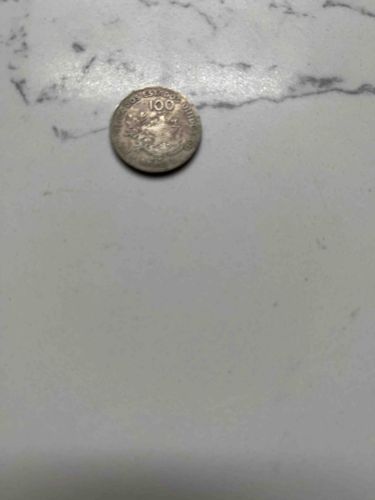
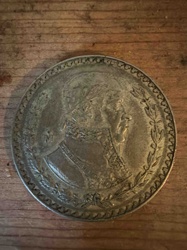
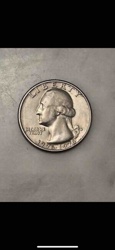
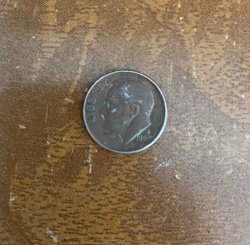
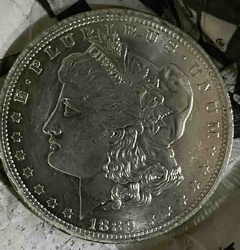
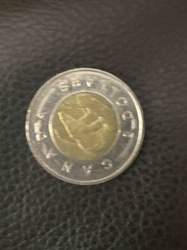
The item is a round, metallic coin, appearing to be made of a silver-colored alloy, possibly silver or a silver-plated base metal. Its diameter cannot be precisely determined from the image, but it appears to be of standard coin size. The obverse side, visible in the image, features a central design that includes what appears to be a stylized bird or eagle, possibly a national emblem, positioned below the numeral "100". This "100" likely indicates the denomination of the coin. Surrounding the central design is a legend, partially legible, with visible letters that suggest a national or governmental name, possibly related to a Spanish-speaking country given the potential visibility of 'ESTADOS' or similar words. The details of the bird/eagle motif are somewhat worn, indicating circulation or age, but the general form is still discernible. The surface exhibits a dull, somewhat tarnished patina consistent with aging and exposure to the elements, and there are visible signs of wear, including scratches and abrasions across the surface and on the raised areas of the design. The rim of the coin shows some minor irregularities and wear. The overall condition suggests a used coin rather than an uncirculated specimen. The craftsmanship appears to be typical of mass-produced government coinage, with clear, though aged, engraving. Without clearer images or further information, specific manufacturing details like a mint mark or year are not discernible. The style suggests it could be from the 20th century, given the numerical denomination presentation.
AI Appraisal Report
Upon examining the provided image of this silver-colored coin, I note its round shape and apparent silver-colored alloy composition, though definitive material identification requires physical analysis. The obverse prominently features a '100' numeral below a stylized eagle motif, indicating denomination and likely a national symbol. The partially legible legend, with hints of 'ESTADOS', suggests an origin from a Spanish-speaking nation. The coin exhibits significant wear, including scratches, abrasions, and a dull, tarnished patina, consistent with circulation and age. The details of the eagle are somewhat abraded, and the rim shows minor irregularities. This wear places the coin in a 'Good' to 'Very Good' condition range. Based on style, I estimate it to be from the 20th century.
Authenticity cannot be definitively verified from an image alone. While the design appears consistent with circulated coinage, an in-person examination would be crucial to assess weight, diameter, edge characteristics, and metallic composition (e.g., specific gravity testing, XRF analysis). Provenance documentation would also bolster authenticity.
Market conditions for common circulated world coinage in this condition are generally modest. Without specific country, year, or mint mark identification, it's virtually impossible to determine rarity. Most '100' denomination coins from various countries are relatively common. Demand is typically low for such unidentified, worn pieces unless they belong to a rare series or have significant historical context. The lack of identifiable features severely limits its appeal to specialized collectors.
Factors significantly impacting value include its unidentifiable origin and the heavy wear. If it were a rare key date or error coin, or if the metal was confirmed to be high-purity silver from a sought-after mint, its value would rapidly increase. However, based solely on the visual evidence, it appears to be a common, circulated piece.