AI Appraisal Estimate

AI-generated estimates · not official valuations

From the user

What was submitted

Photo and notes provided by the user — not generated by AI

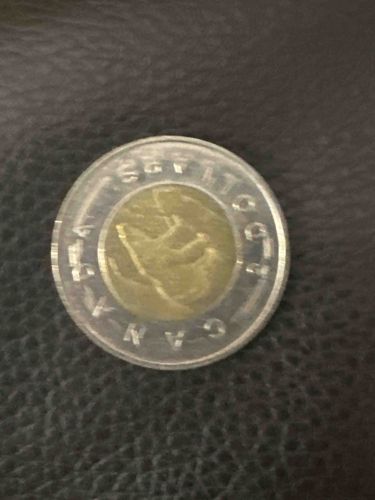
Submitted item photo
Submitted photo · June 8, 2026

User's notes

No additional notes provided.

AI analysis below

AI appraisal

AI analysis & estimate

AI-Generated · Verify before acting

Everything below is generated by AI for informational purposes only. AI can make mistakes — the AI may misidentify items or misattribute them (artist, maker, brand, designer, origin, era). This is not an official valuation and should not be used for insurance, sale, tax, estate, legal, or lending purposes — or any decision requiring a certified appraisal. It is not an authoritative claim about any person, brand, or rights holder — do not share or rely on it as a factual statement about a third party. Always consult qualified professionals before making financial decisions.

Read the full disclaimer

AI Identification

·Not independently authenticated·Verify before acting

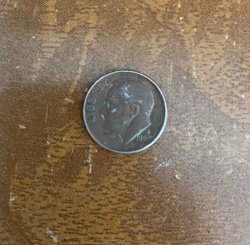
Canadian 2-Dollar Coin (Toonie)

Coinage

AI Estimated Value

·Not an official valuation·Verify before acting

$2.00 - $3.00

As of June 8, 2026

AI Item Analysis

·AI can make mistakes·Verify before acting
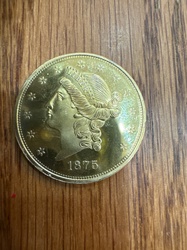
The item is a Canadian 2-dollar coin, commonly known as a 'Toonie'. It is a bimetallic coin, composed of two distinct metallic rings. The outer ring appears to be silver-colored, possibly nickel or a similar alloy, while the inner core is gold-colored, likely brass or bronze-plated nickel. The coin has a circular shape with a reeded edge, though the reeding is not clearly visible in the provided image. The obverse side (visible in the image) features a depiction of a polar bear, which is a characteristic design element of the Canadian Toonie. Although the image quality is somewhat blurry, the words "CANADA" and what appears to be the denomination "2 DOLLARS" are partially discernible along the outer ring. The date "1996" is also faintly visible on the obverse, indicating it is an early issue of the Toonie, which was first introduced in February 1996. The coin exhibits signs of moderate circulation, with some loss of luster and minor surface abrasions consistent with regular use. There are no obvious deep scratches, dents, or significant damage that would suggest abnormal wear or alteration. The contrast between the inner and outer metals is still distinct, showcasing the bimetallic construction. The overall impression is that of a standard circulating coin in good, but not uncirculated, condition. Its distinguishing bimetallic composition and the iconic polar bear design are key features that identify it as a Canadian Toonie.
AI Appraisal Report

·AI can make mistakes·Verify before acting
Based on my visual examination of the provided image, I can confirm this is a Canadian 2-dollar coin, or Toonie, from 1996. The bimetallic composition, the polar bear design on the obverse, and the visible date "1996" are all consistent with an authentic first-year-of-issue Toonie. The coin appears to be in 'Very Fine' to 'Extremely Fine' condition. There is noticeable wear on the high points of the polar bear and some loss of original luster, indicative of moderate circulation. However, there are no significant nicks, scratches, or environmental damage that would detract substantially from its aesthetic appeal. The contrast between the inner and outer metals remains distinct. From a market perspective, 1996 Toonies, while the first year of issue, were produced in very large quantities (over 375 million). Therefore, they are not considered rare in circulated condition. Current market conditions show that circulated examples of this date typically trade very close to their face value. Uncirculated examples might fetch a slight premium, perhaps a few dollars above face value, but this particular coin does not appear to be uncirculated. Key factors impacting value include its circulated condition and high mintage. There is no significant demand for common circulating Toonies beyond their face value, unless they possess unique errors or exceptional condition. While I can confidently assess its authenticity as a genuine Canadian Toonie from the image, a full in-person examination would be required to verify absolute authenticity, precisely grade its condition, identify any subtle mint errors not visible in the photo, and confirm its weight and metallic composition. However, given the nature of this coin, such detailed authentication is usually reserved for higher-value or truly rare examples.

Get your items appraised

Instant estimates of your treasures with AI-powered appraisals

Browse More Appraisals