AI estimate as of July 17, 2025 · verify with a professional before acting
AI-Generated · Verify before acting
Everything on this page is generated by AI for informational purposes only. AI can make mistakes — the AI may misidentify items or misattribute them (artist, maker, brand, designer, origin, era). This is not an official valuation and should not be used for insurance, sale, tax, estate, legal, or lending purposes — or any decision requiring a certified appraisal. It is not an authoritative claim about any person, brand, or rights holder — do not share or rely on it as a factual statement about a third party. Always consult qualified professionals before making financial decisions.
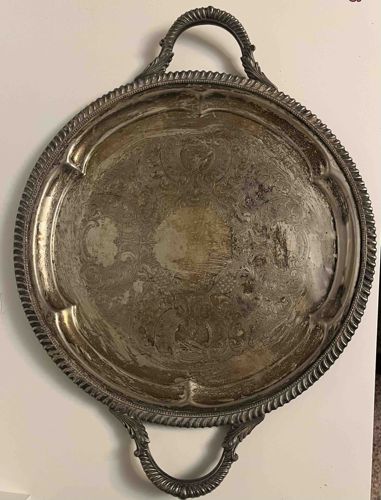
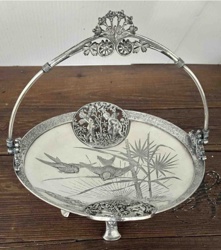
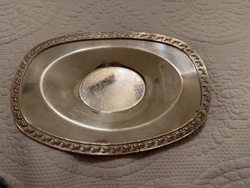
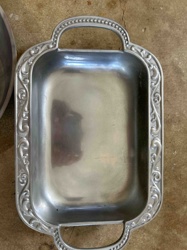
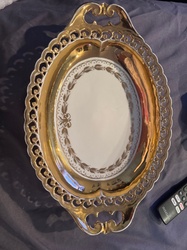
This is an antique or vintage circular serving tray, likely made of silver-plated metal, given its characteristic luster and visible tarnishing. The tray features two ornate, ribbed handles on opposite sides, which appear to be cast with decorative finials connecting them to the main body of the tray. The rim of the tray is also heavily decorated with a twisted rope or braided motif, adding to its elaborate design. The central surface of the tray is extensively engraved or embossed with intricate floral and possibly scrollwork patterns, typical of Rococo or Victorian era designs. While specific details are somewhat obscured by glare and dirt, discernible elements include what appears to be a central vignette surrounded by flowing foliage and possibly grape vines or other naturalistic elements. The overall condition shows significant signs of age and use, with prominent tarnishing visible across the entire surface, ranging from dark brown to black oxidation, particularly in the recessed areas of the engraving and along the rim. There are also visible scuffs, scratches, and areas of wear that suggest the silver plating may be thin or worn through in places, exposing the base metal beneath. Despite the wear, the craftsmanship appears to be of good quality, indicated by the detailed castings of the handles and the intricate surface decoration. No clear maker's marks or signatures are visible in the provided image; however, such trays were commonly produced by various manufacturers in the late 19th to early 20th century. Its elaborate styling suggests it was intended for formal use, such as serving drinks or appetizers.
AI Appraisal Report
I have examined the provided image of this ornate silver-plated embossed serving tray with handles. Visually, its design with elaborate floral and scrollwork patterns, twisted rope rim, and decorative handles, aligns with late 19th to early 20th-century Rococo or Victorian styles. The characteristic luster and extensive tarnishing strongly suggest silver-plate over a base metal.
The condition, as observed, shows significant age and use. Prominent tarnishing, ranging from dark brown to black, is visible in recesses and across the surface. Scuffs, scratches, and areas of wear suggest the silver plating is thin or worn in places. While the craftsmanship appears good, the wear detracts from its aesthetic appeal and value.
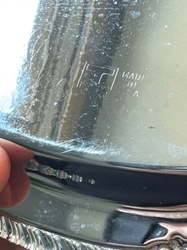
In terms of market conditions, comparable antique silver-plated serving trays with similar decorative elements, especially those showing significant wear, typically fetch modest prices. Demand for such items is generally stable but not high, as collectors often seek pieces in better condition or solid silver. Its common manufacturing period means it's not particularly rare. The lack of visible maker's marks is also a limiting factor, as identifiable makers can increase value.
The primary factors impacting value negatively are the extensive tarnishing and wear to the plating, which would require professional restoration to improve significantly. Positively, its elaborate design and age hold some decorative appeal.
Limitations regarding authenticity verification are significant. Without physical examination, I cannot definitively confirm the material (e.g., distinguish between silver-plate and Britannia metal, or rule out later reproductions). In-person inspection would allow for tactile assessment, examination of hidden marks, precise measurement, and non-destructive testing (e.g., specific gravity or XRF analysis) to determine metal composition. Provenance documentation, if available, would also aid in establishing its history and authenticity. Based on visual assessment alone, its authenticity as a period piece of the specified era appears highly probable, though its exact origin and material composition cannot be guaranteed.