AI identification & appraisal estimate

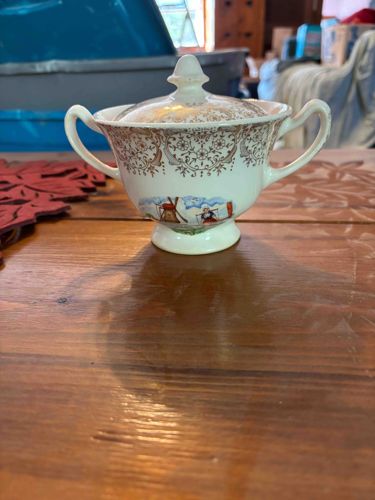
Vintage Covered Sugar Bowl with Dutch Windmill Scene

Submitted photo of Vintage Covered Sugar Bowl with Dutch Windmill Scene
Photo submitted by the user — not generated by AI

User's notes

Excellent condition. No brand

These notes were written by the person who submitted this item. Appraiser.AI has not verified them, and the AI's identification and estimate may rely on them.

AI Estimated Value

Not an official valuation

$40 - $70

AI estimate as of October 11, 2025 · verify with a professional before acting

AI-Generated · Verify before acting

Everything on this page is generated by AI for informational purposes only. AI can make mistakes — the AI may misidentify items or misattribute them (artist, maker, brand, designer, origin, era). This is not an official valuation and should not be used for insurance, sale, tax, estate, legal, or lending purposes — or any decision requiring a certified appraisal. It is not an authoritative claim about any person, brand, or rights holder — do not share or rely on it as a factual statement about a third party. Always consult qualified professionals before making financial decisions.

This analysis also relies on unverified notes provided by the user, which may be incomplete or inaccurate and could affect the result.

Read the full disclaimer

AI Item Analysis

This appears to be a vintage covered sugar bowl, crafted from porcelain or fine ceramic. It features a predominantly off-white or cream base color. The body of the bowl and the lid are adorned with an intricate, repeating pattern of delicate brown and gold (or possibly metallic copper-colored) floral or scrolled motifs. The lid has a small, ornate finial for lifting, which matches the overall design. Below the patterned band, there is a hand-painted or transferware scene depicting a classic Dutch landscape, characterized by a windmill and a figure in traditional attire, possibly ice skating, rendered in soft blues, reds, and browns. The bowl is supported by a short, flared footed base. It has two C-scroll handles, gracefully curved and attached to the upper rim of the bowl, allowing for easy handling. The overall construction exhibits delicate craftsmanship. The item presents in excellent condition with no visible chips, cracks, repairs, or significant wear to the decorative elements or gilding, suggesting careful use or storage. The specific style, with its combination of elaborate patterns and a picturesque scene, suggests a mid-20th-century European aesthetic, possibly from the 1940s to 1960s. The absence of a visible brand mark indicates it might be from a lesser-known manufacturer or a piece where the mark is on the base not visible in the image. Its quality indicators include the fine ceramic material, detailed decoration, and the intact condition of all its components.
AI Appraisal Report

Upon visual examination of the provided image, I assess this vintage covered sugar bowl to be in excellent condition. There are no visible chips, cracks, repairs, or significant wear to the decorative elements or gilding, which is a strong indicator of careful ownership and storage. The overall craftsmanship, with its delicate floral and scrolled motifs, the hand-painted or transferware Dutch landscape scene, and the gracefully curved C-scroll handles, points to a mid-20th-century aesthetic, likely from the 1940s-1960s. The combination of intricate patterning and a picturesque scene is a common characteristic of European decorative ceramics from this period. However, the absence of a visible brand mark significantly impacts its market value. While the quality of the ceramic and decoration is evident, the lack of a known manufacturer or artist prevents attribution to a highly collectible producer. In terms of market conditions, items of this nature, without specific maker identification, generally fall into the broader category of decorative vintage tableware. Demand for such pieces is steady but not typically intense. Comparable items in excellent condition from lesser-known or unidentified makers tend to fetch more modest prices. Rarity is difficult to ascertain without a maker's mark; it is likely one of many similar decorative pieces produced during its era. Factors significantly impacting value are primarily the excellent condition and the attractive, intact decoration. The primary limitation in this appraisal is the verification of authenticity and precise origin without an in-person examination or a manufacturer's mark. A physical inspection would allow for tactile assessment of the ceramic quality, closer inspection for any subtle imperfections, and a thorough search for any hidden manufacturer's marks or artist signatures that might be obscured or on the underside.

Keep exploring

More tableware appraisals

Get your items appraised

Instant AI-powered appraisal estimates from a photo

Browse More Appraisals