AI estimate as of July 4, 2025 · verify with a professional before acting
AI-Generated · Verify before acting
Everything on this page is generated by AI for informational purposes only. AI can make mistakes — the AI may misidentify items or misattribute them (artist, maker, brand, designer, origin, era). This is not an official valuation and should not be used for insurance, sale, tax, estate, legal, or lending purposes — or any decision requiring a certified appraisal. It is not an authoritative claim about any person, brand, or rights holder — do not share or rely on it as a factual statement about a third party. Always consult qualified professionals before making financial decisions.
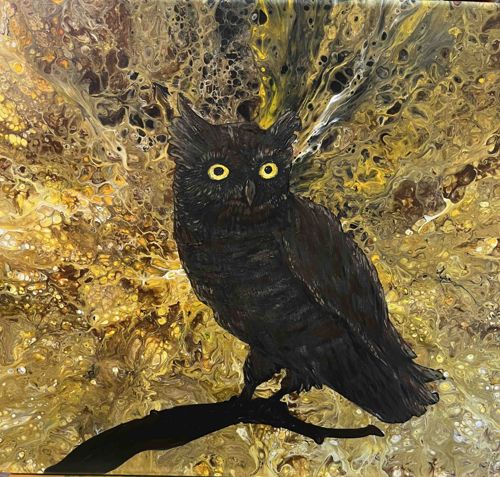
This item is an acrylic pour painting featuring a central depiction of a large, dark owl perched on a branch. The overall dimensions appear to be square, typical of modern canvas sizes. The background is created using a fluid art technique, specifically an acrylic pour, showcasing a swirling, organic pattern dominated by shades of golden yellow, brown, black, and hints of white, creating a luminous, almost fiery effect that radiates from behind the owl. This pour technique gives the background a unique, cellular, and web-like texture, with visible cell formation and lacing typical of silicone-additive pours. The owl itself is rendered in dark, almost black tones, with visible brushstrokes suggesting texture in its feathers. Its most striking features are its two large, intensely bright yellow, circular eyes, which stand out sharply against its dark plumage and the dynamic background. The owl's form is somewhat stylized, with visible 'ear tufts' and a clear outline, suggesting it was painted after the background pour had dried. There are no immediately obvious signs of damage, wear, or repairs from the image provided. The surface appears to be a consistent gloss or satin finish, common for acrylic paintings, and clean. No artist's signature or manufacturing marks are discernible from the visible area. The piece marries a fantastical or illustrative subject within an abstract, contemporary art style framework, suggesting a relatively modern creation, likely within the last 10-20 years.
AI Appraisal Report
Based on my visual examination of the image provided, this Owl on Branch Acrylic Pour Painting appears to be in excellent condition. There are no visible signs of damage, wear, or repairs, and the surface displays a consistent finish. The fusion of a figurative owl against an abstract acrylic pour background, characterized by intricate cellular patterns and lacing, indicates a contemporary creation, likely within the last 10-20 years. This style is popular in current decorative art markets.
Market conditions for this type of blended art, combining illustrative elements with modern abstract techniques like acrylic pouring, show a steady demand, especially for unique pieces that stand out. The striking contrast of the dark owl and its vivid yellow eyes against the fiery golden-yellow and brown background creates significant visual appeal. Comparables can be found in online independent artist marketplaces (e.g., Etsy, Saatchi Art) and local art fairs, where similar-sized and styled pieces by emerging or unestablished artists typically range from $150 to $400, depending on complexity and artistic merit. The visible cell formation and lacing in the pour background suggest a skilled application of the technique, adding to its appeal. This piece is not rare given the prevalence of acrylic pour art, but its unique subject matter crossover makes it distinctive.
Factors impacting value include the excellent condition, the aesthetic appeal of the combination of techniques, and the current popularity of fluid art. However, the absence of an artist's signature or provenance documentation is a limiting factor in determining a higher value from a collectible art perspective. Without in-person examination, I cannot definitively verify the authenticity of materials or the artist's identity. A physical inspection would confirm texture, precise dimensions, and allow for the identification of any hidden signatures or labels. Full authentication would require provenance documentation or, if an artist is identified, a direct confirmation from them.