These notes were written by the person who submitted this item. Appraiser.AI has not verified them, and the AI's identification and estimate may rely on them.
AI Estimated Value
Not an official valuation
$400-650
AI estimate as of October 14, 2025 · verify with a professional before acting
AI-Generated · Verify before acting
Everything on this page is generated by AI for informational purposes only. AI can make mistakes — the AI may misidentify items or misattribute them (artist, maker, brand, designer, origin, era). This is not an official valuation and should not be used for insurance, sale, tax, estate, legal, or lending purposes — or any decision requiring a certified appraisal. It is not an authoritative claim about any person, brand, or rights holder — do not share or rely on it as a factual statement about a third party. Always consult qualified professionals before making financial decisions.
This analysis also relies on unverified notes provided by the user, which may be incomplete or inaccurate and could affect the result.
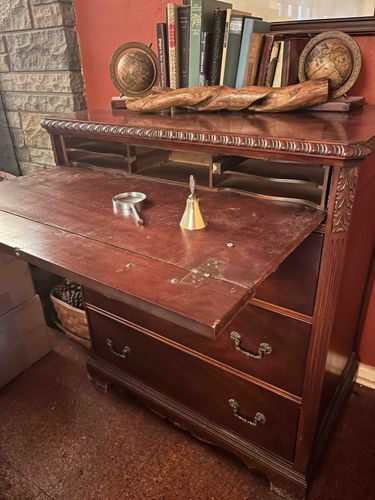
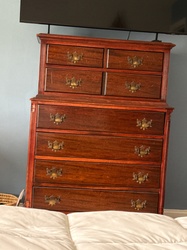
This is a classical style mahogany secretary desk, likely dating from the mid-20th century to contemporary. It features a rich, reddish-brown stained wood finish. The top portion of the desk includes a fall-front writing surface that, when open, reveals a series of small cubbies and drawers suitable for organizing stationery and small office supplies. The writing surface is hinged with visible brass-toned hardware, showing some wear and oxidation. Below the fall-front, there are two full-width drawers, each fitted with ornate brass-toned bail pull handles and escutcheons. The desk exhibits decorative elements characteristic of traditional furniture, such as carved molding along the top edge and fluted or reeded pilasters on the sides, extending downwards, suggesting a Neoclassical or Federal style influence. The overall condition appears very good, with some noticeable dust and minor surface wear on the fall-front, consistent with age and use but no significant damage. The wood grain is visible through the stain, indicating solid wood construction or high-quality veneer. The craftsmanship appears sturdy, with well-fitting drawers and a robust build, suggesting a mass-produced but quality piece of furniture designed for both functionality and aesthetic appeal.
AI Appraisal Report
Upon my virtual examination of this mahogany secretary desk, I assess its condition as very good, consistent with the owner's description. The rich reddish-brown finish, brass-toned hardware, and decorative elements like carved molding and fluted pilasters clearly indicate a mid-20th century to contemporary classical style, likely influenced by Neoclassical or Federal designs. The visible wood grain suggests solid wood or high-quality veneer, reinforcing its quality, though without in-person inspection, the exact construction (solid wood vs. veneer) cannot be definitively confirmed. The minor surface wear and dust are expected for its age and use and do not significantly detract from its value. The functional aspects, such as the fall-front and drawers, appear to be in good working order.
In terms of market conditions, secretary desks of this style, while aesthetically pleasing, generally fall into a moderate demand category. They are not rare; mass-produced quality pieces from this era are relatively common. Comparables in the current market, factoring in its good condition and classic appeal, typically range from $400 to $700. Factors that positively impact value include its functional design, good preservation, and the enduring popularity of traditional furniture styles, especially those with perceived quality construction. The "unknown brand" generally limits value compared to pieces with established makers.
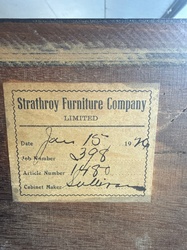
My primary limitation in this appraisal is the lack of physical examination. While the images are clear, a hands-on inspection would allow me to verify wood species, exact construction methods, drawer joinery, and the functionality of hinges and drawer slides more accurately. True authenticity and precise dating would also benefit from examining any maker's marks, internal construction, or hardware details not visible in images. Provenance documentation, if any, could also add to its historical context and potential value.