AI estimate as of November 11, 2025 · verify with a professional before acting
AI-Generated · Verify before acting
Everything on this page is generated by AI for informational purposes only. AI can make mistakes — the AI may misidentify items or misattribute them (artist, maker, brand, designer, origin, era). This is not an official valuation and should not be used for insurance, sale, tax, estate, legal, or lending purposes — or any decision requiring a certified appraisal. It is not an authoritative claim about any person, brand, or rights holder — do not share or rely on it as a factual statement about a third party. Always consult qualified professionals before making financial decisions.
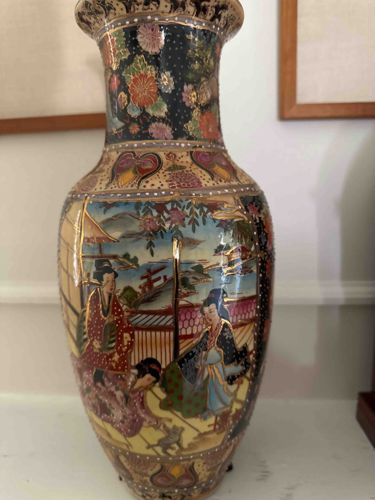
This is a highly ornate ceramic vase, likely of Japanese origin, executed in the Satsuma style. The vase has a classic bulbous body that tapers gracefully to a narrower neck and then flares slightly at the rim, giving it an elegant silhouette. The primary color palette is rich and vibrant, featuring a light cream or beige background for the main scenic panels, contrasted with dark blue, black, and gold accents. The design is meticulously detailed, showcasing scenic vignettes with figures in traditional Japanese attire, possibly geishas or noblewomen, engaged in various activities within a landscape setting. These scenes are rendered in a delicate, almost miniature painting style, with fine brushwork and intricate patterns on clothing and architecture.
Around the neck and shoulder of the vase, as well as along the base, there are highly decorative bands filled with floral motifs, geometric patterns, and stylized borders, often highlighted with raised gold enamel dots and lines, indicating a moriage technique. The floral elements, including chrysanthemums and other blooms, are painted in shades of red, orange, pink, and green against a dark background, creating a sense of depth and luxury. The gold accents throughout the vase appear to be applied in a thick, almost dimensional manner, characteristic of high-quality Satsuma ware.
Observable condition issues appear minimal from the image; the glazes are vibrant, and the colors appear largely unfaded. There might be minor wear to the gold gilding consistent with age and handling, but no obvious chips, cracks, or significant repair are visible. The craftsmanship suggests a piece from the late 19th to early 20th century, a period known for its exquisite export pottery adorned with intricate polychrome enamels and gold. The overall quality indicates a well-made decorative art object intended for display.
AI Appraisal Report
Upon visual examination, this Japanese ceramic vase presents as a fine example of Satsuma-style export ware, likely dating from the Meiji (1868-1912) or early Taisho (1912-1926) period. The piece exhibits the classic characteristics of this style, including a finely crackled cream-colored glaze, intricate polychrome enamel figural scenes, and heavy gilt moriage embellishments. The craftsmanship is of high quality, with meticulous brushwork evident in the depiction of the figures and their garments. The condition appears to be very good, with vibrant enamels and no visible chips, cracks, or repairs, though some minor age-appropriate wear to the gilding is noted.
The current market for Satsuma-style ware of this type is stable but selective. While highly intricate pieces from renowned makers or with exceptional provenance command premium prices, good-quality decorative examples like this are more accessible. Comparables at auction for similar Meiji-period Satsuma vases of this size and quality typically sell in the $400 to $600 range. The value is supported by its strong decorative appeal and good condition.
However, this appraisal is limited by the inability to physically inspect the vase. A definitive authentication requires hands-on examination to verify the age of the materials, identify any maker's marks or shimazu mon on the base, and assess for any hidden repairs or restorations not visible in photographs. Without physical inspection, the possibility that it is a later, non-Japanese reproduction cannot be entirely dismissed. As such, the value provided assumes the piece is a genuine antique Japanese export item from the period stated.