AI Appraisal Estimate

AI-generated estimates · not official valuations

From the user

What was submitted

Photo and notes provided by the user — not generated by AI

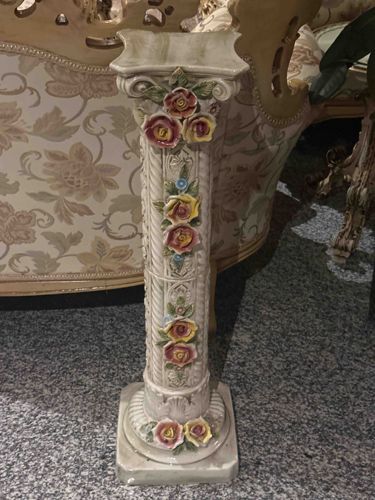
Submitted item photo
Submitted photo · May 27, 2026

User's notes

No additional notes provided.

AI analysis below

AI appraisal

AI analysis & estimate

AI-Generated · Verify before acting

Everything below is generated by AI for informational purposes only. AI can make mistakes — the AI may misidentify items or misattribute them (artist, maker, brand, designer, origin, era). This is not an official valuation and should not be used for insurance, sale, tax, estate, legal, or lending purposes — or any decision requiring a certified appraisal. It is not an authoritative claim about any person, brand, or rights holder — do not share or rely on it as a factual statement about a third party. Always consult qualified professionals before making financial decisions.

Read the full disclaimer

AI Identification

·Not independently authenticated·Verify before acting

Italian Capodimonte Style Ceramic Floral Pedestal Column

Antique & Vintage Home Decor

AI Estimated Value

·Not an official valuation·Verify before acting

$450.00 - $650.00

As of May 27, 2026

AI Item Analysis

·AI can make mistakes·Verify before acting
This is a decorative ceramic pedestal stand, designed in a classical column architectural form with heavy Rococo and Capodimonte-style embellishments. The piece stands on a square plinth base which transitions into a fluted and twisted column shaft, topped with an Ionic-style capital and a flat square platform. It is crafted from glazed ceramic or porcelain, featuring a cream or off-white base glaze with an iridescent or luster finish. The column is elaborately decorated with high-relief, hand-applied polychrome ceramic flowers, predominantly roses in shades of pink, yellow, and red, accented by green leaves and small blue floral buds. The construction showcases intricate molding including scrollwork, foliate patterns, and gadrooning at the base. Visible condition appears fair to good for a decorative object of this age; there are minor surface abrasions and potential fine crazing in the glaze consistent with mid-to-late 20th-century production. No major cracks or professional repairs are immediately evident, though the delicate nature of the petals makes them prone to small chips. This style is characteristic of mid-20th century Italian imports, often used as a stand for planters or busts, reflecting a neoclassical revival aesthetic popular in the 1960s and 70s.

AI Appraisal Report

·AI can make mistakes·Verify before acting
Based on my visual examination of this Italian Capodimonte-style ceramic floral pedestal, I have identified it as a decorative export piece likely dating from the 1960s to mid-1970s. The column exhibits the characteristic 'tutto-tondo' high-relief floral work synonymous with the Bassano and Naples regions of Italy. The iridescent luster glaze and polychrome rose applications are consistent with mid-century Neoclassical revival trends. Physically, the item presents in good vintage condition; while the structural integrity of the fluted shaft appears sound, the high-relief petals show minor 'flea bites'—typical for this medium. The market for mid-century Italian ceramics remains steady, particularly among collectors of Hollywood Regency and Maximalist decor. Comparables sold at auction and through secondary vintage marketplaces typically range between $400 and $700 depending on the complexity of the floral clusters and the absence of significant breaks. The value is bolstered by the height and structural utility as a bust or planter stand, though it is tempered by the lack of a documented maker's mark (such as a 'N' with a crown) visible in the provided views. Please note that this appraisal is based on photographic evidence only. A definitive valuation would require an in-person inspection to check for hidden tension cracks in the ceramic body and 'over-painting' used to mask repairs. Verification of authenticity would involve searching the underside for a blue underglaze mark or an 'Italy' stamp. Without physical handling or provenance documentation, I cannot rule out later 20th-century reproductions from other regions that mimic this specific Italian aesthetic.

Get your items appraised

Instant estimates of your treasures with AI-powered appraisals

Browse More Appraisals