AI Appraisal Estimate

AI-generated estimates · not official valuations

From the user

What was submitted

Photo and notes provided by the user — not generated by AI

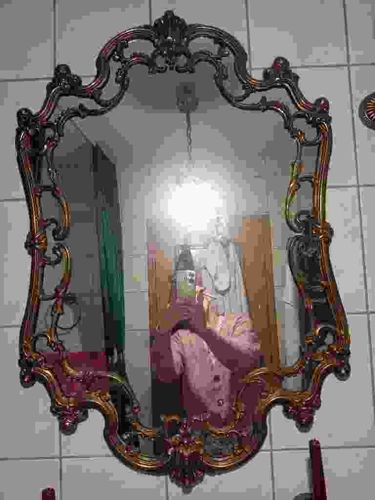
Submitted item photo
Submitted photo · June 17, 2026

User's notes

Messing Spiegel

AI analysis below

AI appraisal

AI analysis & estimate

AI-Generated · Verify before acting

Everything below is generated by AI for informational purposes only. AI can make mistakes — the AI may misidentify items or misattribute them (artist, maker, brand, designer, origin, era). This is not an official valuation and should not be used for insurance, sale, tax, estate, legal, or lending purposes — or any decision requiring a certified appraisal. It is not an authoritative claim about any person, brand, or rights holder — do not share or rely on it as a factual statement about a third party. Always consult qualified professionals before making financial decisions.

Note

This analysis also relies on unverified notes provided by the user, which may be incomplete or inaccurate and could affect the result.

Read the full disclaimer

AI Identification

·Not independently authenticated·Verify before acting

Rococo Revival Brass Openwork Wall Mirror

Antique & Vintage Home Decor - Mirrors

AI Estimated Value

·Not an official valuation·Verify before acting

$250 - $450

As of June 17, 2026

AI Item Analysis

·AI can make mistakes·Verify before acting
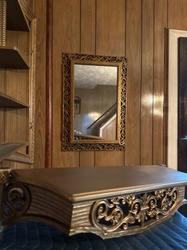
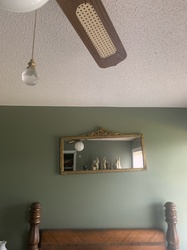
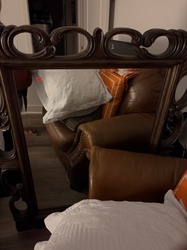
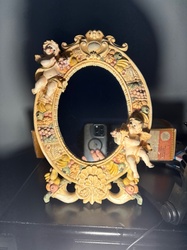
This is an ornate wall mirror featuring a highly decorative 'messing' (brass) frame in the Rococo Revival style. The frame is characterized by intricate openwork or pierced casting, utilizing classic C-scrolls, acanthus leaf motifs, and floral flourishes typical of the mid-20th-century European interpretations of 18th-century design. The construction appears to be sand-cast brass with a dark antiqued patina in the recesses to highlight the dimensional relief. The shape is asymmetrical and cartouche-like, with a prominent crest at the top and a matching terminal at the base. Physically, the brass shows signs of age-related oxidation and some wear to the polished highlights, though it maintains a rich, golden luster. The mirror glass appears flat and relatively clear, though the image reflection is obscured by lighting. The craftsmanship suggests a heavy, durable build, likely manufactured in Germany or Italy between 1950 and 1970. Notable features include the delicate 'windows' within the brass scrollwork which allow the wall color to show through, creating a lightweight visual effect despite the heavy material. There are no visible maker's marks from the front, but the complexity of the casting indicates a quality decorative piece designed for formal interiors.
AI Appraisal Report

·AI can make mistakes·Verify before acting
I have examined the digital representations of this Rococo Revival 'Messing' (brass) openwork wall mirror. Based on the ornate pierced casting, the specific C-scroll and acanthus leaf vocabulary, and the 'Messing' designation, this piece is a mid-20th-century European production, likely of German or Italian origin (circa 1950-1970). The craftsmanship exhibits high-quality sand-casting typical of this era's revivalist decorators. The condition appears consistent with its age, showing a desirable deep patina in the recesses and expected oxidation on the highlights; the glass seems intact, though its original silvering cannot be fully assessed for foxing from these images. The market for mid-century brass mirrors remains stable, particularly for those with 'openwork' designs that blend with both traditional and Hollywood Regency interiors. Comparables found in auction records for similar 20-inch to 30-inch European brass mirrors typically realize between $200 and $500 depending on the weight and intricacy of the casting. While not rare—as these were produced in moderate quantities for the luxury export market—the level of detail in this specific cartouche frame places it in the higher tier of decorative brassware. Limitations: My assessment is based solely on visual inspection of the provided data. Full authentication would require a physical examination to check the rear mounting, the weight of the casting (solid brass vs. plated white metal), and the age of the glass. I would need to inspect the back of the frame for specific foundry marks or 'Made in Germany' stamps which could further refine the provenance. Direct examination would also confirm whether the mirror is original to the frame or a later replacement, which slightly affects the collector value.

Get your items appraised

Instant estimates of your treasures with AI-powered appraisals

Browse More Appraisals