AI estimate as of November 19, 2025 · verify with a professional before acting
AI-Generated · Verify before acting
Everything on this page is generated by AI for informational purposes only. AI can make mistakes — the AI may misidentify items or misattribute them (artist, maker, brand, designer, origin, era). This is not an official valuation and should not be used for insurance, sale, tax, estate, legal, or lending purposes — or any decision requiring a certified appraisal. It is not an authoritative claim about any person, brand, or rights holder — do not share or rely on it as a factual statement about a third party. Always consult qualified professionals before making financial decisions.
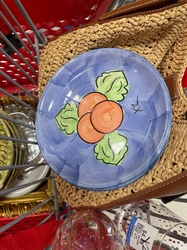
This item is a ceramic bowl, likely made of earthenware or stoneware, featuring a hand-painted blue and white design. The primary motif in the center of the bowl is a stylized fish, depicted in a deep, somewhat muted blue, with strokes that suggest scales and fins. The fish appears to be painted with a fluid, somewhat abstract or Folk Art approach. Surrounding the central fish and along the rim of the bowl, there are decorative blue scroll-like or wave-like patterns, also hand-painted. The base color of the bowl is an off-white or cream, which provides a soft contrast to the blue. The bowl appears to have a slightly irregular, handcrafted form, suggesting it may be artisan-made rather than mass-produced. There are no visible chips or cracks from the provided image, but some minor surface wear or imperfections typical of ceramics, such as slight crazing or glaze inconsistencies, might be present upon closer inspection. The style suggests a possible influence from traditional Asian ceramic art, particularly in the use of blue and white and the fish motif, which often symbolizes good fortune. Given the visible craftsmanship and likely hand-painted nature, it could date from the mid-20th century to more contemporary times. No specific maker's marks or signatures are discernible from the image, which would significantly aid in dating and attribution. The quality appears solid, with a rustic charm. It could serve as a decorative piece or a functional serving bowl.
AI Appraisal Report
Upon visual examination of the provided image, I assess this blue and white hand-painted ceramic bowl with a fish motif. The condition appears to be good to excellent; I observe no chips, cracks, or significant damage, though minor surface wear, crazing, or glaze inconsistencies are possible without a closer physical inspection. The hand-painted nature and slightly irregular form strongly suggest an artisan-made piece rather than mass production, lending it a unique character and Folk Art appeal. The design, particularly the blue and white palette and fish motif, points to a likely influence from traditional Asian ceramic art.
Market conditions for artisan-made ceramic tableware are generally stable, with a demand for unique, decorative, and functional pieces. Comparable items, often found in artisan markets or specialty shops, typically range from $60 to $150 depending on the artist's reputation, age, and specific decorative qualities. This bowl's charm and apparent good condition place it solidly within this range. While not exceedingly rare, its craftwork distinguishes it from common factory-produced ceramics. Factors impacting value positively include its decorative appeal, apparent good condition, and hand-painted quality. The absence of a discernible maker's mark or signature prevents attribution to a specific artist or workshop, which could significantly increase its value if identified.
My assessment of authenticity is based solely on visual cues from the image. For full authentication, I would require an in-person examination to inspect for crazing, glaze quality, clay body characteristics, and any hidden marks. Provenance documentation, if available, would further aid in dating and attribution. Scientific testing is not typically required for items of this nature unless there's a specific question regarding origin or materials.