AI estimate as of October 17, 2025 · verify with a professional before acting
AI-Generated · Verify before acting
Everything on this page is generated by AI for informational purposes only. AI can make mistakes — the AI may misidentify items or misattribute them (artist, maker, brand, designer, origin, era). This is not an official valuation and should not be used for insurance, sale, tax, estate, legal, or lending purposes — or any decision requiring a certified appraisal. It is not an authoritative claim about any person, brand, or rights holder — do not share or rely on it as a factual statement about a third party. Always consult qualified professionals before making financial decisions.
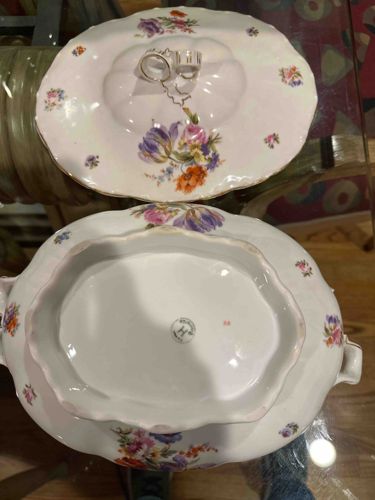
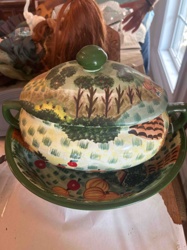
This is an antique lidded oval serving dish, likely a tureen, made of white porcelain or fine china, featuring hand-painted floral decorations. The item consists of two main parts: an oval-shaped bowl and a matching lid. Both pieces have a scalloped or fluted edge, adding an elegant, decorative touch. The predominant colors in the floral motifs are purple, pink, orange, and green, depicting a lush bouquet of what appear to be tulips, roses, and various small blossoms. Scattered smaller floral sprays adorn the background of both the lid and the exterior of the bowl. A gold-painted rim or trim is visible along the edges of both pieces, indicating a touch of luxury and refinement. The lid is designed with a central raised area, possibly for a handle, though none is currently visible or it may include an integrated handle, or the current handle is missing allowing for the placement of two rings on top as seen in the image. On the underside of the bowl, a manufacturer's mark is visible, a circular stamp with an 'H' or 'H B' inside, suggesting a specific pottery or porcelain maker. There's also a smaller red mark, possibly a decorator's mark or an inventory number. The overall condition appears to be good with some signs of age-appropriate wear, such as slight fading of the gold trim in places or minor scuffs. No visible chips, cracks, or extensive repairs are immediately apparent from the provided images. The craftsmanship suggests a European origin, possibly late 19th to early 20th century, consistent with Rococo Revival or early Art Nouveau influences given the undulating forms and naturalistic floral patterns. The quality of the hand-painted details indicates a higher-end production.
AI Appraisal Report
Upon visual examination of the images provided, I have assessed this antique lidded oval serving dish, or tureen. The piece appears to be of European origin, likely French, dating from the late 19th to early 20th century. The maker's mark, a circular stamp with 'HB', is consistent with production by Haviland & Co. of Limoges, a renowned porcelain manufacturer. The hand-painted floral motifs and gold-gilt trim are characteristic of this era and maker, showing good quality craftsmanship. The overall condition appears good for its age, with wear to the gold trim and minor surface scuffs, but no immediately visible cracks, chips, or repairs.
The market for antique porcelain serving pieces like this is generally stable but modest. While Haviland Limoges is a well-respected name, these tureens were produced in large quantities and are not considered exceptionally rare, which tempers the value. Demand is often driven by collectors seeking to complete a dinner service or by those appreciating the decorative quality for home display. A key factor negatively impacting its value is the missing or broken handle on the lid, which significantly detracts from its completeness and aesthetic appeal. Similar tureens from this maker in excellent condition with intact handles typically sell in the $150-250 range. Given the damage to the lid, the value is considerably reduced.
It is crucial to note the limitations of an appraisal based solely on images. Full authentication would require in-person examination to verify the maker's mark, assess the extent of wear, and detect any subtle repairs or hairline cracks not visible in photos. Confirming the 'HB' mark as authentic Haviland Limoges would be a primary step in a physical inspection.