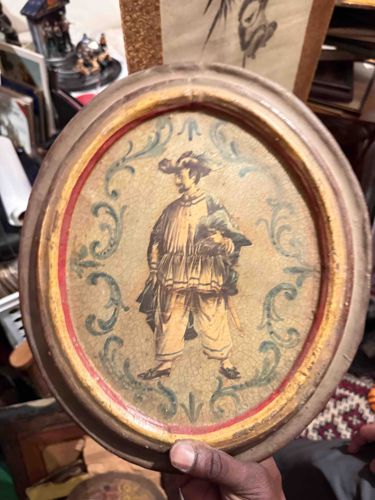
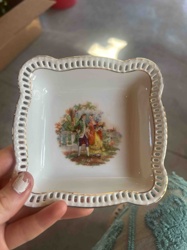
Heavy old painting seems to on plaster or maybe wood
These notes were written by the person who submitted this item. Appraiser.AI has not verified them, and the AI's identification and estimate may rely on them.
AI Estimated Value
Not an official valuation
$30 - $50
AI estimate as of June 24, 2025 · verify with a professional before acting
AI-Generated · Verify before acting
Everything on this page is generated by AI for informational purposes only. AI can make mistakes — the AI may misidentify items or misattribute them (artist, maker, brand, designer, origin, era). This is not an official valuation and should not be used for insurance, sale, tax, estate, legal, or lending purposes — or any decision requiring a certified appraisal. It is not an authoritative claim about any person, brand, or rights holder — do not share or rely on it as a factual statement about a third party. Always consult qualified professionals before making financial decisions.
This analysis also relies on unverified notes provided by the user, which may be incomplete or inaccurate and could affect the result.
This is a circular decorative plaque or 'targone,' likely originating from Italy, featuring a central illustration of a male figure in historical costume. The item appears to be made from a heavy substrate, possibly carved wood given its rounded, beveled edges, or a plaster-like composition as suggested by the user, providing a durable base for the artwork. The outer rim is a natural, unpainted wood tone, suggesting a rustic or aged aesthetic. The inner surface features a painted border in red and yellow-gold concentric rings, framing the central image. The central field is predominantly a cream or light tan color, exhibiting a distinct crackle or crazing pattern across the entire surface, suggesting age, drying of the medium, or intentional 'craquelure' for an antique finish. This pattern is consistent with older finishes or those designed to mimic aged surfaces. The black-and-white illustration of the standing male figure, possibly a 'lute player' or a historical character such as a 'commedia dell'arte' figure given his attire and instrument-like object, is likely not hand-painted but rather a decal, print, or transfer applied to the surface. Surrounding the figure are painted green scrollwork and foliage motifs, which appear hand-applied, adding to its decorative appeal. The overall condition shows significant wear and distress consistent with age and handling. The edges of the plaque exhibit scuffing and loss of finish, and there are areas where the painted surface shows rubbing or minor abrasions. The item has a clear vintage aesthetic, likely dating from the mid-20th century or earlier, possibly between the 1920s and 1960s, a period when such decorative wall plaques were popular. The craftsmanship, while not fine art, suggests a well-made decorative piece intended for domestic display. No discernible maker's marks or signatures are visible in the provided image.
AI Appraisal Report
Upon my examination of this Italian decorative wall plaque, or 'targone,' it is my opinion that this is a mid-20th century decorative piece, likely produced between the 1940s and 1960s for the export or tourist market. The construction, either wood or a plaster composition, is typical for such items. The central image of a costumed figure is consistent with a high-quality decal or transfer, a common manufacturing method for this style, while the surrounding green scrollwork appears to be hand-painted. The prominent 'craquelure' or crackle finish is characteristic of an intentional antiquing effect applied during production rather than a result of natural aging. The overall condition shows significant wear, scuffs, and abrasions, which is common for an item of this age but does detract from its value.
The market for these mid-century Italian decorative plaques is generally modest. They are not considered rare, and similar examples are frequently available online. Demand is driven by decorators seeking a vintage, rustic Italian aesthetic. The key factors limiting this piece's value are its mass-produced nature (indicated by the decal) and its current state of condition. Higher values are reserved for pieces in excellent condition or those verifiably from a noted manufacturer.
This appraisal is based on images alone. A physical, in-person examination would be required to definitively identify the substrate material, confirm the application method of the central image, and thoroughly inspect for any hidden maker's marks that could alter the valuation.