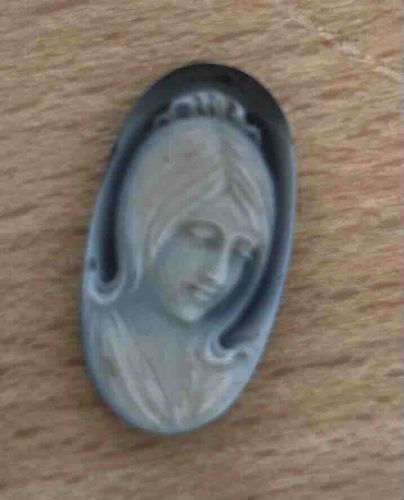
Carved Agate Cameo of the Virgin Mary
This item is an oval-shaped, relief-carved cameo, likely composed of hardstone such as banded agate or onyx. The piece utilizes the natural layering of the stone, featuring a light grey or white upper layer for the figure against a dark grey-to-black base layer, a technique characteristic of traditional glyptic art. The subject is a serene female bust in three-quarter view, appearing to represent the Virgin Mary or a Madonna-like figure, noted by the modest head covering and downcast eyes. The carving shows soft, rounded details in the facial structure and flowing lines in the veil and hair, suggesting a mid-to-late 19th-century Victorian or early 20th-century aesthetic. The surface exhibits a matte finish with slight smoothing of the high points, which suggests natural wear or age. There are no immediate maker's marks visible on the front face. The craftsmanship indicates a level of manual skill, though the moderate detail suggests it was produced for a wider commercial market rather than a high-end bespoke client. The edges appear smooth, though potentially unset, indicating it may have once been part of a brooch, pendant, or ring mounting. Small pits or surface variations are visible, consistent with authentic stone rather than molded plastic or glass imitations.
AI-Generated Appraisal Disclaimer
Estimated Value
$150 - $250
Basic Information
Category
Antique Jewelry/Glyptics
Appraised On
February 2, 2026
Estimated Value
$150 - $250
Item Description
This item is an oval-shaped, relief-carved cameo, likely composed of hardstone such as banded agate or onyx. The piece utilizes the natural layering of the stone, featuring a light grey or white upper layer for the figure against a dark grey-to-black base layer, a technique characteristic of traditional glyptic art. The subject is a serene female bust in three-quarter view, appearing to represent the Virgin Mary or a Madonna-like figure, noted by the modest head covering and downcast eyes. The carving shows soft, rounded details in the facial structure and flowing lines in the veil and hair, suggesting a mid-to-late 19th-century Victorian or early 20th-century aesthetic. The surface exhibits a matte finish with slight smoothing of the high points, which suggests natural wear or age. There are no immediate maker's marks visible on the front face. The craftsmanship indicates a level of manual skill, though the moderate detail suggests it was produced for a wider commercial market rather than a high-end bespoke client. The edges appear smooth, though potentially unset, indicating it may have once been part of a brooch, pendant, or ring mounting. Small pits or surface variations are visible, consistent with authentic stone rather than molded plastic or glass imitations.
Related Tags
Get Your Items Appraised
Instant estimates of your treasures with AI-powered instant appraisals