Tony Evans Mid-Century Raku Studio Pottery Weed Pot
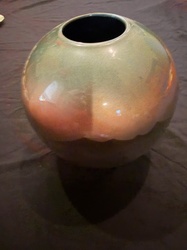
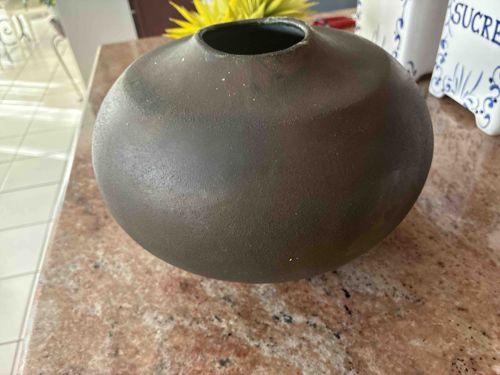
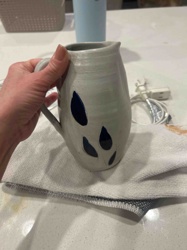
A notable example of mid-century studio ceramics, this Raku-fired vessel, attributed to artist Tony Evans circa 1962, features a squat, bulbous 'weed pot' form with a narrow, slightly recessed circular opening. The piece is characterized by a rich, multi-tonal smoky matte finish, typical of the Raku reduction process, displaying a gradient of charcoal, earthy brown, and subtle metallic copper flashes. The texture is organically granular and tactile, showing the presence of grog in the clay body which adds structural integrity and visual depth. This piece exhibits excellent craftsmanship with balanced proportions and a stable weight. The surface presents in good vintage condition, possessing an authentic aged patina with minor surface variations inherent to the firing process, and one small white speck of surface residue or possible kiln debris near the lower front. The rim appears intact without significant chips. Such pieces from the early 1960s represent the American studio pottery movement's experimentation with traditional Japanese firing techniques, prioritizing form and surface texture over ornate decoration.
AI-Generated Appraisal Disclaimer
Estimated Value
$450 - $650
Basic Information
Category
Studio Pottery and Ceramics
Appraised On
March 15, 2026
Estimated Value
$450 - $650
Additional Details Provided By Owner
User Provided Information
Evans Raku 1962
Item Description
A notable example of mid-century studio ceramics, this Raku-fired vessel, attributed to artist Tony Evans circa 1962, features a squat, bulbous 'weed pot' form with a narrow, slightly recessed circular opening. The piece is characterized by a rich, multi-tonal smoky matte finish, typical of the Raku reduction process, displaying a gradient of charcoal, earthy brown, and subtle metallic copper flashes. The texture is organically granular and tactile, showing the presence of grog in the clay body which adds structural integrity and visual depth. This piece exhibits excellent craftsmanship with balanced proportions and a stable weight. The surface presents in good vintage condition, possessing an authentic aged patina with minor surface variations inherent to the firing process, and one small white speck of surface residue or possible kiln debris near the lower front. The rim appears intact without significant chips. Such pieces from the early 1960s represent the American studio pottery movement's experimentation with traditional Japanese firing techniques, prioritizing form and surface texture over ornate decoration.
Get Your Items Appraised
Instant estimates of your treasures with AI-powered instant appraisals