AI Appraisal Estimate

AI-generated estimates · not official valuations

From the user

What was submitted

Photo and notes provided by the user — not generated by AI

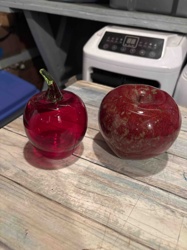
Submitted item photo
Submitted photo · June 6, 2026

User's notes

Seems to be stone or type of marble

AI analysis below

AI appraisal

AI analysis & estimate

AI-Generated · Verify before acting

Everything below is generated by AI for informational purposes only. AI can make mistakes — the AI may misidentify items or misattribute them (artist, maker, brand, designer, origin, era). This is not an official valuation and should not be used for insurance, sale, tax, estate, legal, or lending purposes — or any decision requiring a certified appraisal. It is not an authoritative claim about any person, brand, or rights holder — do not share or rely on it as a factual statement about a third party. Always consult qualified professionals before making financial decisions.

Note

This analysis also relies on unverified notes provided by the user, which may be incomplete or inaccurate and could affect the result.

Read the full disclaimer

AI Identification

·Not independently authenticated·Verify before acting

Gilded Decorative Urn

Decorative Art

AI Estimated Value

·Not an official valuation·Verify before acting

$600 - $900

As of June 6, 2026

AI Item Analysis

·AI can make mistakes·Verify before acting
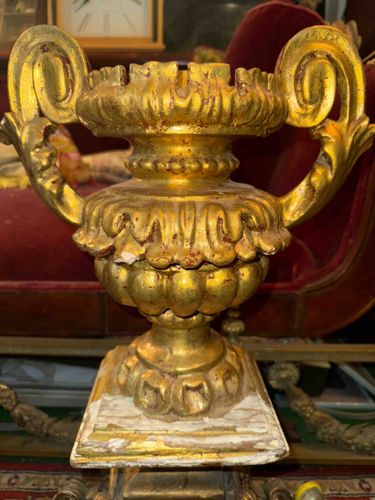
This item is a highly decorative, ornate, and likely antique or vintage gilded urn or vase, possibly intended as a table centerpiece or part of a larger decorative ensemble. It appears to be constructed from carved wood, given the visible wear that reveals a lighter core material, which is then covered with gesso and extensively gilded. The gilding, particularly gold leaf, is applied over intricately carved details. The overall form is classical, reminiscent of urns from the Baroque or Rococo periods, characterized by scrolling volutes serving as handles on either side of the body. The top portion features a fluted or lobed rim, resembling a stylized crown or a serrated edge. Below this, the neck is narrow and banded, leading to a bulbous main body. This body is richly decorated with acanthus leaf motifs and other classical ornamentation, indicating a high level of craftsmanship in its original carving. The base is distinct, consisting of a square plinth that transitions into further carved elements, echoing the decorative style of the main body. Visible condition issues include significant loss of gilding, particularly on the edges and raised areas, revealing the white gesso and underlying dark wood. There are chips and abrasions in various places, suggesting considerable age and handling. Some areas show a darker patination, while others reveal a brighter gold where the top layers of tarnish have worn away. The construction appears solid, carved from multiple pieces and then joined. The overall quality suggests it was a high-status piece, likely custom-made or produced in a workshop specializing in gilded ornamental objects. There are no immediately discernible maker's marks or signatures from the provided image.
AI Appraisal Report

·AI can make mistakes·Verify before acting
Upon examination of the images, this highly ornate decorative urn presents as a fine example of 19th-century European craftsmanship in the Baroque or Rococo revival style. The quality of the carving, particularly the acanthus leaf motifs and scrolling volutes, is of a high standard. While the owner suggested a stone or marble composition, the visible wear, which reveals a white gesso layer beneath the gilding and over a darker core, is characteristic of carved and gilded wood (giltwood). This was a common and traditional technique for creating such high-status decorative objects. The item's condition is fair, exhibiting significant age-related wear. There is considerable loss to the gilded surface, along with various chips and abrasions. While this patina confirms its antiquity, the extensive condition issues are the primary factor limiting its value. The market for large, single decorative urns is steady, often driven by interior design trends. Comparable 19th-century giltwood urns of this scale and quality, but with similar condition issues, typically sell in the proposed range at auction. A pair in pristine condition would command a much higher price. This appraisal is based entirely on photographic evidence. A definitive authentication and valuation would require an in-person physical examination to confirm the material (wood species analysis), assess the structural integrity, identify any restoration, and search for hidden maker's marks. Without provenance or further analysis, its specific workshop or country of origin remains speculative.

Get your items appraised

Instant estimates of your treasures with AI-powered appraisals

Browse More Appraisals