AI estimate as of October 7, 2025 · verify with a professional before acting
AI-Generated · Verify before acting
Everything on this page is generated by AI for informational purposes only. AI can make mistakes — the AI may misidentify items or misattribute them (artist, maker, brand, designer, origin, era). This is not an official valuation and should not be used for insurance, sale, tax, estate, legal, or lending purposes — or any decision requiring a certified appraisal. It is not an authoritative claim about any person, brand, or rights holder — do not share or rely on it as a factual statement about a third party. Always consult qualified professionals before making financial decisions.
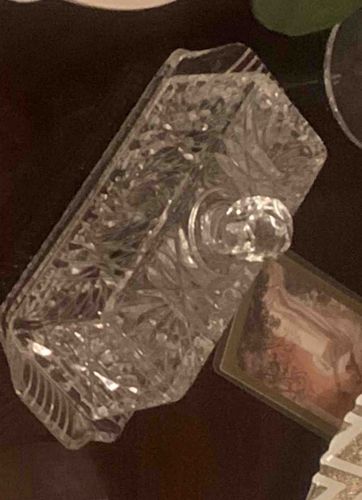
This item is a rectangular, clear cut glass relish dish, likely intended for serving condiments or small food items. Its primary material is glass, characterized by its transparency and refractive qualities. The dish features intricate cut glass patterns across its exterior surfaces, including the sides and potentially the bottom, which create a highly textured and reflective appearance. These patterns appear to be a combination of geometric motifs, possibly including starbursts, diamonds, or hobnail-like cuts, designed to maximize light dispersion and sparkle. The top edges of the dish show a clean, possibly beveled finish. A matching glass stopper is present, featuring a multi-faceted spherical top for easy gripping, connected to a ground glass shaft that would fit snugly into an opening on the dish, although the opening itself is not clearly visible in the provided image. The overall construction suggests a piece of decorative glass art, possibly from the late 19th or early 20th century, a period known for its elaborate cut glass productions. No obvious damage, chips, or cracks are discernible from the image, suggesting it is in good, possibly excellent, vintage condition. There are no visible manufacturer's marks or signatures. The quality of the cuts, as much as can be discerned from the image, indicates skilled craftsmanship, showcasing precision and depth in the facet work. The design embodies classic antique or vintage aesthetics, often associated with formal dining or display.
AI Appraisal Report
Based on my visual examination of the provided image, this cut glass relish dish with its matching stopper appears to be in good to excellent vintage condition. There are no readily discernible chips, cracks, or significant damage, which is a key factor in assessing its value. The intricate cut glass patterns, featuring geometric motifs, are indicative of skilled craftsmanship common in late 19th to early 20th-century American Brilliant Period cut glass, or a good quality reproduction from a slightly later era. The clarity of the glass and the detail of the cuts suggest a piece designed for both utility and aesthetic appeal.
Authenticity from images alone is always a limitation. Without a physical inspection, I cannot verify the exact quality of the glass (e.g., lead content), the precision and depth of the cuts, or the presence of any minute fleabites or repairs that would impact value. An in-person examination would also allow me to look for manufacturer's marks or signatures, which are not visible here, and to assess the ground glass fit of the stopper. Provenance documentation, though unlikely for an item of this type unless significant, would further solidify its history.
Market conditions for cut glass tableware vary. While once highly coveted, demand has softened compared to its peak, making more common patterns and un-signed pieces quite accessible. However, well-preserved examples with intricate cutting, like this one appears to be, still retain collector interest. Comparables in similar condition typically range from $75 to $150, depending on the specific pattern, quality of the blank, and market trends. The lack of visible damage significantly contributes to the higher end of this range. Its rarity is moderate; while many cut glass pieces exist, finding one in excellent condition with its original stopper is less common. This combination enhances its appeal to collectors and those seeking period decorative items.