AI identification & appraisal estimate

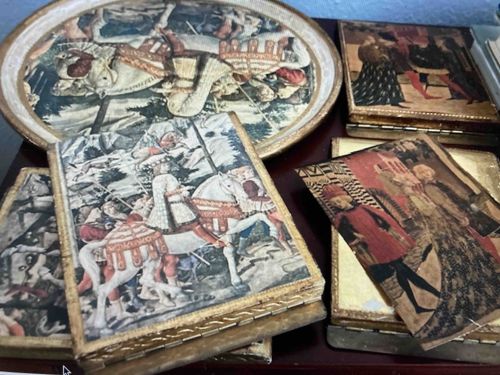
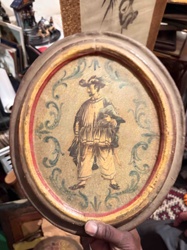
Roberto Ducci Firenze Hand-Painted Florentine Wood Charger and Bookends

Submitted photo of Roberto Ducci Firenze Hand-Painted Florentine Wood Charger and Bookends
Photo submitted by the user — not generated by AI

User's notes

Roberto Ducci, Firenze, Board Charger and two bookend sets, one image off

These notes were written by the person who submitted this item. Appraiser.AI has not verified them, and the AI's identification and estimate may rely on them.

AI Estimated Value

Not an official valuation

$250 - $400

AI estimate as of March 23, 2026 · verify with a professional before acting

AI-Generated · Verify before acting

Everything on this page is generated by AI for informational purposes only. AI can make mistakes — the AI may misidentify items or misattribute them (artist, maker, brand, designer, origin, era). This is not an official valuation and should not be used for insurance, sale, tax, estate, legal, or lending purposes — or any decision requiring a certified appraisal. It is not an authoritative claim about any person, brand, or rights holder — do not share or rely on it as a factual statement about a third party. Always consult qualified professionals before making financial decisions.

This analysis also relies on unverified notes provided by the user, which may be incomplete or inaccurate and could affect the result.

Read the full disclaimer

AI Item Analysis

This set consists of a circular charger (platter) and two pairs of bookends, crafted in the traditional Florentine wood style associated with Roberto Ducci of Florence, Italy. The pieces are constructed from wood composites and feature the classic gesso and gold leaf (gilt) or silver-toned borders characteristic of 20th-century Italian decorative arts. The central artwork on each piece depicts Renaissance-era scenes, specifically battles and courtly life, utilizing the decoupage technique or hand-painted transfers that mimic old-world frescoes and tapestries. The color palette is dominated by muted earth tones, reds, and golds, typical of the mid-20th-century Florentine revival style (c. 1950s-1970s). The charger features an equestrian battle scene, while the bookends display knights and figures in period-appropriate attire. Condition-wise, the items exhibit a natural aged patina with visible shelf wear along the gilded edges and minor scuffing on the flat surfaces. The distressed aesthetic is intentional to provide an antique appearance, but some genuine wear is visible around the corner edges of the bookends. These pieces represent a high quality of Italian craftsmanship often found in mid-century boutique exports, functioning as both functional home decor and historical tributes to Florence's artistic heritage.
AI Appraisal Report

I have conducted a visual examination of this five-piece Florentine wooden vanity/decor set attributed to Roberto Ducci, Firenze. The collection—consisting of a large equestrian-themed charger and two pairs of knight-themed bookends—represents the height of Mid-Century Italian decorative exports (c. 1950s–1960s). The pieces exhibit the hallmark 'Florentine' style: lightweight wood composites finished with gesso, gold leaf gilding, and the characteristic 'Anticatura' distressed treatment. The central motifs utilize high-quality decoupage transfers depicting Sienese or Florentine battle scenes, likely inspired by the works of Paolo Uccello. Condition is consistent with age; while the intentional distressing masks some surface wear, there is visible 'chipping' on the gessoed corners of the bookends and typical shelf-wear on the charger's base. The market for Florentine wood remains steady, driven by collectors of 'Grand Tour' revival decor. Comparables for individual Ducci chargers typically range from $80–$120, while bookend pairs command $60–$100 depending on the complexity of the gilding. As a coordinated set, the value is slightly elevated due to decorative cohesion. Limitations: This appraisal is based solely on high-resolution digital imagery. While the patina and construction appear consistent with mid-century Roberto Ducci production, I cannot confirm the presence of original paper labels or stamped signatures on the undersides. A physical inspection is required to verify the depth of the gilding and ensure no modern structural repairs or water damage exist. Full authentication would require sighting the 'Hand Made in Italy' stamps or specific Ducci workshop insignias typically found on the reverse of these specific woodwares.

Keep exploring

More decorative arts and italian collectibles appraisals

Get your items appraised

Instant AI-powered appraisal estimates from a photo

Browse More Appraisals