AI estimate as of August 22, 2025 · verify with a professional before acting
AI-Generated · Verify before acting
Everything on this page is generated by AI for informational purposes only. AI can make mistakes — the AI may misidentify items or misattribute them (artist, maker, brand, designer, origin, era). This is not an official valuation and should not be used for insurance, sale, tax, estate, legal, or lending purposes — or any decision requiring a certified appraisal. It is not an authoritative claim about any person, brand, or rights holder — do not share or rely on it as a factual statement about a third party. Always consult qualified professionals before making financial decisions.
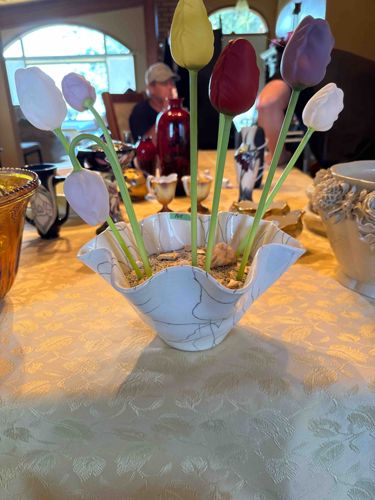
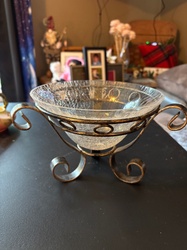
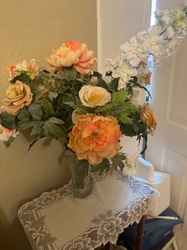
This item is a decorative centerpiece featuring a collection of artificial tulips in a unique wavy-edged bowl. The bowl appears to be ceramic or pottery, with a white or off-white glaze that exhibits a fine crackle pattern, possibly an intentional crazing effect for aesthetic purposes, or an indication of age and wear. The wavy rim adds an organic, almost floral, quality to the container itself, complementing the 'tulips' it holds. Inside the bowl, the base material securing the artificial stems appears to be sand or small decorative pebbles, providing stability for the arrangement. There are approximately seven individual artificial tulip stems, each ending in a closed or partially open bloom. The colors of the tulips vary, including yellow, dark red/burgundy, purple, white, and a light pastel purple/lavender, creating a varied and colorful display. The stems are a vibrant green, mimicking live plant stems. The material of the tulip blooms themselves appears to be a soft-touch artificial fabric or silicone, designed to mimic the texture of real petals. There are no visible maker's marks or signatures on the exterior of the bowl. The overall condition appears good for a decorative item, with no obvious chips or breaks on the bowl, though a closer inspection would be needed to confirm the nature of the crackle as intentional design or damage. The artificial flowers seem well-maintained. This piece appears to be a contemporary or vintage decorative item, likely from the late 20th to early 21st century, focusing on aesthetic appeal rather than high-end craftsmanship, though the crackle glaze and unique bowl shape suggest some attention to design detail.
AI Appraisal Report
Upon my virtual examination of this Artificial Tulip Arrangement in Ceramic Wavy Bowl, I observe a well-preserved decorative item. The ceramic bowl, with its distinctive wavy rim and a fine crackle glaze, appears to be in good condition, showing no obvious chips or breaks from the images. The crackle pattern could be intentional crazing, which adds to its aesthetic; however, without physical inspection, I cannot definitively rule out age-related wear. The artificial tulips, varying in color and style, seem to be made from a soft-touch fabric or silicone, mimicking natural petals effectively. The overall arrangement is visually appealing and appears well-maintained.
In terms of authenticity, based solely on the provided image, I assess this as a contemporary or late 20th-century decorative piece. There are no visible maker's marks, which is common for mass-produced or decorative home items, limiting precise dating or attribution without further evidence. For full authentication and to confirm the nature of the crackle glaze, an in-person examination would be crucial to distinguish intentional design from true damage. Provenance documentation, though unlikely for such an item, would also aid in confirming origin or age. Scientific testing would not typically be warranted for this type of decorative piece.
Market conditions for artificial floral arrangements vary widely. While this piece possesses an attractive and somewhat unique bowl, artificial flowers generally do not command high values unless part of a high-end designer collection or a rare vintage piece. Demand for well-crafted artificial arrangements is steady, but rarity is low for contemporary items of this nature. The value is primarily driven by aesthetic appeal and decorative utility. Comparables would include similar artificial floral arrangements or decorative ceramic bowls found in home goods stores, antique malls, or online marketplaces. Given its decorative nature and perceived lack of significant historical or artistic provenance, the value reflects its utility as a charming home decor piece rather than a collectible.
Factors impacting value include the good visible condition, the attractive and seemingly unique design of the bowl, and the realistic appearance of the artificial flowers. The primary limitation in valuation is the inability to physically inspect the weight, material quality, and true condition of the crazing, which could either enhance its appeal or indicate wear.