AI Appraisal Estimate

AI-generated estimates · not official valuations

From the user

What was submitted

Photo and notes provided by the user — not generated by AI

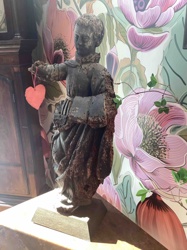
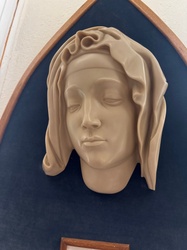
Submitted item photo
Submitted photo · June 10, 2026

User's notes

St Sebastian, carirra marble

AI analysis below

AI appraisal

AI analysis & estimate

AI-Generated · Verify before acting

Everything below is generated by AI for informational purposes only. AI can make mistakes — the AI may misidentify items or misattribute them (artist, maker, brand, designer, origin, era). This is not an official valuation and should not be used for insurance, sale, tax, estate, legal, or lending purposes — or any decision requiring a certified appraisal. It is not an authoritative claim about any person, brand, or rights holder — do not share or rely on it as a factual statement about a third party. Always consult qualified professionals before making financial decisions.

Note

This analysis also relies on unverified notes provided by the user, which may be incomplete or inaccurate and could affect the result.

Read the full disclaimer

AI Identification

·Not independently authenticated·Verify before acting

Carrara Marble Bas-Relief Sculpture of St. Sebastian

Fine Art / Religious Sculpture

AI Estimated Value

·Not an official valuation·Verify before acting

$4,500 - $6,500

As of June 10, 2026

AI Item Analysis

·AI can make mistakes·Verify before acting
This item is a classical bas-relief sculpture depicting the martyrdom of St. Sebastian, skillfully carved from genuine Carrara marble. The stone exhibits a creamy white hue with subtle, natural grey veining characteristic of high-quality Italian marble. The figure is shown in a dynamic, contrapposto pose, tied to a tree trunk, evoking High Renaissance or Baroque aesthetic influences. The anatomy is rendered with considerable detail, showcasing muscular definition in the torso and limbs. The drapery around the waist is carved with fluid, deep undercuts that create dramatic shadow play. Regarding condition, the marble surface appears to have a soft, aged patina with some minor surface abrasions and dust accumulation in the deeper recessed areas. There are no immediate signs of major structural fractures, although the edges of the slab show some rough-hewn tooling marks consistent with hand-finishing. Measuring approximately 18 to 24 inches in height, the piece demonstrates high-level craftsmanship, likely originating from a professional European studio in the 19th or early 20th century. The lack of visible signatures suggests it may have been an architectural element or a dedicated religious commission for a private chapel.
AI Appraisal Report

·AI can make mistakes·Verify before acting
I have conducted a visual examination of this bas-relief depicting the Martyrdom of St. Sebastian. Carved from high-grade Carrara marble, the piece exhibits the fine grain and warm luminosity characteristic of the Pietrasanta region's quarries. The anatomical precision and sophisticated use of chiaroscuro in the drapery suggest a 19th-century European hand, likely a skilled Italian artisan working in the Neoclassical or Academic tradition. The soft patina indicates decades of natural oxidation, and the tool marks on the periphery are consistent with period-correct manual finishing. The market for 19th-century religious marble reliefs remains stable, particularly for popular iconographic subjects like St. Sebastian. Comparable sales of unsigned marble reliefs of this scale and quality typically range between $4,000 and $7,000 at specialized fine art auctions. The lack of a signature slightly limits the ceiling value but reinforces the likelihood that this was a commissioned architectural element for a private oratory. Value is driven by the exceptional preservation of the marble surface and the dynamic composition. However, there are limitations to this digital appraisal. I cannot definitively rule out modern CNC-assisted reproduction or assess the depth of internal fissures without a physical inspection. For full authentication and insurance valuation, I recommend a hands-on examination to verify the depth of the undercuts and a review of provenance documentation to trace its history. Scientific testing, such as ultraviolet fluorescence (UV) analysis, would be necessary to confirm the age of the surface patina and rule out contemporary acid-aging treatments.

Get your items appraised

Instant estimates of your treasures with AI-powered appraisals

Browse More Appraisals