AI Appraisal Estimate

AI-generated estimates · not official valuations

From the user

What was submitted

Photo and notes provided by the user — not generated by AI

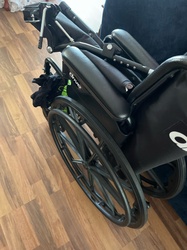
Submitted item photo
Submitted photo · June 14, 2026

User's notes

No additional notes provided.

AI analysis below

AI appraisal

AI analysis & estimate

AI-Generated · Verify before acting

Everything below is generated by AI for informational purposes only. AI can make mistakes — the AI may misidentify items or misattribute them (artist, maker, brand, designer, origin, era). This is not an official valuation and should not be used for insurance, sale, tax, estate, legal, or lending purposes — or any decision requiring a certified appraisal. It is not an authoritative claim about any person, brand, or rights holder — do not share or rely on it as a factual statement about a third party. Always consult qualified professionals before making financial decisions.

Read the full disclaimer

AI Identification

·Not independently authenticated·Verify before acting

Adjustable Aluminum Axillary Crutches

Medical Equipment and Mobility Aids

AI Estimated Value

·Not an official valuation·Verify before acting

$10.00-25.00

As of June 14, 2026

AI Item Analysis

·AI can make mistakes·Verify before acting
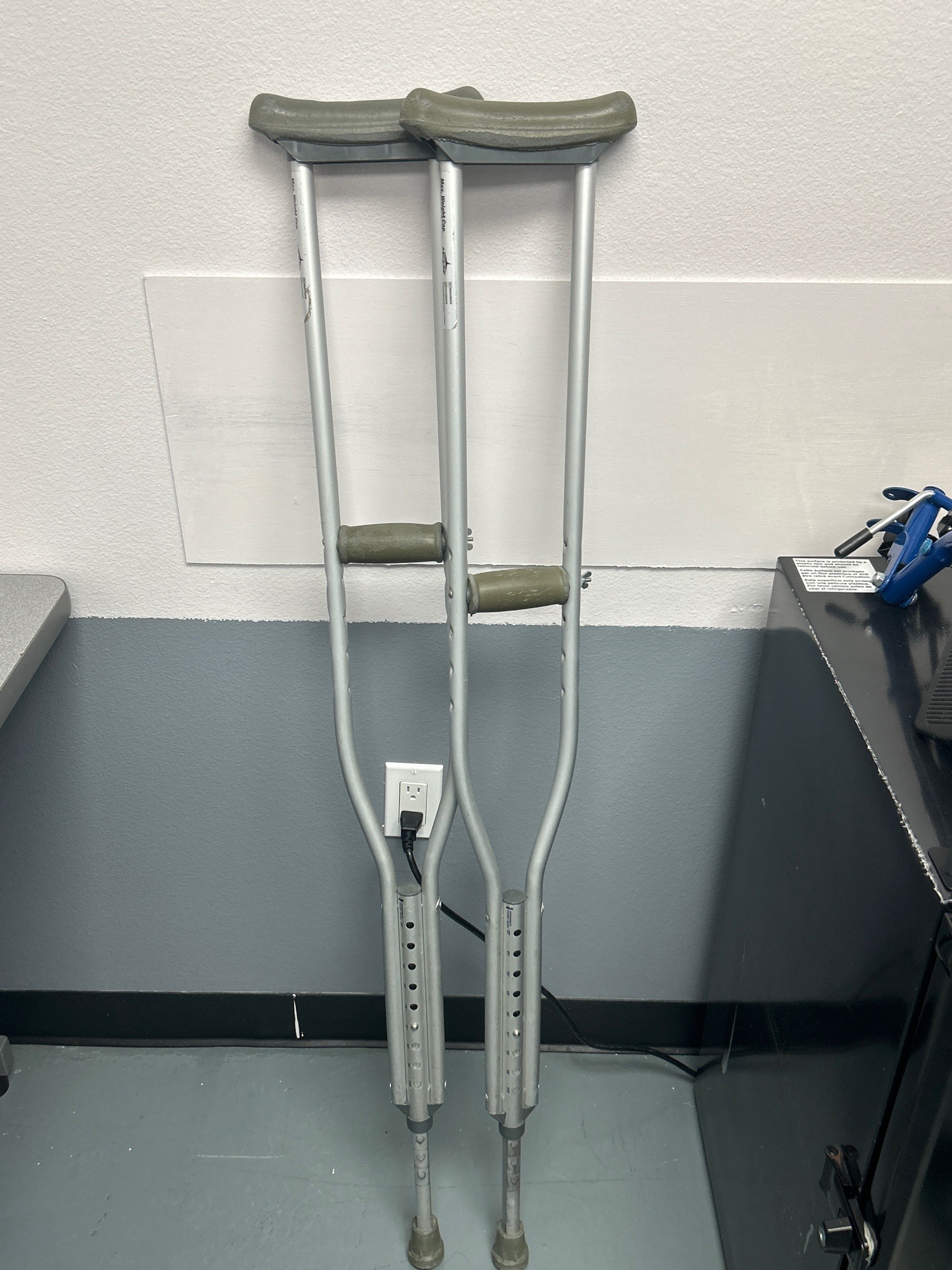
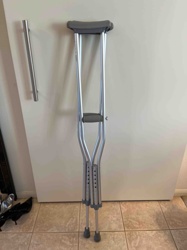
This is a pair of standard adjustable axillary crutches, commonly utilized for medical mobility assistance. The frames are constructed from lightweight extruded aluminum with a matte silver finish. They feature olive-drab or dark grey rubberized padding on the underarm rests and the hand grips to enhance user comfort and prevent slipping. Each crutch is designed with a telescopic lower section and a push-button spring-loaded lock mechanism, allowing for height adjustments visible through pre-drilled holes at the bottom. The hand grips are also adjustable via wing-nut bolts. Visible markings on the upper tubes include safety weight capacity warnings and height scale graduations. In terms of condition, the items show significant signs of wear and age; the rubber components appear oxidized, hardened, and discolored, which is common in older medical equipment. There are visible scuffs and scratches throughout the aluminum frame, particularly near the adjustment joints. The rubber ferrules at the feet are present but appear worn. These crutches likely date from the late 20th to early 21st century and represent a standard mass-produced orthopedic utility design.
AI Appraisal Report

·AI can make mistakes·Verify before acting
I have performed a visual examination of the pair of adjustable aluminum axillary crutches. My assessment identifies these as standard, mass-produced medical utility items, likely manufactured between 1990 and 2010. The construction uses extruded aluminum with typical spring-button height adjustments and wing-nut bolts for handgrip positioning. The condition is fair to poor. Significant oxidation and UV-induced degradation are visible on the rubber components (axillary pads, handgrips, and tips), which have hardened and lost their essential pliability. The aluminum frame shows numerous superficial scuffs consistent with prolonged storage and prior use. Market conditions for used, older-model mobility aids are saturated; these items were produced by the millions and lack any antique or historical collectible value. Comparables for such items in similar condition are found in thrift stores and garage sales for nominal amounts. Their value is purely utilitarian, yet hampered by the need for $15-20 in replacement rubber kits to make them safe for modern use. A brand-new, similar pair currently retails for approximately $30-45 with full warranty and fresh materials. My valuation assumes these are functional but reflects the cost of necessary refurbishment. Limitations: This appraisal is based solely on digital images. A physical inspection is required to ensure the structural integrity of the spring-lock mechanisms and to check for micro-fractures in the aluminum joints or stripped threads on the wing-nuts. Full authentication of manufacturer and load-bearing safety certification would require original documentation or labels that are currently illegible or missing from the visual field. I cannot verify the specific alloy grade or weight-bearing safety without hands-on testing.

Get your items appraised

Instant estimates of your treasures with AI-powered appraisals

Browse More Appraisals