AI estimate as of September 3, 2025 · verify with a professional before acting
AI-Generated · Verify before acting
Everything on this page is generated by AI for informational purposes only. AI can make mistakes — the AI may misidentify items or misattribute them (artist, maker, brand, designer, origin, era). This is not an official valuation and should not be used for insurance, sale, tax, estate, legal, or lending purposes — or any decision requiring a certified appraisal. It is not an authoritative claim about any person, brand, or rights holder — do not share or rely on it as a factual statement about a third party. Always consult qualified professionals before making financial decisions.
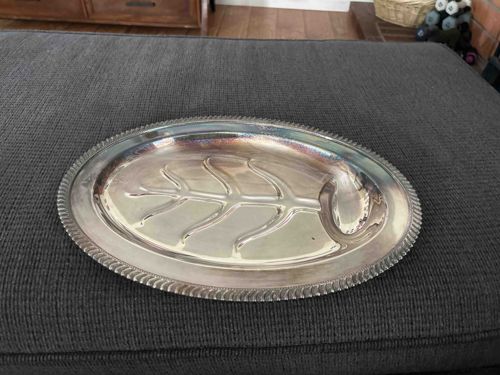
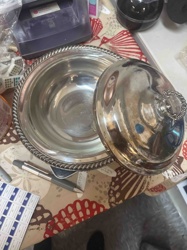
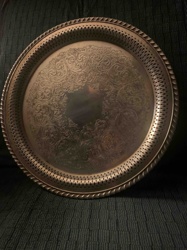
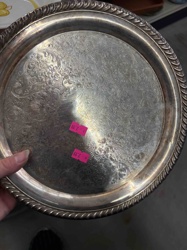
This is an oval-shaped silver-plated meat platter, commonly referred to as a carving platter or well-and-tree platter, designed to collect juices from carved meats. The platter features a polished, reflective silver tone, indicating a potential silver-plated or similar metallic finish. Its construction is solid and appears to be made from a relatively heavy gauge metal, contributing to its durability. The primary distinguishing feature in the center of the platter is a raised 'tree' pattern, which consists of elevated channels resembling branches that direct liquids towards a 'well' (a deeper depression) at one end. This well is specifically designed to collect meat juices or gravies, preventing them from spilling onto the table. The rim of the platter is adorned with a decorative, rope-like or beaded edge, providing an aesthetic detail and enhancing the overall presentation. Given the reflective surface, it likely exhibits minor scratches and scuffs consistent with typical use and cleaning, which are common for vintage metal serving pieces. There is a visible iridescent sheen in some areas, which could be tarnish or reflections. The overall condition appears good for its likely age, suggesting it has been reasonably well-maintained. Without specific maker's marks visible in the image, an exact manufacturing detail or precise age determination is challenging, but similar platters were popular throughout the 20th century, particularly from the Art Deco period onwards for their practical design and elegant appearance. The craftsmanship appears to be of standard quality for mass-produced servingware of its type, focusing on functionality alongside decorative appeal.
AI Appraisal Report
Based on my visual examination of the provided image, this Silver-Plated Well-and-Tree Carving Platter appears to be in good overall condition for its type and likely age. The reflective silver tone suggests silver-plating, consistent with general servingware from the 20th century. I observe minor surface scratches and scuffs, which are entirely typical for vintage metal serving pieces that have seen use and cleaning. The decorative rope-like rim is intact, and the functional 'well-and-tree' design is clearly defined. The presence of an iridescent sheen could be minor tarnish or reflections, common for silver-plated items.
From a market perspective, silver-plated carving platters are relatively common. While elegant, they are not rare, and demand is moderate. Comparables typically sell in the $50-$100 range, depending on size, condition, and any identifiable maker's marks. This specific platter's value falls within that range, leaning slightly higher due to its seemingly good preservation and classic design. Factors impacting value include the lack of visible maker's marks, which prevents attribution to a specific manufacturer or period, and the commonality of such items.
It is crucial to note the limitations of authenticating solely from images. Without a physical inspection, I cannot definitively confirm the exact metal composition (e.g., sterling silver vs. silver-plate base metal), the extent of plating wear, or detect any subtle repairs or structural issues. An in-person examination would allow for tactile assessment of weight, detailed inspection for polishing through the plating, and a thorough search for any hidden hallmarks. Provenance documentation, if available, would significantly enhance authentication and potentially value, confirming its history and origin.