AI Appraisal Estimate

AI-generated estimates · not official valuations

From the user

What was submitted

Photo and notes provided by the user — not generated by AI

Submitted item photo
Submitted photo · June 6, 2026

User's notes

Unknown artist, unspecified, artwork, size 2225 x 1719

AI analysis below

AI appraisal

AI analysis & estimate

AI-Generated · Verify before acting

Everything below is generated by AI for informational purposes only. AI can make mistakes — the AI may misidentify items or misattribute them (artist, maker, brand, designer, origin, era). This is not an official valuation and should not be used for insurance, sale, tax, estate, legal, or lending purposes — or any decision requiring a certified appraisal. It is not an authoritative claim about any person, brand, or rights holder — do not share or rely on it as a factual statement about a third party. Always consult qualified professionals before making financial decisions.

Note

This analysis also relies on unverified notes provided by the user, which may be incomplete or inaccurate and could affect the result.

Read the full disclaimer

AI Identification

·Not independently authenticated·Verify before acting

Afrocentric Religious Lithograph Print of Jesus as the Messiah

Religious Art & Prints

AI Estimated Value

·Not an official valuation·Verify before acting

$45-85

As of June 6, 2026

AI Item Analysis

·AI can make mistakes·Verify before acting
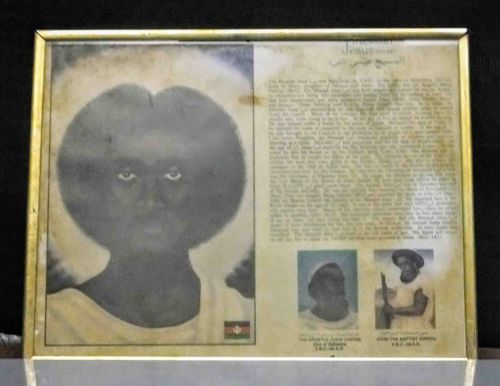
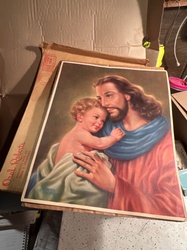
This item is a framed lithographic print featuring Afrocentric religious iconography. The central image on the left depicts a dark-skinned, youthful male figure meant to represent Jesus, styled with a prominent, large afro and a subtle halo of light. The figure is shown from the shoulders up, wearing simple white garments. To the right of the portrait is a large block of printed English and Arabic text detailing a religious narrative. At the bottom right, two smaller inset portraits are visible, labeled as religious figures. The entire composition is housed in a simple, thin gold-toned metallic or polychrome frame. Physically, the artwork shows significant signs of age and environmental wear. There is noticeable yellowing and foxing of the paper substrate, particularly on the right side over the text area. Darker staining suggests potential moisture exposure or chemical reaction with the glass. The colors appear somewhat muted, consistent with post-1960s printing techniques on standard paper. The frame shows minor surface abrasions and tarnishing. This piece likely dates from the late 20th century, specifically the 1970s or 1980s, during a period of increased production of Black religious art intended for home devotional use. The quality is indicative of mass-produced commercial printmaking rather than a fine arts edition.
AI Appraisal Report

·AI can make mistakes·Verify before acting
I have conducted a visual examination of the framed Afrocentric lithographic print featuring the Messiah. Based on the 2225 x 1719 resolution image provided, the item appears to be a mass-produced commercial religious print, likely originating from the 1970s or early 1980s. This era saw a significant rise in 'Black Jesus' iconography within American home devotional markets. The physical condition is a primary factor in this valuation. I observe significant foxing and discoloration across the right side of the paper substrate. The darker staining suggests past moisture infiltration under the glass, which may have led to substrate degradation or mold. The frame is a standard, low-cost metallic trim consistent with commercial framing of the period. The market for 20th-century mass-market religious prints remains niche. While there is a growing interest in the 'Black Power' aesthetic and vintage Afrocentric decor, the 'fair' to 'poor' condition of this specific piece prevents it from reaching the higher price points ($150+) seen for pristine or artist-signed examples. Comparables for unsigned, water-damaged prints of this nature typically sell in mid-century second-hand or flea market settings. Limitations: My assessment is based solely on digital imagery. A full authentication would require removing the piece from the frame to inspect the verso for publisher marks or watermarks. I cannot verify the stability of the paper or the presence of active fungal growth without a physical inspection. Provenance documentation regarding the original point of purchase would clarify its historical context, though scientific testing is typically not warranted for mass-produced lithographs of this era.

Get your items appraised

Instant estimates of your treasures with AI-powered appraisals

Browse More Appraisals