AI estimate as of October 3, 2025 · verify with a professional before acting
AI-Generated · Verify before acting
Everything on this page is generated by AI for informational purposes only. AI can make mistakes — the AI may misidentify items or misattribute them (artist, maker, brand, designer, origin, era). This is not an official valuation and should not be used for insurance, sale, tax, estate, legal, or lending purposes — or any decision requiring a certified appraisal. It is not an authoritative claim about any person, brand, or rights holder — do not share or rely on it as a factual statement about a third party. Always consult qualified professionals before making financial decisions.
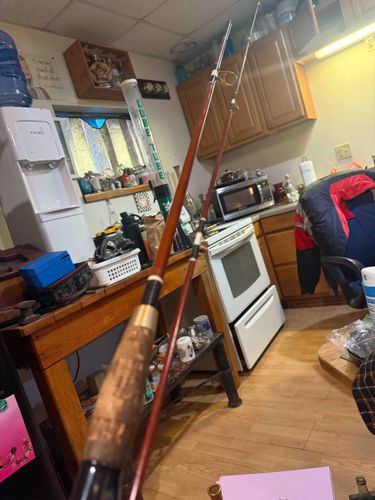
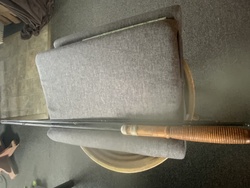
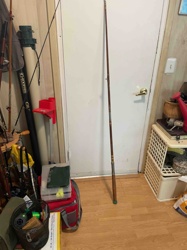
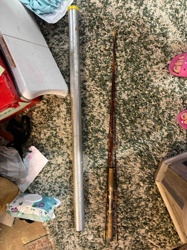
The image displays two fishing rods, with one prominent in the foreground. Both appear to be two-piece designs, characterized by their construction into two distinct sections that join together, facilitating easier transport and storage. The rod in the foreground features a prominent cork handle, exhibiting significant signs of use and wear, including darkening and some slight fraying or flattening of the cork material, which is typical for frequently handled equipment. Above the cork handle, there is a brass-colored metal ferrule or winding check, providing a secure transition to the main rod blank. The rod blank itself is a rich, reddish-brown color, suggesting it might be made of fiberglass or an older composite material, possibly even bamboo given the coloring, though modern fiberglass is more common. The rod eyes (guides) are visible along the upper section, featuring simple, likely metal frames with ceramic inserts, designed to minimize friction on the fishing line. The overall construction appears sturdy, hinting at a rod built for general fishing purposes, perhaps freshwater or light saltwater applications. The visible signs of wear on the cork handle and the general aesthetic suggest an item that has been used regularly, but is still functional. No specific brand markings or model numbers are discernible from the provided images, making precise identification of the manufacturer or age difficult without further inspection. The rod exemplifies a classic design, likely from the mid-to-late 20th century, given the materials and visible construction techniques.
AI Appraisal Report
Based on my visual examination of the provided image, I assess this two-piece fishing rod to be in fair to good used condition. The cork handle shows significant wear, darkening, and minor fraying, indicative of regular use over time. The reddish-brown blank, likely fiberglass or a composite, appears intact with no visible major cracks or damage. The guides seem functional, featuring simple metal frames and ceramic inserts. Authenticity, in terms of its general nature as a fishing rod, is clear. However, without discernible brand markings or model numbers, its specific manufacturer, original model, or exact age cannot be authenticated from images alone. This limits my ability to verify if it's a collectible piece from a renowned maker versus a standard production rod.
Market conditions for used, unmarked fishing rods of this type are generally modest. Comparables would include similar vintage fiberglass or composite rods found in sporting goods stores or online marketplaces, typically ranging from $20 to $100 depending on the brand and condition. There is no indication of significant rarity or high demand for this specific item without further identification. Factors impacting its value negatively are the lack of identifiable branding, the general wear, and its common design. Its functional utility is its primary value.
To definitively authenticate its origin, age, and potential collectible status, an in-person examination would be crucial. This would allow for a detailed inspection of the blank material, guide wraps, ferrule type, and the discovery of any hidden inscriptions, model numbers, or manufacturer logos that reveal its specific provenance. Scientific testing of the material composition could further confirm age. Without these, it remains a nice, functional, but otherwise unexceptional vintage fishing rod.