AI estimate as of July 20, 2025 · verify with a professional before acting
AI-Generated · Verify before acting
Everything on this page is generated by AI for informational purposes only. AI can make mistakes — the AI may misidentify items or misattribute them (artist, maker, brand, designer, origin, era). This is not an official valuation and should not be used for insurance, sale, tax, estate, legal, or lending purposes — or any decision requiring a certified appraisal. It is not an authoritative claim about any person, brand, or rights holder — do not share or rely on it as a factual statement about a third party. Always consult qualified professionals before making financial decisions.
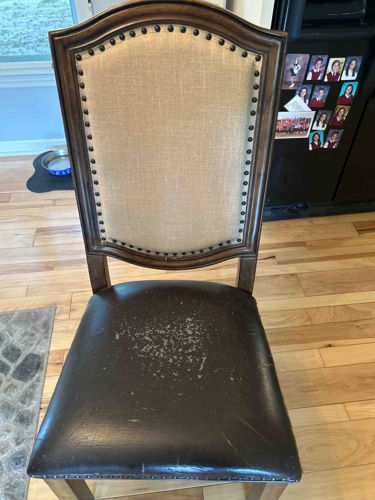
This is a dining chair or accent chair with a transitional design, blending traditional and contemporary elements. The chair features a sturdy wooden frame, likely made of a dark-stained hardwood, exhibiting some visible grain. The chair back is upholstered with a light-colored, possibly beige or natural linen-like fabric, framed by the dark wood. A notable feature of the backrest upholstery is the meticulous application of individual metal nailhead trim, which forms a decorative border around the fabric panel, adding a touch of classic sophistication. The shape of the backrest is slightly curved or scrolled at the top, a common characteristic in more traditional or transitional furniture styles. The seat of the chair is upholstered in a dark brown, possibly faux leather or synthetic leather, material. A significant condition issue is visible on the seat, where the 'leather' material shows considerable wear, peeling, and flaking, particularly in the center, revealing lighter material underneath. This indicates age and significant use, or degradation of the material. The wooden legs and frame appear solid, though some minor scuffs or wear on the finish may be present but are not clearly visible in the provided image. The construction appears robust, suggesting a mass-produced item from the late 20th or early 21st century. No discernible maker's marks or signatures are visible. The overall form suggests it is part of a dining set or could function as a standalone accent chair. The nailhead trim along the seat edge further enhances its decorative appeal. The contrast between the dark wood, light fabric, and dark seat gives it a versatile aesthetic. The chair's quality is fair, compromised by the extensive wear on the seat upholstery.
AI Appraisal Report
Based on my visual examination of the provided image, this Transitional Wood Dining Chair exhibits a blend of traditional and contemporary design elements. The dark-stained wooden frame appears structurally sound, with typical transitional styling including a slightly curved top backrest. The back is upholstered in a light, linen-like fabric, framed by meticulous individual metal nailhead trim, adding a touch of sophistication. The seat is upholstered in what appears to be dark brown faux leather.
My assessment of its condition is fair to poor, primarily due to the significant and highly visible wear, peeling, and flaking of the faux leather seat upholstery. This is a major detractor affecting both functionality and aesthetic appeal, and it necessitates re-upholstery. The wooden frame shows no obvious signs of major damage from the image, but minor scuffs and wear are typical for such an item. Authenticity, in terms of its mass-produced nature from the late 20th or early 21st century, is consistent with its visible characteristics; no maker's marks were discernible, which is common for this type of furniture.
Market conditions for transitional dining chairs with damaged upholstery are significantly depressed. Comparables in good condition typically retail from $50-$150 individually. However, the extensive seat damage drastically reduces its immediate resale value. Demand for single, damaged dining chairs is low; typically, these are purchased as part of a set, or individuals seek items ready for immediate use, or at very low cost for restoration. Rarity is not a factor here; this is a mass-produced item. The primary factor impacting value is the severely deteriorated seat upholstery, followed by its status as a single chair rather than part of a set.
Limitations in authenticity verification from images alone include the inability to fully assess structural integrity, the exact material composition of the wood and fabrics, or to detect subtle repairs or hidden defects. An in-person examination would allow for a tactile assessment of the frame's stability, a closer inspection of all upholstery for tears or stains not evident, and a thorough search for any hidden manufacturer's labels. Provenance documentation would confirm its original purchase, and scientific testing, while not typically applied to items of this type unless significant historical or material questions arise, could confirm material composition.