AI Appraisal Estimate

AI-generated estimates · not official valuations

From the user

What was submitted

Photo and notes provided by the user — not generated by AI

Submitted item photo
Submitted photo · June 23, 2026

User's notes

No additional notes provided.

AI analysis below

AI appraisal

AI analysis & estimate

AI-Generated · Verify before acting

Everything below is generated by AI for informational purposes only. AI can make mistakes — the AI may misidentify items or misattribute them (artist, maker, brand, designer, origin, era). This is not an official valuation and should not be used for insurance, sale, tax, estate, legal, or lending purposes — or any decision requiring a certified appraisal. It is not an authoritative claim about any person, brand, or rights holder — do not share or rely on it as a factual statement about a third party. Always consult qualified professionals before making financial decisions.

Read the full disclaimer

AI Identification

·Not independently authenticated·Verify before acting

Victorian Rubina Verre Moire Art Glass Vase

Art Glass Vase

AI Estimated Value

·Not an official valuation·Verify before acting

$250-400

As of June 23, 2026

AI Item Analysis

·AI can make mistakes·Verify before acting
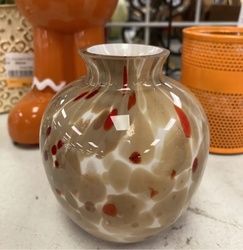
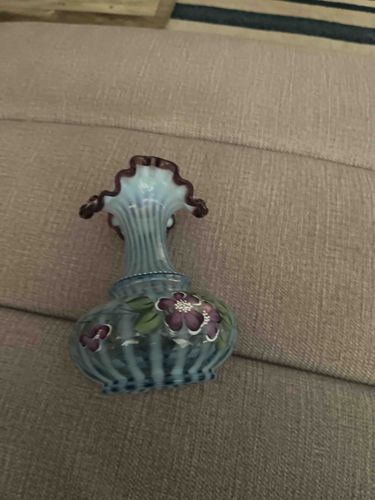
This is a small, ornate art glass vase, likely dating to the late 19th or early 20th century, consistent with the Victorian or Edwardian era. The vase appears to be made of 'Verre Moire' or opalescent art glass, exhibiting a delicate blue-to-white or light green fading effect, potentially indicating a rubina or similar color transition in the glass production. The body of the vase features pronounced vertical ribbing, adding texture and aiding in the opalescent shimmer. The lower, bulbous section of the vase is hand-painted with floral motifs, showing several deep purple or maroon hued flowers with white highlights and green leaves, suggesting an enameled or cold-painted decoration. The neck tapers gracefully before flaring out into a ruffled or crimped rim, which is distinctly outlined in a darker, possibly deep red or brown color, enhancing its decorative appeal. There are no visible chips, cracks, or significant wear evident from the image, suggesting it has been well-preserved. The craftsmanship indicates a hand-blown and hand-finished piece, typical of studio art glass from its presumed period. The base, though not clearly visible, likely shows a pontil mark, further supporting its hand-blown origin. The vase possesses a delicate aesthetic, characteristic of decorative household items from its era, intended for small floral arrangements or as a standalone decorative object.
AI Appraisal Report

·AI can make mistakes·Verify before acting
Based on my visual examination of the provided image, this Victorian Rubina Verre Moire Art Glass Vase appears to be in excellent condition. I see no visible chips, cracks, or significant wear to the glass or the painted decoration. The defined vertical ribbing, opalescent shimmer, and ruffled, crimped rim with a darker outline are characteristic features of late 19th to early 20th-century art glass. The hand-painted floral motifs are well-preserved, suggesting careful handling over the years. The craftsmanship points to a hand-blown and hand-finished piece. Market comparables for similar Victorian or Edwardian Rubina Verre Moire or opalescent art glass vases in excellent condition, especially those with hand-painted enamel decoration, typically range from $250 to $500. While Verre Moire glass itself is desirable, the additional well-executed enamel work enhances its appeal. Demand for quality antique art glass remains steady among collectors, with pieces in pristine condition commanding higher prices. The subtle blue-to-white or light green opalescence, if it is indeed a rubina transition, adds to its rarity. Factors impacting value positively include its excellent condition, appealing aesthetic, and the decorative enameling. A limitation in authenticity verification from images alone exists; I cannot definitively confirm the presence of a pontil mark or the exact color transition (Rubina vs. other opalescent types without red). For full authentication, I would require an in-person examination to inspect the base for a pontil mark, physically assess the glass quality and color nuances, and potentially conduct scientific testing to confirm glass composition and age. Provenance documentation, if available, would also significantly aid in authentication and value assessment.

Get your items appraised

Instant estimates of your treasures with AI-powered appraisals

Browse More Appraisals