AI identification & appraisal estimate

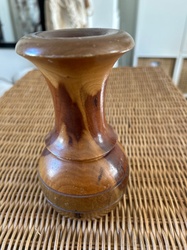
Art Glass Vase

Submitted photo of Art Glass Vase
Photo submitted by the user — not generated by AI

User's notes

From a private gallery 20+ years ago, no name. 9.25x3.5

These notes were written by the person who submitted this item. Appraiser.AI has not verified them, and the AI's identification and estimate may rely on them.

AI Estimated Value

Not an official valuation

$150-250

AI estimate as of June 6, 2025 · verify with a professional before acting

AI-Generated · Verify before acting

Everything on this page is generated by AI for informational purposes only. AI can make mistakes — the AI may misidentify items or misattribute them (artist, maker, brand, designer, origin, era). This is not an official valuation and should not be used for insurance, sale, tax, estate, legal, or lending purposes — or any decision requiring a certified appraisal. It is not an authoritative claim about any person, brand, or rights holder — do not share or rely on it as a factual statement about a third party. Always consult qualified professionals before making financial decisions.

This analysis also relies on unverified notes provided by the user, which may be incomplete or inaccurate and could affect the result.

Read the full disclaimer

AI Item Analysis

This is a cylindrical glass vase with a rounded base and straight sides, measuring approximately 9.25 inches in height and 3.5 inches in diameter. The vase features a vibrant, multi-layered color scheme dominated by a deep, translucent reddish-brown hue. Swirling patterns in opaque white and touches of red and perhaps green are embedded within the glass, creating an effect that resembles smoke or abstract figures. The glass appears thick and hand-blown, suggesting artisanal craftsmanship rather than mass production. The surface is glossy and shows minimal signs of wear or damage based on the provided image, though minor surface scratches or internal imperfections inherent to the glassblowing process might be present but are not clearly visible. The base is clear glass and likely has a pontil mark from the blowing process, which is not visible but expected for hand-blown glass. Without manufacturer's marks or signatures, attributing it to a specific maker is challenging. Given the style and the information it was acquired from a private gallery over 20 years ago, it is likely from the late 20th or early 21st century, possibly reflecting the Studio Glass movement or another contemporary art glass trend. The piece exhibits good quality in terms of color saturation and the complexity of the embedded design.
AI Appraisal Report

Upon examining the provided image and information, this art glass vase presents as a high-quality, hand-blown piece, likely originating from the American Studio Glass movement of the late 20th century. The vase, measuring 9.25 x 3.5 inches, exhibits a complex and aesthetically pleasing design with a multi-layered, cased glass technique, featuring vibrant swirls of white, red, and potentially green within a rich reddish-brown body. The craftsmanship appears skilled, indicated by the smooth form and intricate internal patterns. The condition looks excellent from the photograph, with a glossy surface showing no discernible chips or cracks. The valuation is significantly impacted by the anonymity of the piece. Without a signature or maker's mark, attribution to a specific artist or studio is impossible, which caps its market potential. Comparable unsigned studio glass vases of similar size, quality, and complexity typically trade in the low to mid-hundreds. The market for unsigned decorative art glass is stable but relies heavily on aesthetic appeal rather than speculative artist-driven value. It is crucial to note the limitations of this appraisal, as it is based solely on images. A physical examination is necessary to confirm the condition, check for a pontil mark, and search for any faint, acid-etched signatures that are not visible in photographs. Provenance documentation from the gallery purchase could provide crucial clues. Full authentication would require identifying a signature or matching the piece to a known artist's documented work.

Keep exploring

More decorative arts appraisals

Get your items appraised

Instant AI-powered appraisal estimates from a photo

Browse More Appraisals