AI Appraisal Estimate

AI-generated estimates · not official valuations

From the user

What was submitted

Photo and notes provided by the user — not generated by AI

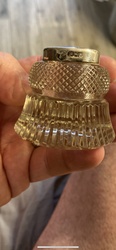
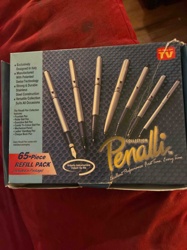
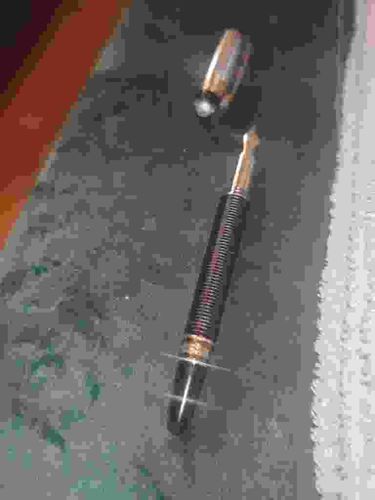
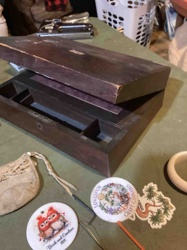
Submitted item photo
Submitted photo · June 14, 2026

User's notes

No additional notes provided.

AI analysis below

AI appraisal

AI analysis & estimate

AI-Generated · Verify before acting

Everything below is generated by AI for informational purposes only. AI can make mistakes — the AI may misidentify items or misattribute them (artist, maker, brand, designer, origin, era). This is not an official valuation and should not be used for insurance, sale, tax, estate, legal, or lending purposes — or any decision requiring a certified appraisal. It is not an authoritative claim about any person, brand, or rights holder — do not share or rely on it as a factual statement about a third party. Always consult qualified professionals before making financial decisions.

Read the full disclaimer

AI Identification

·Not independently authenticated·Verify before acting

Vintage Celluloid or Hard Rubber Fountain Pen

Antique Writing Instruments

AI Estimated Value

·Not an official valuation·Verify before acting

$150 - $350

As of June 14, 2026

AI Item Analysis

·AI can make mistakes·Verify before acting
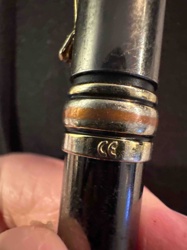
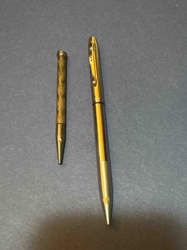
This appears to be a vintage fountain pen from mid-20th century, likely from the 1930s or 1940s. The pen features a barrel and cap made of a dark material, possibly black celluloid or ebonite (hard rubber), which has been decorated with a series of fine, horizontal gold-toned rings or banding. The grip section leading to the nib is also gold-toned, suggesting it may be gold-plated brass. The nib is visible at the top, appearing to be a traditional metal fountain pen nib. The pen is shown in two parts: the main body and a separate cap or end piece. The condition shows significant signs of age and wear; the dark surface appears dull, and there is visible tarnish or oxidation on the metal components. The fine banding on the barrel shows unevenness, indicating frequent use and potential moisture-related wear to the decorative finish over time. Small scratches and abrasions are visible throughout the body of the instrument. While no maker's mark is clearly legible due to the resolution, the design echoes the 'Golden Web' or 'Stacked Coin' styles popularized by brands like Sheaffer or Parker during the Art Deco era. The construction quality suggests a mid-tier to high-tier writing instrument originally meant for professional use.
AI Appraisal Report

·AI can make mistakes·Verify before acting
I have examined the provided images of this mid-20th-century fountain pen. Based on my visual inspection, the pen likely dates to the late 1930s. The 'stacked coin' or banded celluloid motif is highly characteristic of the Parker Vacumatic 'Golden Web' series or similar Art Deco designs from Sheaffer. The condition of this specific piece is fair to good; there is evident brassing on the gold-toned trim and oxidation on the barrel, which significantly affects the tactile and aesthetic appeal. The unevenness in the banding suggests possible internal swelling or exposure to moisture, which can compromise the integrity of vintage celluloid. Market demand for Art Deco writing instruments remains steady among enthusiasts, though value is heavily dictated by the functionality of the filling system (e.g., diaphragm or lever) and the nib's material. If the nib is 14k gold, the value sits at the higher end of the range; if it is gold-plated steel, it falls toward the lower end. Comparable sales for restored Parker Vacumatics in similar patterns range from $250 to $500, but the visible wear and unrestored state of this example merit a conservative valuation. Limitations: My assessment is based solely on digital images. A physical inspection is required to determine if the material is celluloid or ebonite and to verify the gold content of the furniture. Most importantly, I cannot verify the internal mechanical condition; a brittle ink sac or cracked feed would necessitate costly restoration. Full authentication would require disassembly to inspect the breather tube and maker marks on the barrel and nib, as well as provenance documentation to confirm its historical storage conditions.

Get your items appraised

Instant estimates of your treasures with AI-powered appraisals

Browse More Appraisals