AI estimate as of December 11, 2025 · verify with a professional before acting
AI-Generated · Verify before acting
Everything on this page is generated by AI for informational purposes only. AI can make mistakes — the AI may misidentify items or misattribute them (artist, maker, brand, designer, origin, era). This is not an official valuation and should not be used for insurance, sale, tax, estate, legal, or lending purposes — or any decision requiring a certified appraisal. It is not an authoritative claim about any person, brand, or rights holder — do not share or rely on it as a factual statement about a third party. Always consult qualified professionals before making financial decisions.
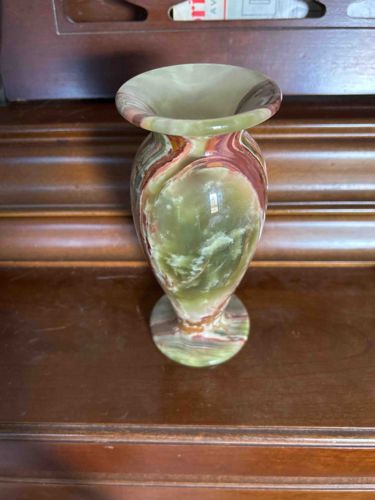
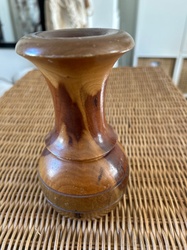
This item is a small, polished vase crafted from onyx stone, exhibiting a distinctive variegated color palette. The primary color is a translucent, mottled green, interspersed with striking veins and swirling patterns of reddish-brown, cream, and subtle hints of grey. The stone's natural banding creates an organic, iridescent quality, particularly noticeable in the lighter areas. The vase features a classic amphora-like silhouette, with a flared rim, a gently tapering neck, a rounded body, and a circular, stepped base. It appears to be carved from a single piece of stone, with a smooth, highly polished finish that reflects light, enhancing the depth and vibrancy of the natural patterns. The interior of the vase opening also shows the polished stone, indicating a solid construction. There are no visible chips, cracks, or significant damage to the exterior surface. Minor surface scratches or scuffs, consistent with age and handling, may be present but are not clearly discernible from the provided image. No distinct maker's marks, signatures, or stamps are visible on the exterior. Given its material and style, it likely dates from the mid to late 20th century, a period when ornamental pieces like this were popular. The craftsmanship suggests a commercially produced item, possibly from a region known for onyx carving. Its most striking feature is the beautiful natural patterns and translucency of the onyx, making it a decorative piece, suitable for displaying a single small flower or as a standalone object of aesthetic interest. The base appears stable and proportional to the body.
AI Appraisal Report
I have carefully examined the provided image of this small, polished onyx stone vase. Visually, the condition appears excellent, with no visible chips, cracks, or significant damage. The highly polished finish and classic amphora-like silhouette are well-rendered, suggesting good craftsmanship despite being a commercially produced item. The natural variegated green, reddish-brown, cream, and grey patterns, along with the translucency of the onyx, are indeed its most striking features and contribute significantly to its decorative appeal. The perceived lack of maker's marks is common for such ornamental pieces.
Based on the material and style, I concur with the mid to late 20th century dating. Market conditions for decorative onyx vases of this type are generally stable but not experiencing significant appreciation. Comparable items, often found at antique malls, online marketplaces, or estate sales, typically range from $50 to $200 depending on size, the quality of the stone's patterns, and overall condition. While attractive, these items are not particularly rare; onyx carving was a widespread craft. Demand is steady among collectors of decorative arts and individuals seeking unique home decor.
The primary value drivers are the aesthetic appeal of the natural stone patterns and its excellent apparent condition. The craftsmanship, though commercially oriented, is of a good standard. Limitations in authenticity verification from an image alone are primarily regarding a definitive assessment of minor surface abrasions, subtle repairs, or internal flaws that would only be detectable through direct physical inspection. An in-person examination would also allow for a more precise assessment of the stone's quality and translucency, which can vary. Provenance documentation or scientific testing is not typically required for items of this nature and value, as their worth is predominantly aesthetic rather than historical or artistic authorship.