AI Appraisal Estimate

AI-generated estimates · not official valuations

From the user

What was submitted

Photo and notes provided by the user — not generated by AI

Submitted item photo
Submitted photo · May 30, 2026

User's notes

No additional notes provided.

AI analysis below

AI appraisal

AI analysis & estimate

AI-Generated · Verify before acting

Everything below is generated by AI for informational purposes only. AI can make mistakes — the AI may misidentify items or misattribute them (artist, maker, brand, designer, origin, era). This is not an official valuation and should not be used for insurance, sale, tax, estate, legal, or lending purposes — or any decision requiring a certified appraisal. It is not an authoritative claim about any person, brand, or rights holder — do not share or rely on it as a factual statement about a third party. Always consult qualified professionals before making financial decisions.

Read the full disclaimer

AI Identification

·Not independently authenticated·Verify before acting

Mid-20th-century style composite and plastic fashion dolls

Dolls and Toys

AI Estimated Value

·Not an official valuation·Verify before acting

$40-$85

As of May 30, 2026

AI Item Analysis

·AI can make mistakes·Verify before acting
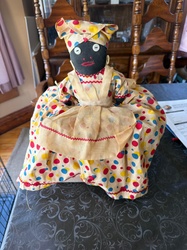
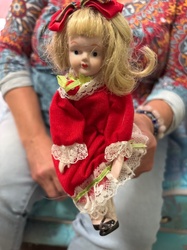
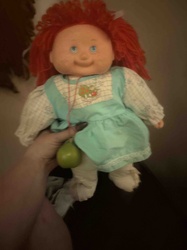
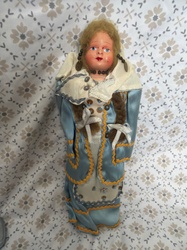
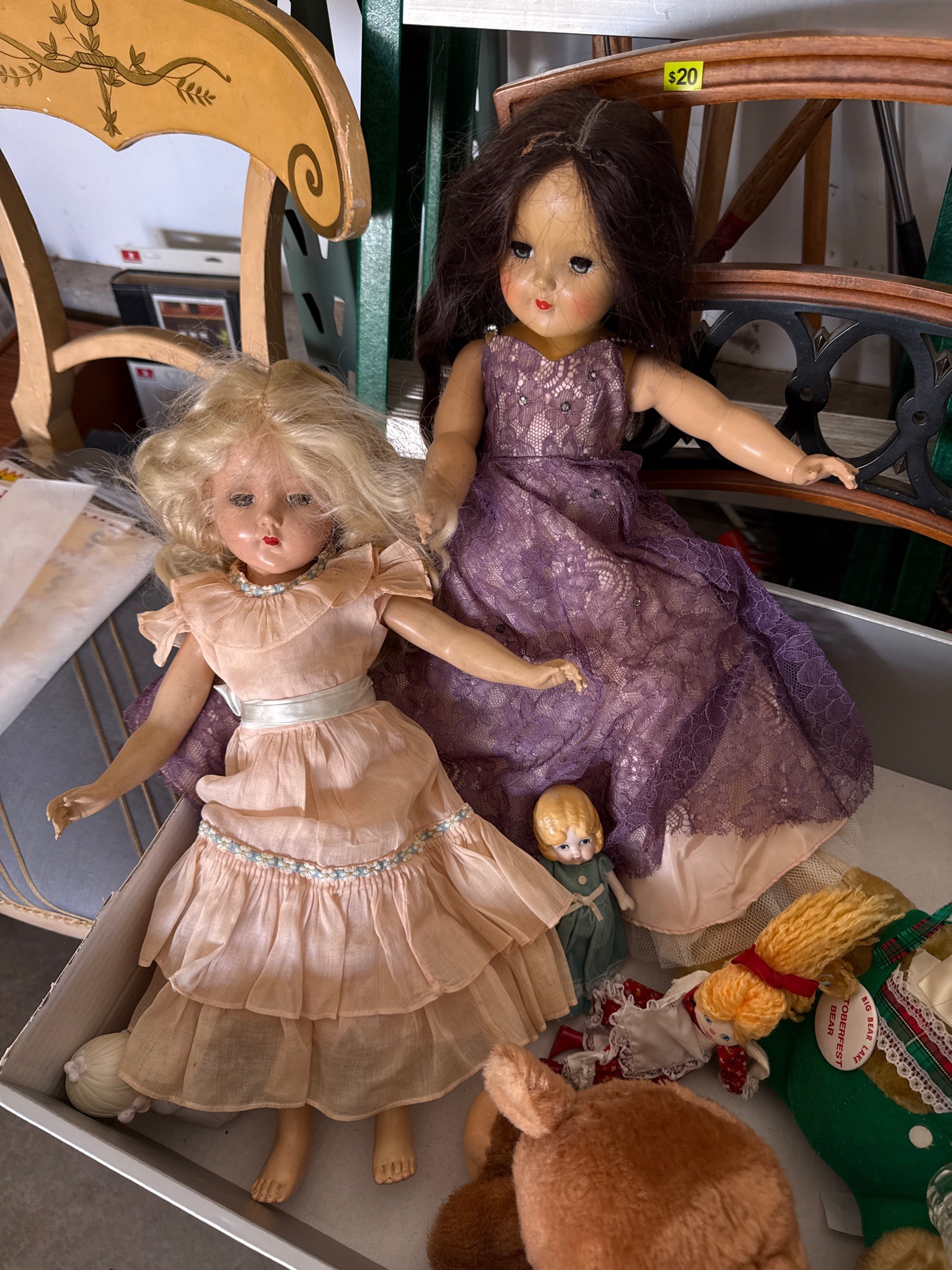
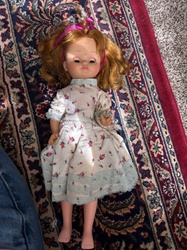
This collection features several dolls, primarily dominated by two large female figures in formal attire. The doll on the left features blonde synthetic or human hair and is dressed in a multi-tiered peach or pink ruffed dress with a satin-style waist ribbon. The doll to the right has dark brown hair and wears a purple lace-over-satin evening gown. Both larger dolls exhibit facial features consistent with 1940s or 1950s manufacturing, including molded 'sleep eyes' and painted red lips. A much smaller doll with blonde hair in a green dress is positioned between the two. The materials appear consistent with hard plastic or a similar early synthetic composite common in mid-century toy production. Visible condition issues include significantly tangled and matted hair on all dolls, surface grime on the skin areas, and potential fraying of the delicate dress fabrics. There are no visible maker's marks, tags, or signatures on the dolls themselves in the image; however, there is a retail price sticker of '$20' on a chair in the background. Because no manufacturer labels are visible, these are identified stylistically as mid-century fashion dolls rather than attributed to a specific brand like Madame Alexander or Ideal, though they follow those design conventions.
AI Appraisal Report

·AI can make mistakes·Verify before acting
Based on my visual analysis of the provided image, I have evaluated this collection of mid-20th-century style fashion dolls. From what I can see, the larger figures appear to be constructed from hard plastic or an early synthetic composite, featuring the molded 'sleep eyes' and facial paint typical of the late 1940s through the 1950s. I cannot verify the specific manufacturer or substrate material from a photo alone; a physical inspection would be required to search for marks on the nape of the neck or back, which would be necessary to distinguish if these are by a specific maker like Madame Alexander or are unattributed 'grocery store' dolls of the era. The value estimate of $40-$85 reflects the current fair market value for a grouping of generic mid-century dolls in this state of preservation. The estimate is significantly impacted by the visible condition issues, specifically the matted and tangled synthetic hair and surface grime, as doll collectors place a high premium on 'mint' hair sets and clean costuming. Based on what I can see, the dresses show signs of age-related wear which further limits the high-end potential. General market demand for unattributed mid-century plastic dolls is currently modest compared to name-brand counterparts. If these were authenticated as a high-demand manufacturer, the value could increase by 50-100%. Conversely, if the plastic is found to have 'doll disease' (deteriorating odors or stickiness) upon physical inspection, the value would drop significantly. Professional authentication would require a hands-on examination of the joints, material composition, and any hidden manufacturer stamps to move beyond this working hypothesis.

Get your items appraised

Instant estimates of your treasures with AI-powered appraisals

Browse More Appraisals