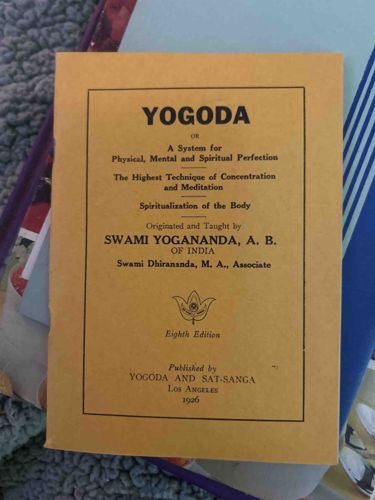
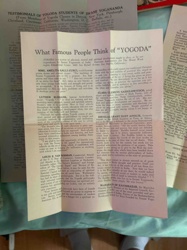
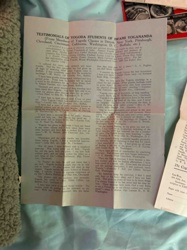
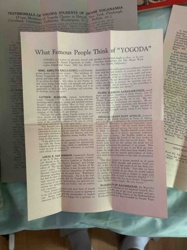
1926 yogoda booklet 8th edition printed in Los Angles
These notes were written by the person who submitted this item. Appraiser.AI has not verified them, and the AI's identification and estimate may rely on them.
AI Estimated Value
Not an official valuation
$400-600
AI estimate as of August 23, 2025 · verify with a professional before acting
AI-Generated · Verify before acting
Everything on this page is generated by AI for informational purposes only. AI can make mistakes — the AI may misidentify items or misattribute them (artist, maker, brand, designer, origin, era). This is not an official valuation and should not be used for insurance, sale, tax, estate, legal, or lending purposes — or any decision requiring a certified appraisal. It is not an authoritative claim about any person, brand, or rights holder — do not share or rely on it as a factual statement about a third party. Always consult qualified professionals before making financial decisions.
This analysis also relies on unverified notes provided by the user, which may be incomplete or inaccurate and could affect the result.
This item is an antique or vintage softcover booklet titled "YOGODA" or "A System for Physical, Mental and Spiritual Perfection." The cover is a distinctly aged, dark yellow or light orange cardstock, showing some minor wear along the edges and corners, indicating its age and handling. The text on the cover is printed in black ink, featuring various font sizes and styles to differentiate sections. A black rectangular border frames the central text, adding a formal touch to the design. Notable features include the authorship by "SWAMI YOGANANDA, A.B. OF INDIA" and "Swami Dhirananda, M.A., Associate." A stylized floral or lotus-like emblem is printed below the author names, followed by "Eighth Edition." The publication information states "Published by YOGODA AND SAT-SANGA, LOS ANGELES, 1926." This detail confirms it as the 8th edition, printed in Los Angeles in 1926, aligning with the provided context. The booklet appears to be in overall good condition for its age, with no significant tears or major discoloration visible on the front cover. The aged color of the paper and the slight imperfections suggest natural deterioration over close to a century. The craftsmanship indicates a standard pamphlet production of the early 20th century, likely saddle-stitched, though the spine is not visible. Its historical significance lies in its connection to Swami Yogananda's early teachings in the United States, making it a key piece for collectors of spiritual texts, yoga history, or early 20th-century American spiritual movements.
AI Appraisal Report
I have examined the provided image of the YOGODA Booklet, 8th Edition (1926) by Swami Yogananda, noting its aged cardstock cover, black printed text, and the distinct publication information. Based on the visual evidence, the booklet appears to be in good condition for its age, with expected wear along the edges and corners, and consistent discoloration. The legibility of the title, author, edition, and publication details confirms its authenticity as described. The specific mention of "Eighth Edition" and "Published by YOGODA AND SAT-SANGA, LOS ANGELES, 1926" aligns perfectly with the known publishing history of Swami Yogananda's early works in the United States.
Market conditions for early editions of Swami Yogananda's works, especially those predating the establishment of Self-Realization Fellowship, show consistent demand from collectors of spiritual texts, yoga history, and early 20th-century esoterica. While this is the 8th edition, its 1926 publication date places it within a sought-after period. Rarity is moderate; while not unique, these early printings are not common given their age and format as a booklet. Factors impacting value positively include its clear identification as an early edition, its good preservation for a nearly 100-year-old pamphlet, and its direct connection to Yogananda's initial teachings in the West. Its historical significance is considerable.
My assessment of authenticity and condition is based solely on the provided image. Limitations of this remote appraisal include the inability to inspect the interior pages for completeness, foxing, or damage, and to physically assess the binding or paper quality. Full authentication would require in-person examination to verify paper type, printing methods, and the absence of any repairs or alterations not visible in the image. Provenance documentation, such as prior ownership records, would further enhance its authenticated value, though this is often unavailable for such items.