AI estimate as of September 11, 2025 · verify with a professional before acting
AI-Generated · Verify before acting
Everything on this page is generated by AI for informational purposes only. AI can make mistakes — the AI may misidentify items or misattribute them (artist, maker, brand, designer, origin, era). This is not an official valuation and should not be used for insurance, sale, tax, estate, legal, or lending purposes — or any decision requiring a certified appraisal. It is not an authoritative claim about any person, brand, or rights holder — do not share or rely on it as a factual statement about a third party. Always consult qualified professionals before making financial decisions.
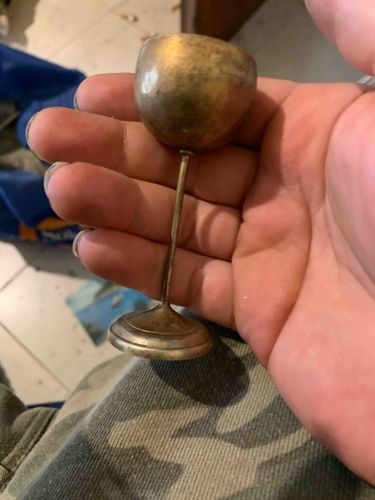
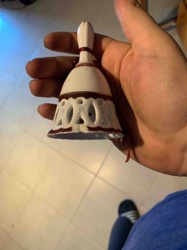
This item is a very small, single goblet or chalice, appearing to be made of a silver-toned metal, possibly pewter, silver plate, or a silver alloy, exhibiting a warm antique patina. The overall height of the goblet is suggested by its placement within an average adult's hand, indicating it is likely no more than 3-4 inches tall. The cup or bowl of the goblet is rounded and relatively deep, showing signs of wear and surface imperfections consistent with age and handling, including minor dents or irregularities in its spherical shape. The color of the cup suggests a brassy or gilded interior or a significant build-up of tarnish that has oxidized to a golden-brown hue, contrasting slightly with the stem and base. The stem is thin and appears solid, connecting the bowl to a circular, stepped base. The base has a simple, classic design with a raised central dome and a flanged rim, showing a similar aged patina. There are no immediately visible maker's marks, engravings, or other distinguishing features on the exterior surface. The craftsmanship appears functional rather than ornate, suggesting a utility piece or a simple decorative object. The condition indicates an older item, with visible signs of oxidation and surface wear throughout, which adds to its antique appeal. Its diminutive size suggests it could be a toy, a dollhouse accessory, a shot glass, an egg cup, or a commemorative miniature.
AI Appraisal Report
Upon examining the provided image of this miniature goblet, I've assessed its condition as fair to good, consistent with an antique piece showing signs of age and considerable handling. The 'silver-toned metal' exhibits a charming, warm patina, which is desirable for antique collectors as it indicates authenticity and age. The surface imperfections and minor dents in the cup, along with the contrasting 'gilded interior' or tarnished brassy hue, are all indicative of its natural aging process. The craftsmanship, while not ornate, speaks to a functional or simple decorative purpose.
Authenticity, based solely on visual cues, suggests it's a genuine antique miniature. Its diminutive size points towards possibilities such as a toy, doll's accessory, or a commemorative piece, which can influence its specific market niche. In terms of market conditions, miniature decorative collectibles generally have a steady, albeit niche, demand. Comparable items, such as miniature silver or pewter chalices from the late 19th to early 20th century, typically fetch modest prices unless associated with a significant maker or historical event. This item lacks immediate distinguishing marks, which limits its value. Its rarity is moderate; while not mass-produced, similar small-scale metalware is not exceedingly rare.
Factors significantly impacting value include the lack of maker's marks or definitive material identification (silver vs. pewter/silver plate). Without physical inspection, I cannot confirm the metal composition, which is crucial. If it were confirmed sterling silver, the value would increase. Demand is driven by collectors of miniatures, dollhouse enthusiasts, or those seeking unique decorative accents.
My appraisal is limited by the visual-only examination. For full authentication and a more precise valuation, an in-person examination would be necessary to assess metal purity (e.g., acid test for silver content), search for hidden marks, and gauge the tactile quality and weight. Provenance documentation, if available, would also significantly enhance its value by providing historical context.