AI Appraisal Estimate

AI-generated estimates · not official valuations

From the user

What was submitted

Photo and notes provided by the user — not generated by AI

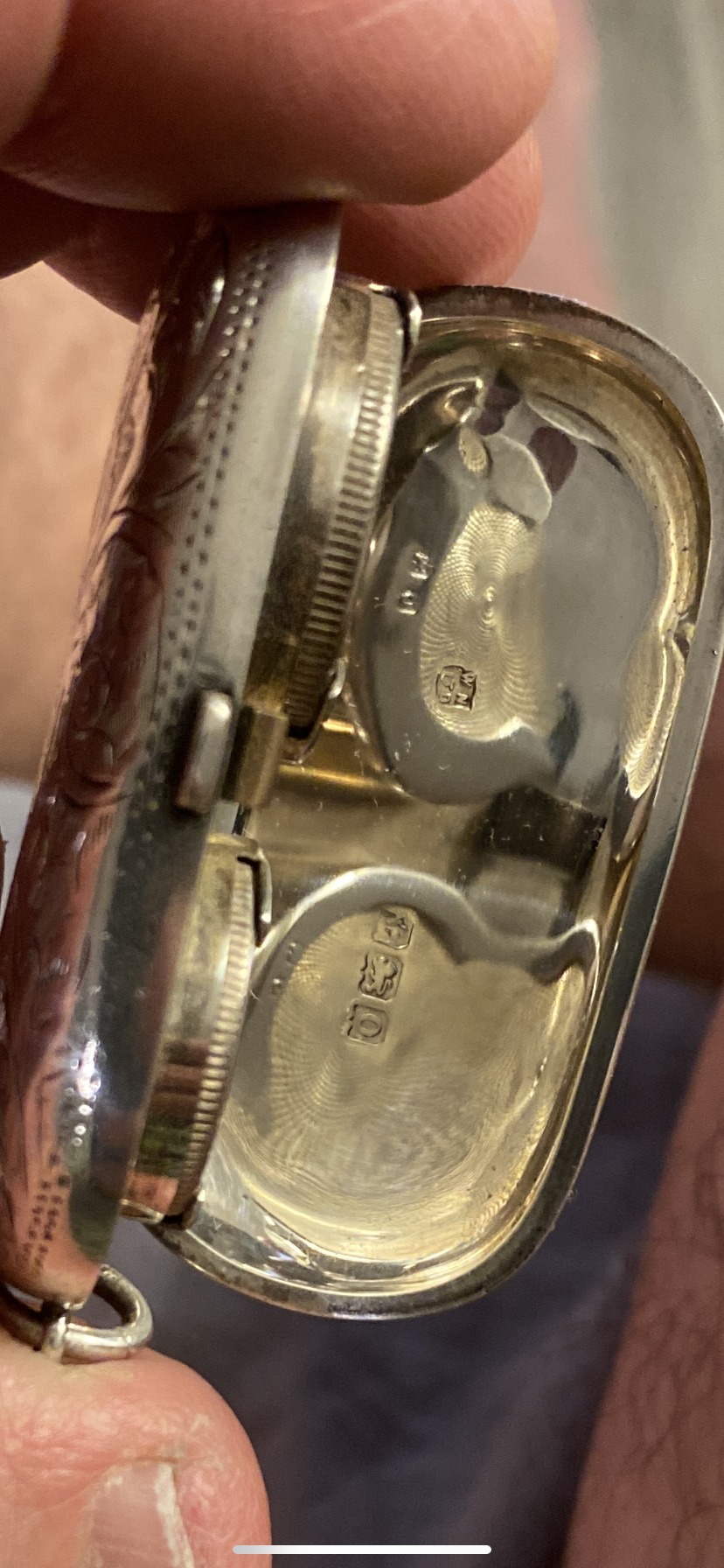
Submitted item photo
Submitted photo · June 21, 2026

User's notes

Victorian era sterling silver double sovereign nickel dime coin case crafted in Birmingham England in 1904. In very good condition and has the clear markings to establish authenticity

AI analysis below

AI appraisal

AI analysis & estimate

AI-Generated · Verify before acting

Everything below is generated by AI for informational purposes only. AI can make mistakes — the AI may misidentify items or misattribute them (artist, maker, brand, designer, origin, era). This is not an official valuation and should not be used for insurance, sale, tax, estate, legal, or lending purposes — or any decision requiring a certified appraisal. It is not an authoritative claim about any person, brand, or rights holder — do not share or rely on it as a factual statement about a third party. Always consult qualified professionals before making financial decisions.

Note

This analysis also relies on unverified notes provided by the user, which may be incomplete or inaccurate and could affect the result.

Read the full disclaimer

AI Identification

·Not independently authenticated·Verify before acting

Silver-tone double coin case in the Edwardian style

Antiques and Collectibles

AI Estimated Value

·Not an official valuation·Verify before acting

$450 - $650

As of June 21, 2026

AI Item Analysis

·AI can make mistakes·Verify before acting
This item is a compact, silver-tone metal double coin case featuring an oval, hinged design with a bail for suspension on a chain. The exterior appears to be decorated with intricate foliate or floral engraving, consistent with late 19th or early 20th-century aesthetic movements. Internally, the case contains two spring-loaded compartments designed to hold coins. The interior surfaces show engine-turned engine-turned patterns (guilloché) and several clear markings. Specifically, one side bears a maker's mark consisting of the initials 'W.N' in a shield. The other internal face displays a series of three hallmarks, including a lion passant (the British mark for sterling silver), an anchor (the assay office mark for Birmingham), and a lowercase 'e' in a rounded shield (a date letter consistent with the year 1904). The owner identifies this as an Edwardian-era sterling silver double sovereign case crafted in Birmingham, England, in 1904. While the visible hallmarks are consistent with this attribution, they remain unverified without physical inspection to ensure they are contemporary to the piece and not later applications. The item shows light surface scratches and minor tarnish consistent with use and age, but appears to be in overall good condition with no visible structural damage.

AI Appraisal Report

·AI can make mistakes·Verify before acting
Based on the provided imagery, I have examined this silver-tone double sovereign case. The item appears to feature an Edwardian aesthetic with foliate engravings and internal spring-discs. Per the user submission, this is attributed to a 1904 Birmingham sterling silver manufacture by 'W.N'. While the images show hallmarks consistent with this period and origin, including a lion passant and anchor, I cannot verify their authenticity or whether they are contemporary to the piece without a physical inspection. Photos alone cannot confirm metal purity or the absence of modern fabrication techniques. The estimated value of $450 - $650 assumes the attribution to the Edwardian era and sterling silver material is correct. Items of this type are currently in moderate demand among collectors of Victorian and Edwardian vesta and sovereign cases, where value is driven by the clarity of marks and mechanical function of the springs. Based on what I can see, the case appears to be in good condition with minor tarnish; however, I cannot verify the strength of the hinges or the interior spring tension from a photo. To confirm these details and the stated identification, an in-person examination by a specialist is required. If the item were found to be a modern silver-plated reproduction or if the hallmarks were determined to be later additions, the value would likely decrease significantly to a decorative range of $50 - $100. Documentation of provenance or a metallurgical test would further support the higher valuation range.

Related Tags

Explore similar items and categories

Get your items appraised

Instant estimates of your treasures with AI-powered appraisals

Browse More Appraisals