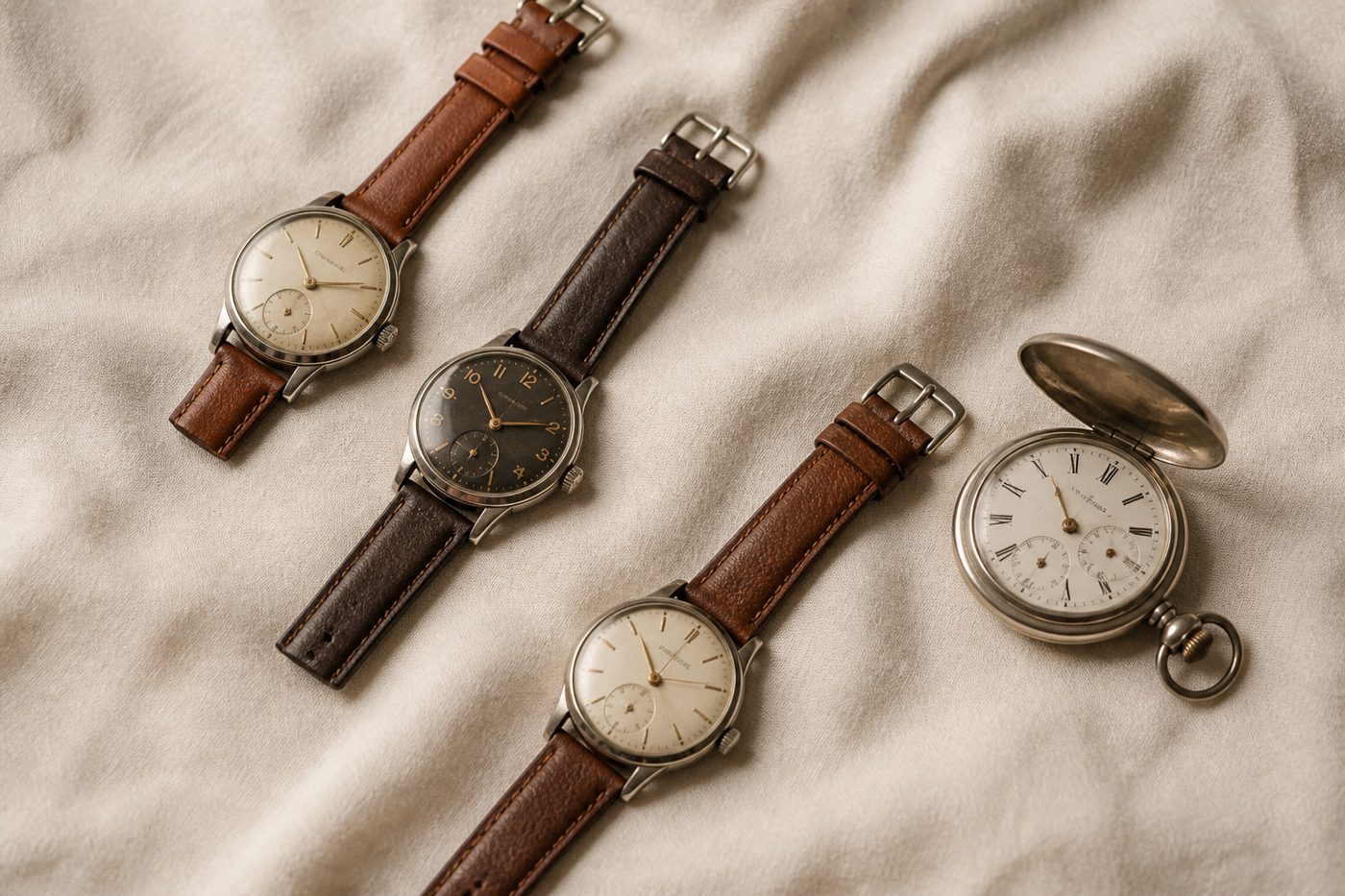
Watch values are driven by a combination of factors that can interact in surprising ways. A common brand in an uncommon configuration can outperform a rarer maker's ordinary model, and a heavily polished example of a sought-after reference can trade below a pristine example of a humbler one. Understanding the main drivers helps you interpret any estimate — human or AI — with the right context.
Maker and reference
Brand is usually the first factor collectors consider. Houses such as Rolex, Patek Philippe, Omega, and Audemars Piguet tend to command strong collector interest, but within any brand, the specific model and reference number matters enormously. A brand's sports chronographs from certain decades often attract far more attention than its dress watches from the same era, and even small reference differences — a particular dial variant, bezel style, or movement generation — can meaningfully change desirability.
Rarity and production numbers
Scarcity tends to raise interest when demand exists. Limited production runs, short-lived dial variants, transitional references made during a design change, and watches produced for specific markets or military contracts can all be scarcer than standard production. Rarity alone, however, rarely creates value — an obscure watch with no collector following can be both rare and inexpensive.
Condition and originality
Condition matters in every category, but originality is especially prized in watches. Collectors often value an unpolished case with its original sharp edges, an untouched dial that has aged evenly, and matching original hands and crown. Replacement parts fitted during routine service — a new dial, relumed hands, an aftermarket crystal — can significantly reduce collector appeal even when they improve appearance. In many cases, an honestly worn but original watch is preferred over a heavily restored one.
Provenance and documentation
A documented history can add interest, particularly for notable ownership, military issue, or a clear chain of custody from the original purchase. Even ordinary provenance helps: original purchase receipts, service records, and dated photographs tend to support confidence in a watch's story and originality.
Completeness: the "full set"
A watch accompanied by its original box, papers (warranty or guarantee certificate), hang tags, spare links, and booklets is often described as a full set, and complete examples tend to attract stronger interest than the watch alone. Papers matter partly because they can tie a specific serial number to a date and place of sale.
Complications and movement
Mechanical complexity often adds appeal. Chronographs, perpetual calendars, moonphase displays, and minute repeaters generally sit above simple time-only watches within the same maker's range. The movement's condition also matters: a watch that runs well and has been sensibly serviced is typically easier to sell than one needing costly repair.
Demand and taste
Collector taste shifts over time. Case sizes, dial colors, and whole categories move in and out of fashion, so demand for a given style can strengthen or soften across years. No one can reliably predict these shifts, which is one reason value estimates should always be treated as snapshots rather than promises.
Putting it together
Because these factors interact, photos alone can only take an assessment so far. Appraiser.AI provides an instant AI-powered estimate as a starting point — useful for orientation, but not an official valuation. Before insuring, selling, or dividing an estate, have the watch examined by a qualified professional appraiser or watchmaker who can open the case, verify the movement, and assess originality firsthand.