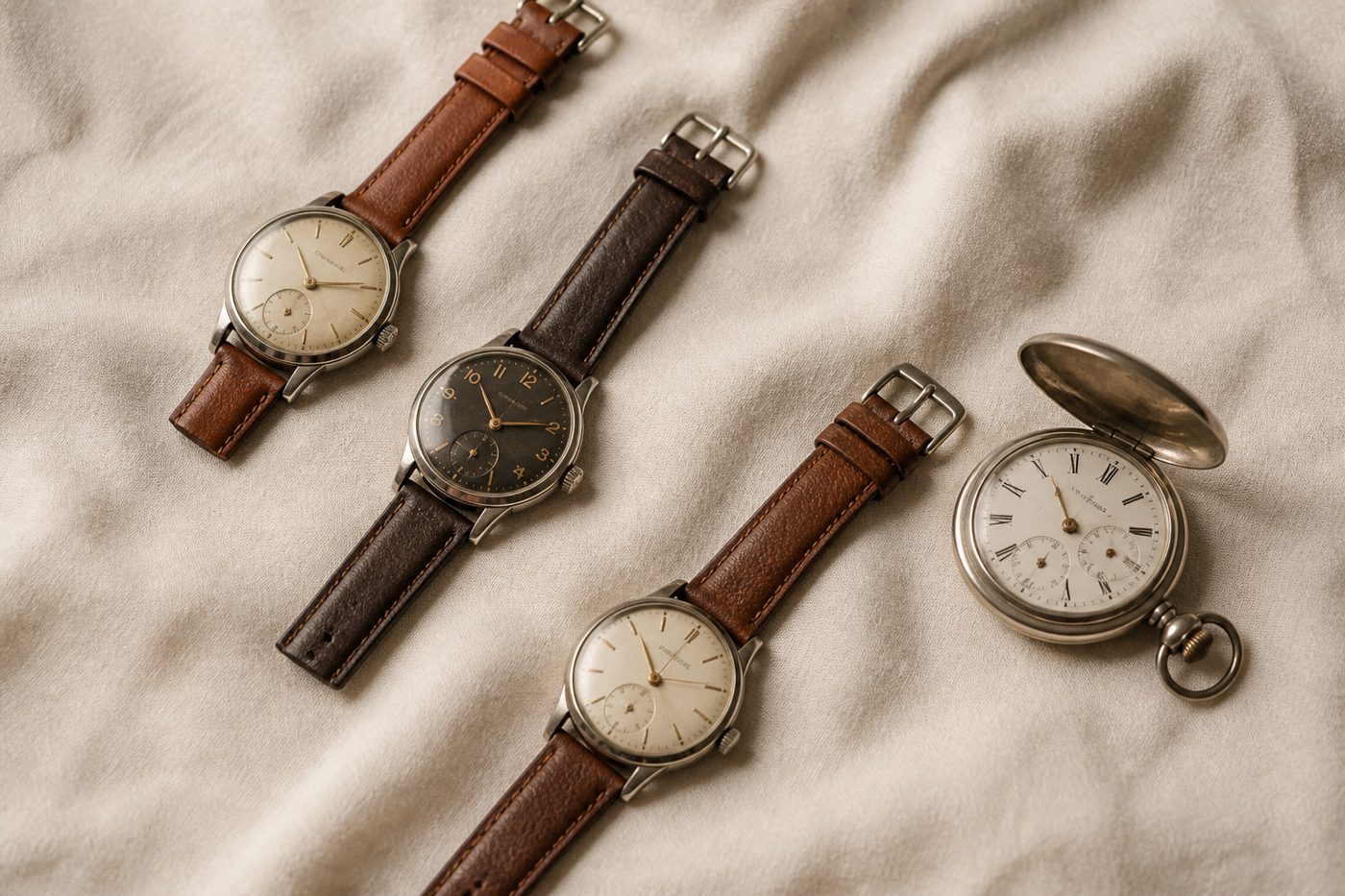
Unlike coins or trading cards, watches have no single universally accepted numerical grading scale. Condition is instead described through a mix of conventional terms — new old stock, mint, excellent, good, fair — and, more importantly, through specific observations about the case, dial, movement, and originality. Two sellers may call the same watch "excellent," so experienced buyers focus on what they can actually see and verify.
How watch condition is assessed
A careful condition assessment usually works through the watch part by part:
- Case: Collectors look at whether the case retains its original shape and finishing. Sharp edges, crisp lugs, and visible factory brushing or polishing lines suggest the case is unpolished or lightly polished. Rounded edges, softened bevels, and thin lugs indicate repeated polishing, which many collectors regard as a permanent loss.
- Dial and hands: Even aging is generally preferred to patchy damage. Some patina — such as luminous material aging to warm tones — can be attractive to collectors, while moisture damage, spotting, flaking paint, or a refinished (redialed) dial tends to reduce collector appeal considerably.
- Crystal and bezel: Scratches on a crystal are often replaceable and less critical, but original bezels and bezel inserts, especially with even fading, can be a significant part of a vintage watch's character.
- Movement: A clean, running movement with correct-period parts is what buyers hope to find. Rust, missing components, botched repairs, or a non-original movement are serious issues. Timekeeping accuracy matters less for vintage pieces than overall mechanical health.
- Bracelet or strap: An original bracelet with matching end links and little stretch adds to completeness; worn or replacement bracelets are common and usually noted.
Common condition issues
Certain problems come up again and again in this category. Moisture intrusion is among the most damaging, because it affects the dial and movement at once. Over-polishing is probably the most common irreversible issue on vintage cases. Relumed hands and dials, replacement crowns, service dials fitted decades ago, and mismatched serial or reference details are all originality concerns that can be hard to spot without experience. Pocket watches bring their own issues: cracked enamel dials, worn winding mechanisms, and cases that have been swapped between movements over a century of repairs.
Terms you will encounter
Though informal, some conventions are widely used. "New old stock" (NOS) describes an unworn watch that has survived from its era of manufacture. "Unpolished" is a strong claim implying the case has never been refinished. "Full set" refers to completeness (box and papers) rather than condition, but the two are often discussed together. "Franken" or "frankenwatch" describes a piece assembled from parts of multiple watches — generally undesirable when undisclosed. Because these terms are applied inconsistently, they are best treated as starting claims to verify rather than guarantees.
How condition shapes desirability
The effect of condition on value is rarely linear. For common modern watches, condition mostly affects saleability and price within a fairly narrow band, since serviced examples are plentiful. For scarce vintage references, the gap between an average example and an exceptional, original one can be dramatic — top-condition examples of sought-after references often attract intense competition, while the same reference in rough or heavily restored condition may draw only modest interest. Originality frequently outweighs cosmetic perfection: an evenly aged original dial tends to be preferred over a bright but refinished one.
Assessing your own watch
Good photographs — straight-on dial shots, angled case shots showing edges and lugs, and close-ups of the crown and caseback — capture much of what an initial assessment needs. Appraiser.AI can read these visible cues to produce an instant AI-powered estimate, which is a helpful starting point but not an official valuation; the movement, water resistance, and originality of parts can only be confirmed in person. Before making insurance, estate, or sale decisions, have the watch opened and evaluated by a qualified professional appraiser or watchmaker.