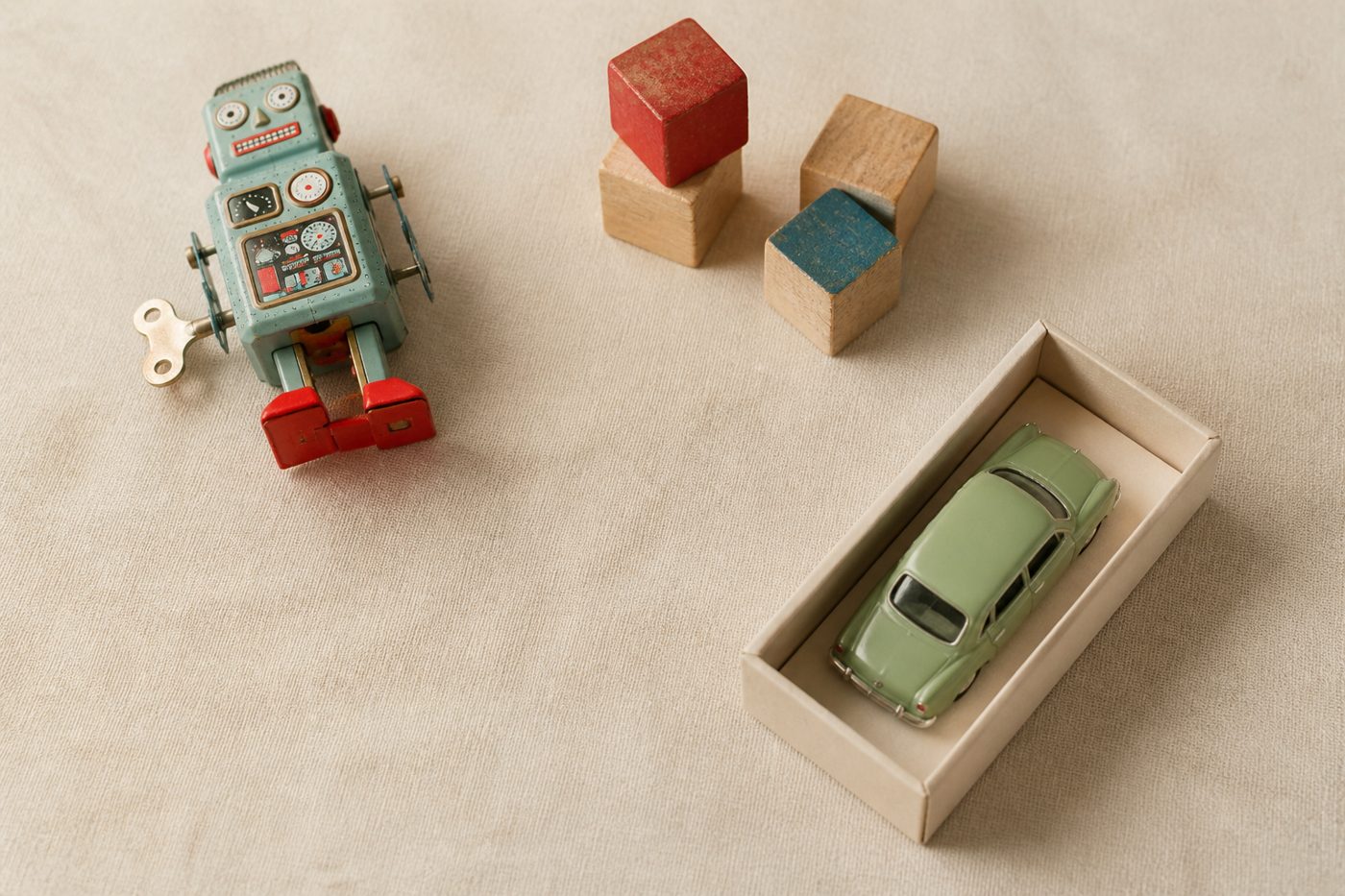
Two toys from the same production line can end up worth wildly different amounts, and the reasons are usually predictable once you know what collectors weigh. Value in this category tends to come down to a handful of factors working together: how scarce the item is, what shape it survived in, how complete it is, who made it, and how many people want it today.
Rarity and production history
Rarity is not the same as age. A mass-produced toy from the 1960s can be common, while a short-run figure from the 1990s can be scarce. What tends to matter is how many examples survive in collectible condition. Factors that create genuine scarcity include short production windows, regional releases that never shipped widely, recalled or quickly revised designs, promotional and mail-away items, and factory variants — a changed paint application, a different accessory, an early card back. Variant differences that look trivial to an outsider can separate a common piece from a sought-after one.
Condition
Toys were handled, chewed, sun-faded, and stored in damp basements, so honest survivors in strong condition are the exception. Paint wear on a die-cast car, loose joints on an action figure, yellowed plastic on a vintage console, or a repainted tin toy can each significantly reduce collector interest. Because condition interacts with everything else, a rare toy in rough shape and a common toy in pristine shape can end up in surprisingly similar territory.
Packaging and sealed status
In few categories does packaging matter as much as it does here. Original boxes, blister cards, inserts, and instructions often carry a large share of an item's collectible appeal, because packaging was the first thing discarded. Sealed items sit at the top of this hierarchy: a factory-sealed video game or unopened building set can be treated as a different class of object than an opened example of the same title. That said, sealed status invites scrutiny — resealing exists, and serious buyers often expect verification.
Completeness
An action figure missing its blaster, a board game missing a token, or a building set missing pieces and minifigures is worth notably less to collectors than a complete example. Small accessories are frequently the hardest parts to replace, so completeness can matter more than the size or prominence of the missing piece would suggest. Original instructions, catalogs, and paperwork count toward completeness too.
Maker, character, and franchise
Who made a toy — and what it depicts — shapes demand. Established makers with strong collector followings, whether in tin toys, dolls, die-cast, or construction sets, tend to command more attention than anonymous manufacturers. Character licensing matters as well: toys tied to enduring film, comic, and game franchises often have deeper buyer pools than generic equivalents, and first-appearance or first-wave items within a franchise tend to be the most pursued.
Age and era
Age alone does not create value, but certain eras are focal points for collectors — early tin and cast-iron toys, postwar Japanese tinplate, the action figure booms of specific decades, early home video game generations. An item from a heavily collected era benefits from an existing community of buyers, reference knowledge, and established grading norms.
Demand and nostalgia cycles
Demand in toys is strongly nostalgia-driven and can shift as different generations reach their peak collecting years. Interest in a line can rise or cool over time, so today's enthusiasm is not a promise about tomorrow's. No one can guarantee that any toy will hold or gain value.
Provenance
Documentation is less central here than in fine art, but it still helps: original receipts, store displays, employee or promotional provenance, or a documented single-owner history can add credibility, particularly for sealed items where the chain of custody supports authenticity.
An instant AI estimate from appraiser.ai can weigh the visible signals — apparent identity, condition, packaging — and give you a useful starting range, but it cannot confirm variants, seals, or originality from photos alone. Before insuring, selling, or settling an estate, verify with a qualified professional appraiser.