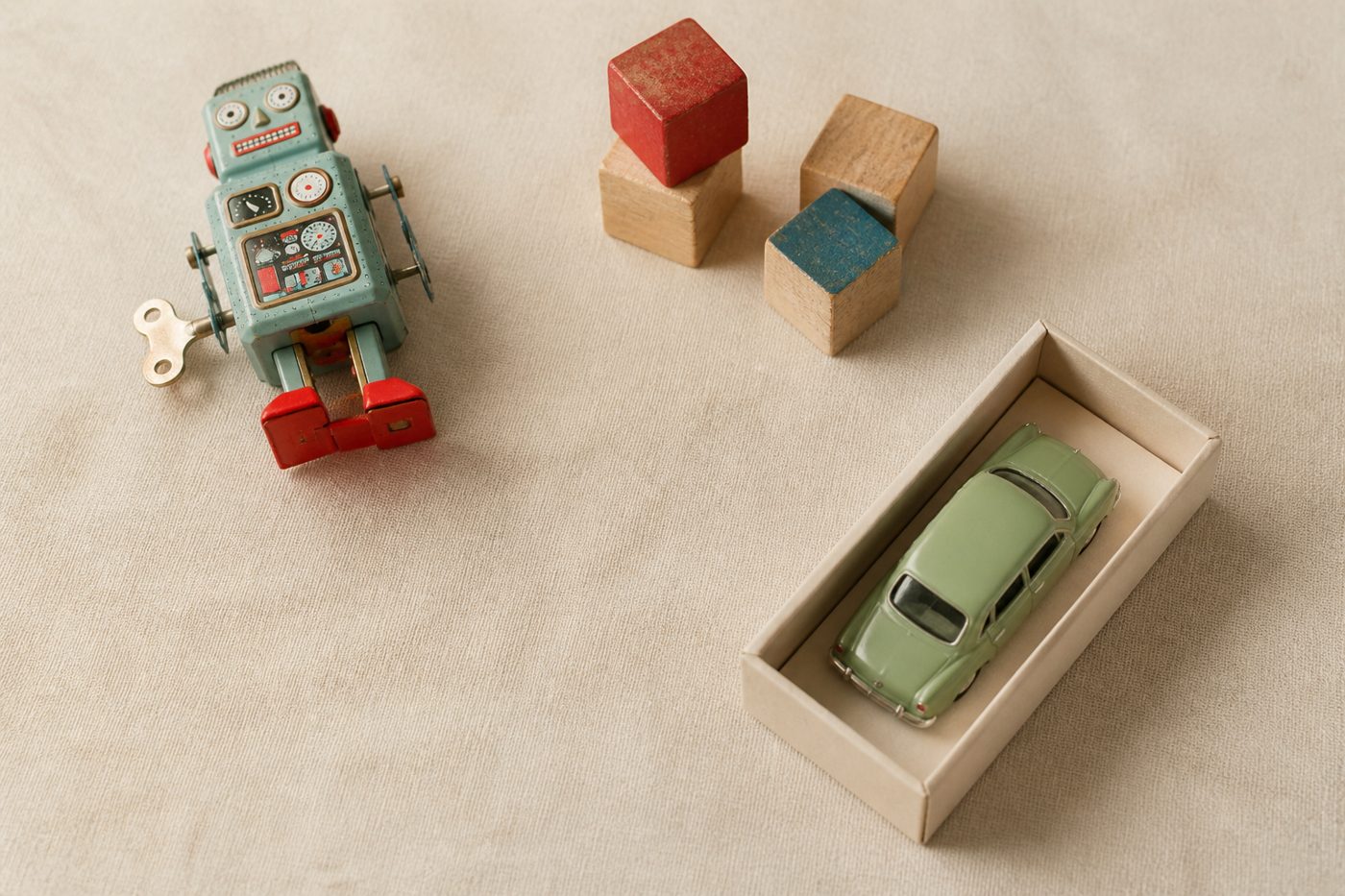
Condition drives more of a toy's desirability than almost any other factor, and collectors in this category have developed unusually specific ways of describing it. Understanding how condition is assessed — and what separates an average survivor from a top-grade example — helps you photograph, describe, and store your items realistically.
The basic condition ladder
Toy collectors commonly think in tiers rather than a single scale:
- Loose: the item alone, out of its packaging, with no box or accessories.
- Loose and complete: out of the packaging but with all original accessories, parts, and often instructions.
- Boxed or carded: the item with its original packaging, which is then graded on its own condition.
- Factory sealed / mint on card: never opened, with original seals, tape, or blister intact.
Each step up the ladder tends to represent a meaningful jump in collector interest, because packaging and completeness were the first things lost to play.
Common condition issues by type
Different materials fail in different ways, and experienced collectors check for the classic problems:
- Plastic figures and consoles: yellowing from UV exposure and chemical aging, loose or overly tight joints, paint rubs on high points, stress marks near joints, brittle or snapped accessories.
- Vintage dolls: hairline cracks in bisque heads, repainted faces, replaced wigs or clothing, crazing in composition dolls, restrung limbs.
- Tin and pressed-steel toys: scratches, dents, rust, touched-up or fully repainted surfaces, and non-working mechanisms in wind-up and battery-operated pieces. Original paint in worn condition is generally preferred over a fresh repaint.
- Building sets: missing pieces, sun-faded or discolored bricks, worn stickers, and incomplete instructions.
- Boxed games and packaging: crushed corners, tears, price-sticker damage, water staining, writing, and missing inserts.
Restoration is a double-edged subject. Sympathetic cleaning is usually acceptable, but repainting, part replacement, and re-stringing tend to reduce collector value compared with honest original condition — and undisclosed restoration is a serious problem at sale time.
Grading conventions that genuinely exist
Some corners of this category have formal, widely used grading systems. Sealed video games are frequently sent to third-party grading services that encapsulate the item and assign a numeric grade to both the seal and the box, similar in spirit to trading-card grading; a professionally graded sealed game is often treated as a distinct market from ungraded copies. Carded action figures are also commonly graded and case-sealed by third-party services, which typically score the figure, the card, and the blister bubble.
Elsewhere, grading is descriptive rather than numeric. Terms like mint, near mint, excellent, very good, good, and played-with are common, and abbreviations such as MIB (mint in box), MOC (mint on card), NRFB (never removed from box), and CIB (complete in box) appear constantly in listings. These labels are conventions, not certifications — two sellers can mean different things by "near mint," so detailed photos matter more than the label.
What collectors actually look for
Beyond headline grades, buyers scrutinize the details: sharp corners and gloss on card backs, unpunched hangtags, crisp factory tape and seals, bright unfaded paint, tight joints, and clear date stamps or copyright markings. On sealed items they look hard at seams and tape for signs of resealing. Small differences at the top of the condition range — a crease versus no crease — can matter more than large differences at the bottom.
How condition affects desirability
As a rule of thumb, demand concentrates at the extremes of quality. Top-condition and sealed examples attract competitive interest, mid-grade examples trade steadily to collectors who want to own rather than display-perfect, and heavily played examples appeal mainly as parts, restoration candidates, or nostalgic keepers. Condition can't be guaranteed to translate into any particular price, but it reliably shapes who is interested.
When you photograph an item for an instant AI estimate on appraiser.ai, capture the flaws as well as the strengths — corners, joints, seals, and any damage — so the estimate reflects reality. The result is a starting point; for grading decisions, insurance, or a major sale, have the item assessed in person by a qualified professional appraiser or grading service.