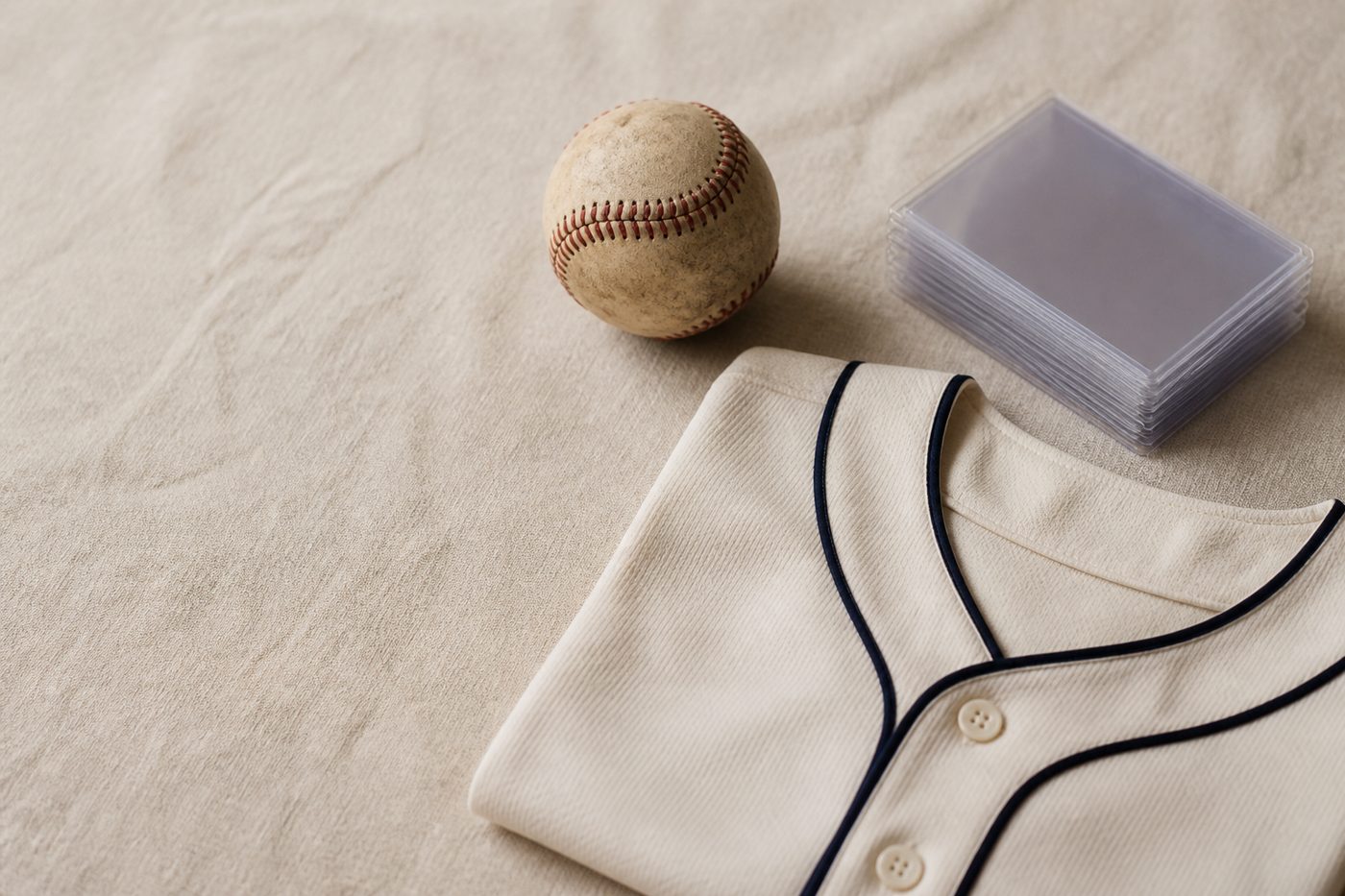
Two baseball cards printed the same year, or two jerseys from the same team, can differ in value by orders of magnitude. That's because sports memorabilia value isn't set by any one trait — it emerges from a combination of rarity, condition, the player involved, provenance, and how many collectors want the item right now. Understanding these factors helps you make sense of any estimate, including an instant one.
Rarity and scarcity
Rarity is about how many examples survive, not just how many were made. Early twentieth-century tobacco-era cards are scarce because most were handled by children and discarded; cards from the late 1980s and early 1990s were printed in enormous quantities and remain common. Scarcity can also be artificial and modern: serial-numbered parallels, low-print inserts, and one-of-one cards are designed to be rare from the start. For equipment, a player's game-used bat tends to be far scarcer than a retail replica bearing the same name.
The player and the moment
Who the item is connected to matters enormously. Memorabilia tied to all-time greats — think Hall of Fame legends of past eras — tends to hold sustained demand, while items tied to journeyman players often carry mainly sentimental value. The specific moment matters too: a rookie-year card, an item from a championship season, or memorabilia linked to a record-setting performance often commands more interest than material from an unremarkable stretch of the same career.
Condition
Condition can multiply or crush value. A vintage card with sharp corners, strong centering, and clean surfaces can be worth many times the same card with creases or rounded corners. For jerseys and equipment, collectors weigh fading, tears, missing lettering, and later alterations. Notably, honest game wear on a game-used item is often desirable — it supports the story — while the same wear on a display piece is just damage.
Provenance and authentication
Sports memorabilia is a category where forgery is a genuine problem, especially for autographs. Because of that, documentation can be as important as the item itself:
- Third-party authentication of a signature by a recognized service tends to substantially improve marketability.
- Photo-matching — linking a jersey or bat to images from a specific game — can elevate a game-used piece dramatically.
- A documented chain of ownership, such as a letter from the player, team, or original recipient, adds confidence.
An autograph without credible support often sells for a fraction of an authenticated equivalent, regardless of whether it's genuine.
Completeness and originality
Complete card sets, jerseys with all original patches and lettering, and equipment in unaltered condition tend to be more desirable than incomplete or restored examples. Undisclosed restoration — trimmed card edges, re-stitched jerseys, refinished bats — is treated harshly by collectors when discovered.
Demand and timing
Demand shifts with the sports world itself. Interest in a player's memorabilia often moves with milestones, Hall of Fame inductions, anniversaries, and broader collecting trends. This is why the same item can receive different estimates a year apart, and why no source can promise what an item will bring.
Putting it together
When you upload photos to appraiser.ai, the AI weighs the visible signals — item type, player, era, apparent condition — to produce an instant estimate range. It's a useful starting point, but it can't verify signatures, provenance, or game use from a photo alone, so always confirm with a qualified professional appraiser before making insurance, sale, or estate decisions.