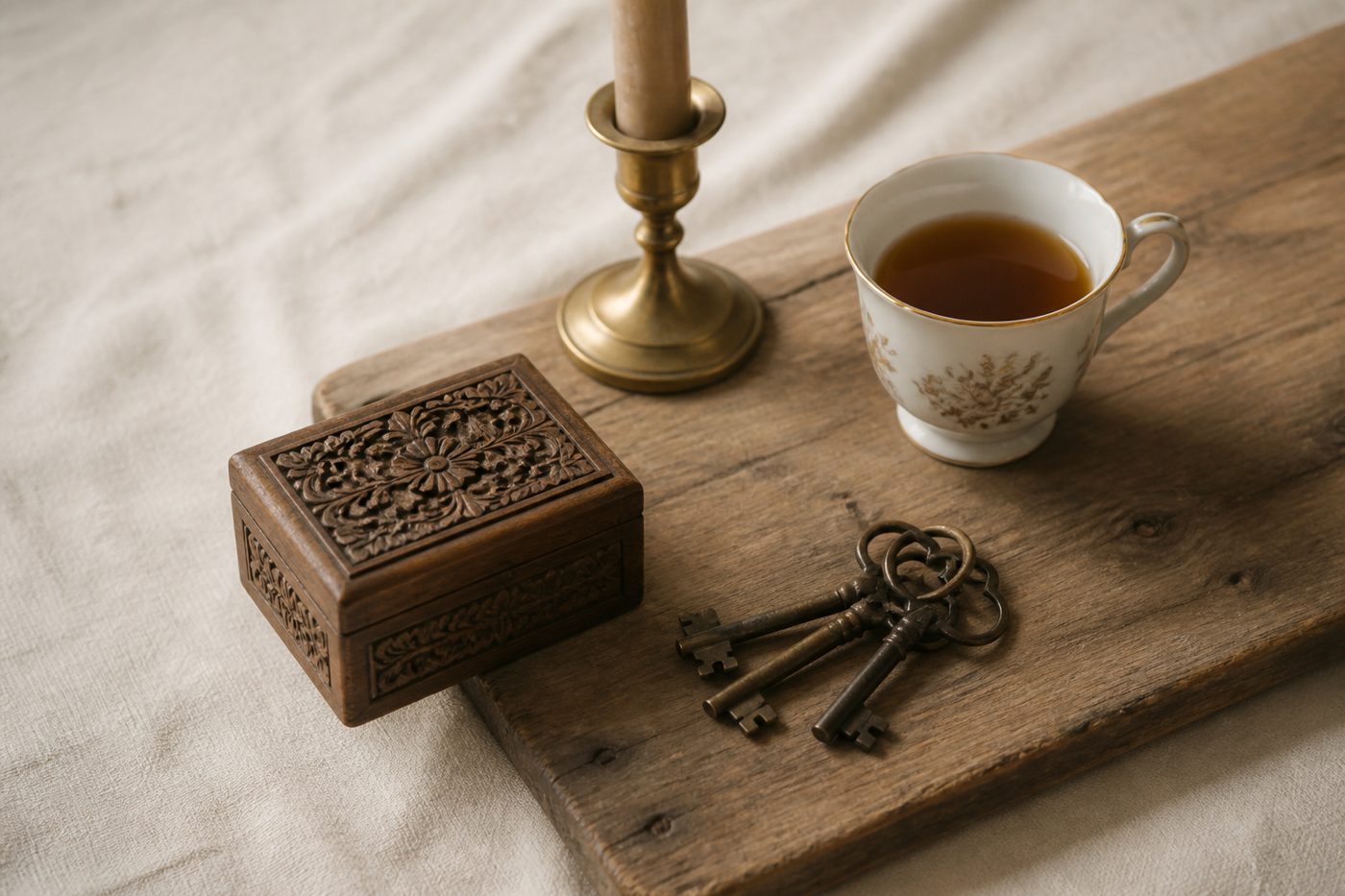
Two antiques can look nearly identical and yet sell for wildly different amounts. That gap almost always comes down to a handful of factors that dealers, auctioneers, and collectors weigh instinctively. Understanding them helps you read your own pieces more clearly — and helps you understand why any estimate, human or AI, is really a judgment about how these factors stack up.
Rarity
Scarcity is the engine of collectible value, but it has to be the right kind of scarcity. Millions of pieces of mass-produced Victorian furniture and transferware china survive, which is why ordinary examples often sell modestly despite genuine age. What tends to command attention is the unusual variant: a short production run, an experimental glaze on a piece of art pottery, a regional folk-art form few makers produced, or a clock movement made in small numbers. Rarity only matters, though, when collectors actually want the rare thing.
Condition
Condition can multiply or gut a price. A porcelain figure with a professionally restored hand is typically worth a fraction of an undamaged example; a piece of cut glass with a rim chip may lose most of its collector appeal. Furniture is judged partly on surface — an original finish with honest wear is often preferred to a stripped-and-refinished piece, because original surfaces cannot be recreated. Silver that has been over-polished until the hallmarks blur, or monogram-erased, tends to lose ground with serious buyers.
Maker and attribution
A maker's mark can transform an object. A hallmarked sterling teapot from a well-regarded silversmith sits in a different market than an unmarked piece of similar form. Porcelain marked by famous continental or English factories draws a different audience than unmarked wares. With furniture, a documented attribution to a known workshop or cabinetmaker can matter more than the wood itself. Marks are also the most commonly faked feature in antiques, which is one reason photos alone can never settle authenticity.
Provenance
A documented history — receipts, old photographs, exhibition records, or a traceable line of ownership — can add real value, especially for folk art and furniture where attribution is otherwise difficult. Provenance connected to a notable historical household or collection can lift an otherwise ordinary object. Undocumented family lore ("it came over on a ship") is charming but carries little weight without paper to back it.
Age and period
Age alone does not create value — plenty of 150-year-old objects are common — but the period a piece belongs to shapes its market. Certain eras go in and out of favor: formal nineteenth-century "brown furniture" has softened in many markets while mid-century modern pieces, technically "vintage" rather than antique, have surged. The lesson is that age interacts with taste; it does not override it.
Demand and fashion
Antique values track collector demand, and demand shifts with decorating trends, generational taste, and regional interest. Categories that were hot decades ago can cool; overlooked ones can revive. No one can reliably predict these swings, which is why value should be treated as a snapshot, not a promise.
Completeness and originality
Sets and original components matter. A complete china service tends to outperform scattered pieces; a clock with its original movement, pendulum, and finials is more desirable than one with replacements; a chest with original brasses beats one with modern hardware. "Married" pieces — tops and bases joined from different originals — are usually discounted heavily once detected.
Putting it together
Appraiser.AI weighs visible versions of these factors — form, apparent condition, visible marks, style, and period cues — to produce an instant AI-powered estimate from your photos. That estimate is a useful starting point, but factors like authenticity, restoration, and provenance can only be confirmed in hand, so verify with a qualified professional appraiser before making insurance, estate, or sale decisions.