AI Appraisal Estimate

AI-generated estimates · not official valuations

From the user

What was submitted

Photo and notes provided by the user — not generated by AI

Submitted item photo
Submitted photo · June 3, 2026

User's notes

Approximately 75 years old

AI analysis below

AI appraisal

AI analysis & estimate

AI-Generated · Verify before acting

Everything below is generated by AI for informational purposes only. AI can make mistakes — the AI may misidentify items or misattribute them (artist, maker, brand, designer, origin, era). This is not an official valuation and should not be used for insurance, sale, tax, estate, legal, or lending purposes — or any decision requiring a certified appraisal. It is not an authoritative claim about any person, brand, or rights holder — do not share or rely on it as a factual statement about a third party. Always consult qualified professionals before making financial decisions.

Note

This analysis also relies on unverified notes provided by the user, which may be incomplete or inaccurate and could affect the result.

Read the full disclaimer

AI Identification

·Not independently authenticated·Verify before acting

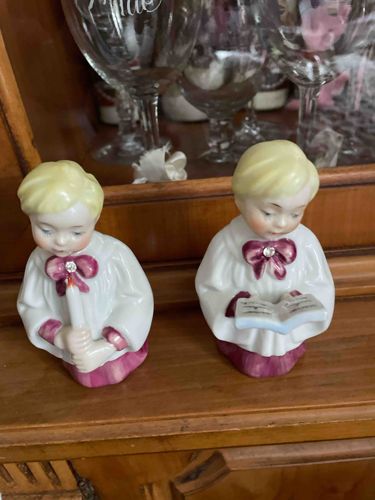
Vintage Porcelain Choir Boy Figurines duo

Vintage Collectible Ceramics

AI Estimated Value

·Not an official valuation·Verify before acting

$45.00 - $65.00

As of June 3, 2026

AI Item Analysis

·AI can make mistakes·Verify before acting
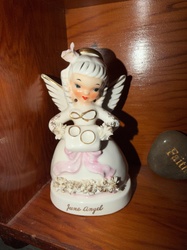
This lot contains a pair of approximately 75-year-old porcelain figurines depicting young choir boys or altar servers. The figures are crafted from a fine, high-gloss glazed white porcelain. Both figures share a consistent aesthetic: they feature pale blonde molded hair with a soft yellow wash, serene facial expressions with downcast blue eyes, and delicate hand-painted rosy cheeks. Each boy wears a voluminous white surplice over a deep magenta or plum-colored cassock. A notable decorative feature is the sculpted magenta bow at the neckline of each surplice, which is further embellished with a single embedded clear rhinestone or glass jewel at the center. One figurine is depicted holding a white candle with a small orange painted flame, while the other holds an open musical score or hymnal with black line work suggesting musical notations. The craftsmanship shows typical characteristics of mid-20th-century decorative ceramics, likely produced in Japan or Germany for the export market. The pieces appear to be in good vintage condition with no visible cracks or heavy crazing, though light surface dust is present. The glaze remains vibrant, and the application of the cold-paint accents on the hair and faces is well-executed for the period. These small-scale figurines (typically 3-4 inches in height) represent a classic mid-century holiday or religious decorative style.
AI Appraisal Report

·AI can make mistakes·Verify before acting
I have examined the images of these two porcelain choir boy figurines, estimated to be from the late 1940s or early 1950s. The high-gloss glaze, hand-painted 'cold paint' accents on the hair, and the specific application of rhinestone embellishments are hallmarks of the 'Lefton' or 'Napco' era of Japanese imports. Based on visual inspection, the figures appear to be in excellent condition; the magenta pigments remain saturated, and the delicate rhinestone settings are intact, which is rare for items of this age. The market for mid-century religious kitsch remains steady, though values are currently driven by nostalgic collectors rather than high-end decorative arts investors. Comparables for similar Japan-made figurines typically range from $20 to $35 per individual piece. The presence of the original rhinestones and the lack of visible crazing or chips supports a value at the higher end of the spectrum. However, a definitive appraisal is limited by the digital format. In-person inspection is required to check for 'flea bites' on the base, professional restoration invisible to the camera, and the presence of makers' marks or foil stickers which would confirm the specific manufacturer. Without an 'Occupied Japan' or branded stamp, the provenance remains speculative. Authentication would further require verifying the material density to ensure they are true porcelain rather than common earthenware replicas.

Get your items appraised

Instant estimates of your treasures with AI-powered appraisals

Browse More Appraisals