AI Appraisal Estimate

AI-generated estimates · not official valuations

From the user

What was submitted

Photo and notes provided by the user — not generated by AI

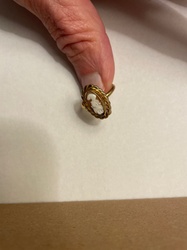
Submitted item photo
Submitted photo · July 1, 2026

User's notes

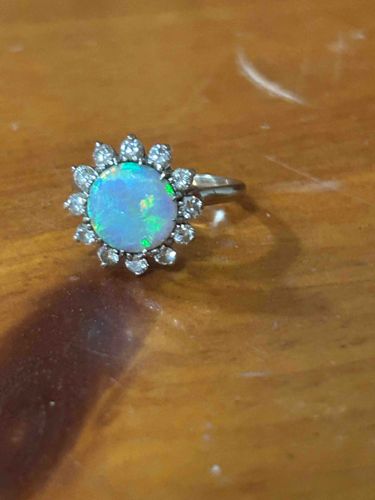
More than 70 years old opal ring with 12 diamond halo on platinum setting

AI analysis below

AI appraisal

AI analysis & estimate

AI-Generated · Verify before acting

Everything below is generated by AI for informational purposes only. AI can make mistakes — the AI may misidentify items or misattribute them (artist, maker, brand, designer, origin, era). This is not an official valuation and should not be used for insurance, sale, tax, estate, legal, or lending purposes — or any decision requiring a certified appraisal. It is not an authoritative claim about any person, brand, or rights holder — do not share or rely on it as a factual statement about a third party. Always consult qualified professionals before making financial decisions.

Note

This analysis also relies on unverified notes provided by the user, which may be incomplete or inaccurate and could affect the result.

Read the full disclaimer

AI Identification

·Not independently authenticated·Verify before acting

Vintage Platinum Opal and Diamond Cluster Halo Ring

Fine Vintage Jewelry / Antique Rings

AI Estimated Value

·Not an official valuation·Verify before acting

$3,200 - $4,500

As of July 1, 2026

AI Item Analysis

·AI can make mistakes·Verify before acting
This is a vintage cluster ring, approximately 70-80 years old, featuring a central cabochon-cut natural opal estimated to be between 1.5 to 2.5 carats. The opal exhibits a vibrant play-of-color, predominantly flashing neon green and hints of orange across a milk-blue base. It is securely held in a classic multi-prong setting within a platinum mounting. Surrounding the center stone is a floral-style halo consisting of 12 round-cut diamonds, likely single-cut or early brilliant-cut stones typical of the mid-20th century. These diamonds are prong-set in individual leaf-like or petal-shaped settings, creating a sunburst effect. The band is a slender, high-polished platinum shank with a slight taper toward the head. In terms of condition, there is visible surface wear consistent with age, including minor micro-scratches on the platinum and some slight dulling to the opal's surface finish (crazing is not immediately apparent, but would require magnification to rule out). The craftsmanship is characteristic of the late Art Deco or early Mid-Century modern periods, suggesting high-quality hand-finishing. No visible maker's marks are shown in the image, but the setting style is synonymous with fine heirloom jewelry from the 1940s-1950s.
AI Appraisal Report

·AI can make mistakes·Verify before acting
I have conducted a visual analysis of this vintage platinum cluster ring, which demonstrates characteristics consistent with mid-20th-century craftsmanship (circa 1945-1955). The central natural opal, weighing approximately 1.5–2.5 carats, displays a desirable 'nebula' pattern with strong green-orange fire. The use of a platinum mounting, rather than white gold, indicates a high-tier production for its era. The 12-diamond halo provides a total estimated weight of 0.36 to 0.50 carats. These stones appear to be single-cut, which is historically appropriate and reinforces authenticity. The current market for 'Mid-Century Modern' and 'Late Art Deco' jewelry remains robust, with high demand for natural opals that have avoided 'crazing' (internal cracking). While the surface wear noted is consistent with a 70+ year age, the opal’s slight dullness suggests a professional polish could increase its marketability. Comparable auction results for platinum-set opal halos range from $3,000 to $5,000 depending on the specific saturation of the opal and diamond clarity (estimated here at VS2-SI1, G-H color). Limitations: This appraisal is based solely on digital imagery and descriptions. I cannot definitively confirm if the opal is a solid natural stone, a doublet, or a triplet without viewing the side profile and back of the setting. To finalize this valuation, an in-person inspection is required to test the metal purity via XRF, weigh the stones precisely, and use a refractometer to ensure the opal is not synthetic. Absence of a maker’s mark is common for this period, but any provenance documentation could further elevate the value.

Get your items appraised

Instant estimates of your treasures with AI-powered appraisals

Browse More Appraisals