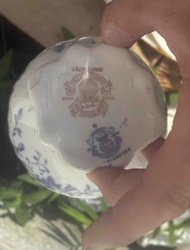
Petrus Regout & Co. Maastricht 'Delft' Pattern Ceramic Plate
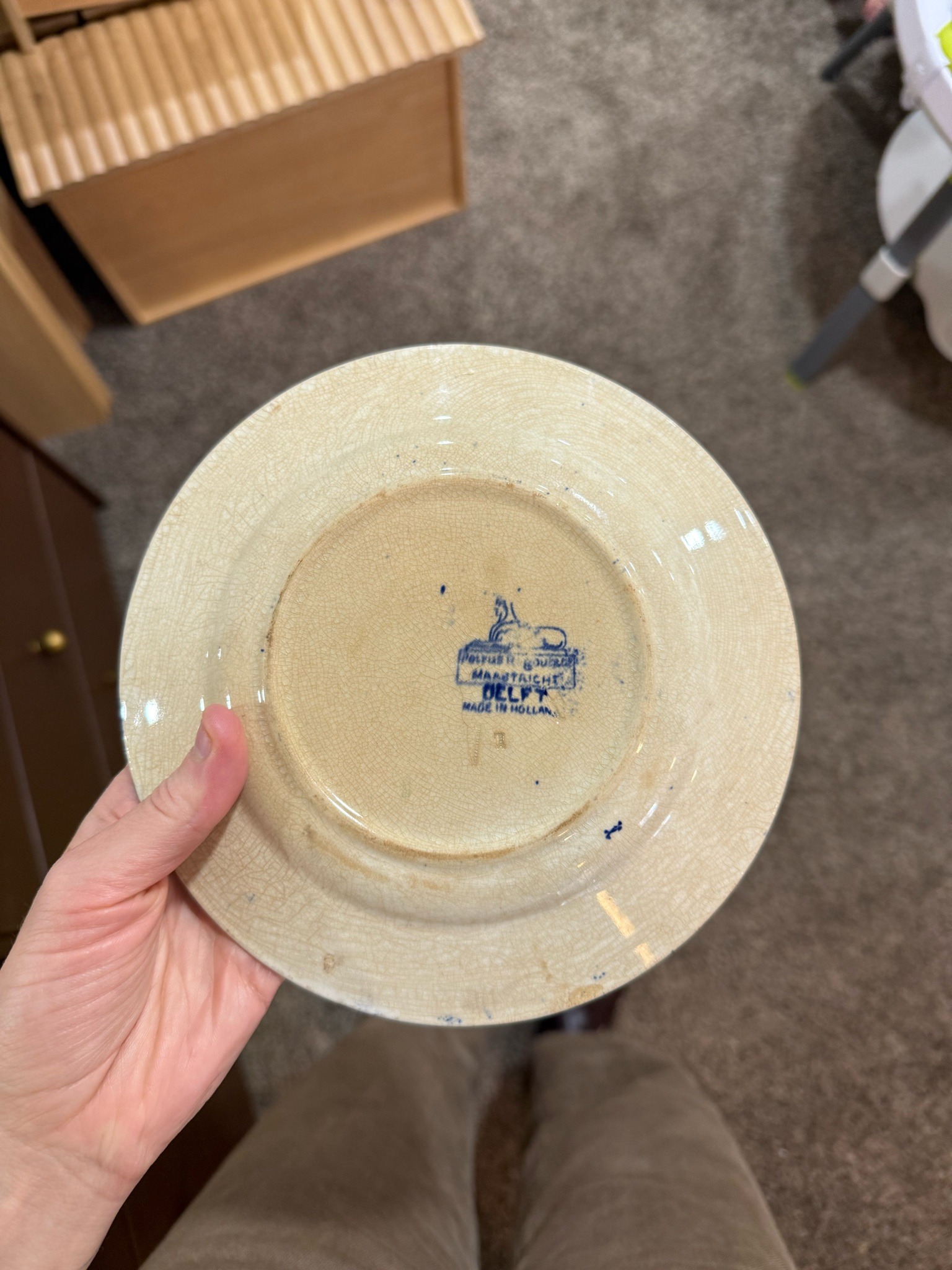
This is the underside of a circular ceramic plate, likely earthenware or ironstone, featuring a creamy off-white or yellowish glaze. The central focus is a prominent blue transfer-printed maker's mark consisting of a 'Sphinx' logo above the text 'Petrus Regout & Co / MAASTRICHT / DELFT / MADE IN HOLLAND'. This specific mark and the inclusion of 'Made in Holland' suggest a production date between the late 19th century and the mid-20th century (c. 1891-1950). The plate exhibits significant all-over 'crazing' (fine spider-web fracturing of the glaze) which has darkened over time due to dirt or moisture penetration, adding a pronounced aged aesthetic. There is visible discoloration and minor staining, particularly along the foot rim and edges. Small blue ink flecks or 'stilt marks' are visible, common in mass-produced transferware of this era. The craftsmanship represents a high-quality industrial ceramic intended for the export market, mimicking traditional Hand-painted Delftware through more efficient transfer printing methods. While there are no visible chips or cracks beyond the surface crazing, the heavy patina indicates a piece that has seen regular domestic use.
AI-Generated Appraisal Disclaimer
Estimated Value
$45.00 - $85.00
Basic Information
Category
Antique Ceramics and Pottery
Appraised On
April 17, 2026
Estimated Value
$45.00 - $85.00
Item Description
This is the underside of a circular ceramic plate, likely earthenware or ironstone, featuring a creamy off-white or yellowish glaze. The central focus is a prominent blue transfer-printed maker's mark consisting of a 'Sphinx' logo above the text 'Petrus Regout & Co / MAASTRICHT / DELFT / MADE IN HOLLAND'. This specific mark and the inclusion of 'Made in Holland' suggest a production date between the late 19th century and the mid-20th century (c. 1891-1950). The plate exhibits significant all-over 'crazing' (fine spider-web fracturing of the glaze) which has darkened over time due to dirt or moisture penetration, adding a pronounced aged aesthetic. There is visible discoloration and minor staining, particularly along the foot rim and edges. Small blue ink flecks or 'stilt marks' are visible, common in mass-produced transferware of this era. The craftsmanship represents a high-quality industrial ceramic intended for the export market, mimicking traditional Hand-painted Delftware through more efficient transfer printing methods. While there are no visible chips or cracks beyond the surface crazing, the heavy patina indicates a piece that has seen regular domestic use.

Related Tags
Get Your Items Appraised
Instant estimates of your treasures with AI-powered instant appraisals