AI identification & appraisal estimate

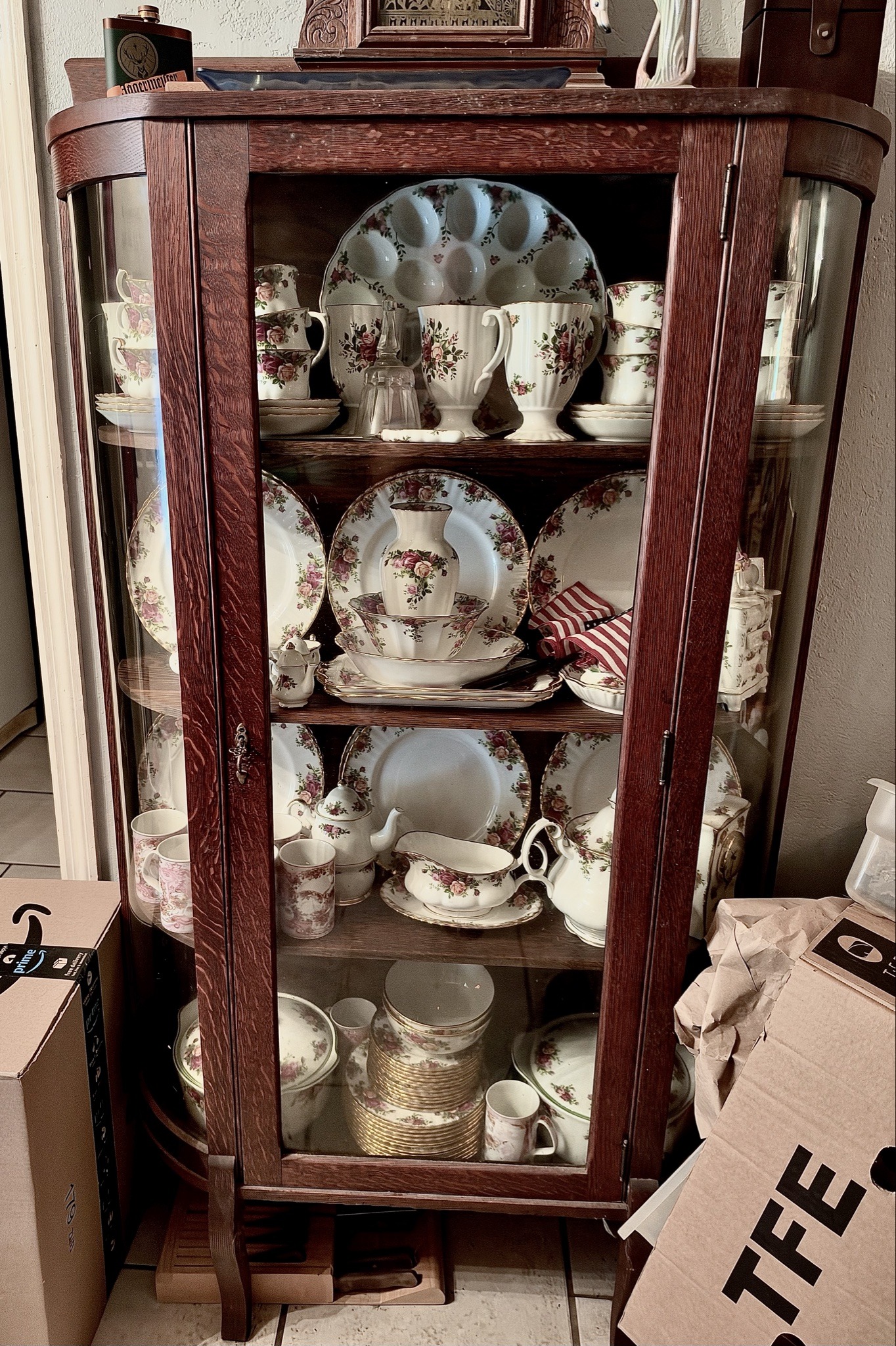
Curio cabinet (not authenticated)

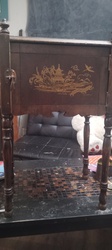
Submitted photo of Curio cabinet (not authenticated)
Photo submitted by the user — not generated by AI

User's notes

The chest not dishes only

These notes were written by the person who submitted this item. Appraiser.AI has not verified them, and the AI's identification and estimate may rely on them.

AI Estimated Value

Not an official valuation

$800-$1,200

AI estimate as of October 12, 2026 · verify with a professional before acting

AI-Generated · Verify before acting

Everything on this page is generated by AI for informational purposes only. AI can make mistakes — the AI may misidentify items or misattribute them (artist, maker, brand, designer, origin, era). This is not an official valuation and should not be used for insurance, sale, tax, estate, legal, or lending purposes — or any decision requiring a certified appraisal. It is not an authoritative claim about any person, brand, or rights holder — do not share or rely on it as a factual statement about a third party. Always consult qualified professionals before making financial decisions.

This analysis also relies on unverified notes provided by the user, which may be incomplete or inaccurate and could affect the result.

Read the full disclaimer

AI Item Analysis

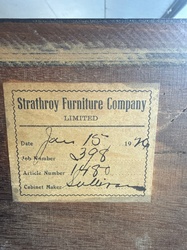
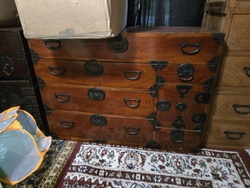
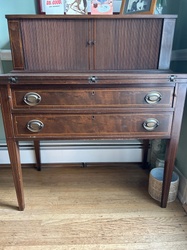
This is a tall, freestanding wooden curio cabinet featuring a curved glass front door and rounded glass side panels, creating a bow-front or serpentine aesthetic. The visible framing displays a rich dark brown wood grain, characteristic of oak or a similar hardwood with a stained finish. The cabinet includes a central glass door with an ornate metal latch and multiple interior wooden shelves that are currently heavily stocked with a large assortment of matching floral-patterned ceramic dinnerware, including plates, cups, saucers, teapots, and serving vessels. The pieces generally feature white glazed ceramic bodies adorned with pink rose or floral motifs and subtle gold-toned rim accents. The glass panels are curved, suggesting a specialized manufacturing technique common in early to mid-20th-century furniture production, specifically matching styles associated with antique or vintage china cabinets. There is no clearly legible maker's mark or brand stamp visible on the exterior from this viewing angle. The owner notes that the chest contains dishes, suggesting the user views the entire assembly as a storage chest for tableware. The physical condition appears generally intact, though minor wear on the wooden frame and dust accumulation consistent with age and indoor display environments can be observed. The attribution in the name rests purely on the stylistic design of the wooden cabinet structure and curved glass housing. All assessments of style period and material composition remain unverified visual hypotheses.
AI Appraisal Report

Based on what I can see in the provided image, this tall, freestanding curio cabinet features a dark brown wood grain, potentially oak or a similar hardwood, along with a characteristic curved glass front door and rounded side panels in a serpentine aesthetic. The interior houses multiple wooden shelves displaying a large assortment of matching floral-patterned ceramic dinnerware with pink rose motifs and gold-toned rims. Per user submission, the assembly functions as a storage chest for tableware, though my visual assessment focuses primarily on the furniture structure itself. I can't verify from a photo the exact wood species, internal construction quality, or age, and physical inspection would be needed to confirm whether the joinery aligns with early to mid-20th-century manufacturing techniques. Assuming the attribution to a vintage bow-front china cabinet is correct, comparable pieces of this type typically trade in the $800 to $1,200 range in current secondary markets, driven by moderate demand for classic display furniture. However, no maker's mark is visible from this viewing angle, and all assessments remain unverified visual hypotheses. If the piece turns out to be a modern reproduction, replica, or crafted simply 'in the style of' antique furniture rather than a period piece, the value would likely decrease significantly, falling closer to $250 to $450. To establish an authenticated provenance, a physical inspection by an antique furniture specialist would be required to look for hidden stamps, assess wear patterns, and evaluate structural integrity.
Keep exploring

More antique furniture appraisals

Get your items appraised

Instant AI-powered appraisal estimates from a photo

Browse More Appraisals