AI estimate as of July 13, 2025 · verify with a professional before acting
AI-Generated · Verify before acting
Everything on this page is generated by AI for informational purposes only. AI can make mistakes — the AI may misidentify items or misattribute them (artist, maker, brand, designer, origin, era). This is not an official valuation and should not be used for insurance, sale, tax, estate, legal, or lending purposes — or any decision requiring a certified appraisal. It is not an authoritative claim about any person, brand, or rights holder — do not share or rely on it as a factual statement about a third party. Always consult qualified professionals before making financial decisions.
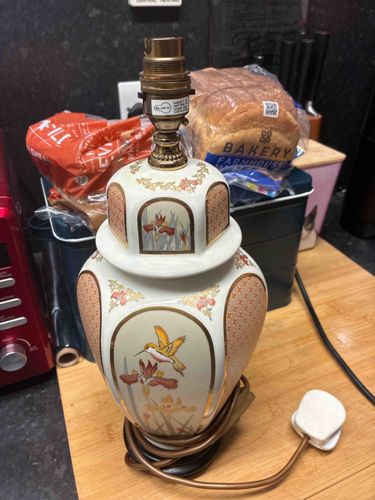
The item is a ceramic table lamp with a distinctive, multi-tiered body. It stands on a wooden surface, suggesting a tabletop or desk placement. The lamp's base is primarily off-white or cream-colored, adorned with decorative panels. The main body features large, arched inset panels with images of what appear to be hummingbirds and irises in muted tones of yellow, orange, and brown, outlined in gold. Between these pictorial panels, there are textured sections in a peach or light terracotta color with a subtle pattern, possibly embossed or stenciled, also highlighted with gold accents resembling small floral or geometric motifs. The upper section of the lamp mirrors the design of the base, also featuring arched panels with iris motifs and textured peach sections. The overall style suggests a vintage or possibly mid-20th century aesthetic, perhaps from the 1960s to 1980s, given the color palette and motifs. The lamp is topped with a standard brass-colored light bulb socket (E27 or similar), which shows some patina consistent with age. A brown electrical cord snakes from the base of the lamp, culminating in a white three-pin plug, indicating it is designed for use in countries with British standard outlets. There are no obvious signs of significant damage like major cracks or chips, but typical wear and tear fitting its age, such as slight discoloration on the metal components, might be present. The craftsmanship appears to be of good quality, with clear decorative elements and a well-formed ceramic body.
AI Appraisal Report
Upon visual examination of this Vintage Ceramic Table Lamp with Hummingbird and Iris Motif, I assess its condition as good, consistent with its likely age. There are no apparent cracks or significant chips visible in the ceramic body, which retains its decorative integrity. The brass-colored light bulb socket shows expected patina, and the electrical cord and plug appear intact, though their functionality cannot be confirmed remotely. The design, featuring hummingbirds and irises in muted tones outlined in gold, points to a mid to late 20th-century aesthetic, likely 1960s-1980s. The craftsmanship suggests a well-made, possibly mass-produced decorative item from that period, rather than a unique artisan piece.
In terms of market conditions, vintage ceramic lamps of this style are generally stable. Comparables on online marketplaces and at antique dealers suggest a steady demand for well-preserved decorative lighting from this era, particularly pieces with nature-inspired motifs. The unique multi-tiered structure and the detailed artwork enhance its appeal. However, these are not exceedingly rare items, preventing a significant premium. Factors impacting value include the excellent preservation of the ceramic body and the appealing, popular theme. The presence of a British standard plug limits its immediate plug-and-play usability in other regions without an adapter, which is a minor detractor.
My primary limitation in authenticity verification stems from relying solely on images. I cannot verify the internal wiring’s safety or originality, nor can I definitively confirm the ceramic's age or origin without examining manufacturer marks, if any. In-person examination would allow for a tactile assessment of the ceramic quality, inspection for hairline cracks or repairs, and a closer look at the integrity of electrical components. Provenance documentation, such as original purchase receipts or family history, would significantly bolster authenticity and historical context, while scientific testing (e.g., thermoluminescence for ceramics) is typically reserved for much older, higher-value items to determine absolute age.