These notes were written by the person who submitted this item. Appraiser.AI has not verified them, and the AI's identification and estimate may rely on them.
AI Estimated Value
Not an official valuation
$100-200
AI estimate as of August 19, 2025 · verify with a professional before acting
AI-Generated · Verify before acting
Everything on this page is generated by AI for informational purposes only. AI can make mistakes — the AI may misidentify items or misattribute them (artist, maker, brand, designer, origin, era). This is not an official valuation and should not be used for insurance, sale, tax, estate, legal, or lending purposes — or any decision requiring a certified appraisal. It is not an authoritative claim about any person, brand, or rights holder — do not share or rely on it as a factual statement about a third party. Always consult qualified professionals before making financial decisions.
This analysis also relies on unverified notes provided by the user, which may be incomplete or inaccurate and could affect the result.
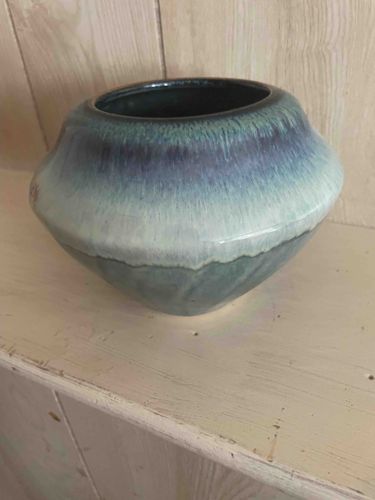
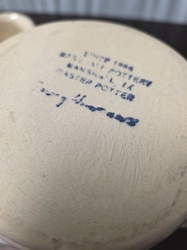
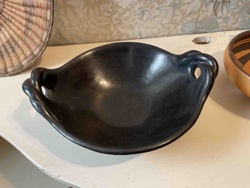
This item is an unmarked pottery bowl, likely handcrafted, showcasing a dynamic interplay of glazes. It features a rounded, somewhat flattened spherical body with a gently curving shoulder that tapers into a wide, open mouth. The external surface is adorned with an expressive, multi-tonal glaze treatment. The upper portion, particularly around the rim and shoulder, displays a mottled blend of dark teal, deep navy blue, and lighter aqua tones, reminiscent of a drip or 'flow' glaze, where the colors intermingle as they run down the form. Below this, the glaze transitions to a lighter, almost off-white or very pale green, creating a distinct horizon line around the belly of the vessel. The lowest portion of the bowl, closer to the base (which is not fully visible), appears to be a solid, darker teal or muted blue-green. The interior of the bowl is coated with a dark, uniform glaze, possibly black or a very dark green, providing a striking contrast to the exterior. There are no apparent chips, cracks, or significant surface abrasions visible, suggesting good overall condition. The glazing appears even and well-fired, indicating a reasonable level of craftsmanship. The absence of discernible maker's marks or signatures makes precise attribution or age determination challenging, but the organic form and reactive glazes suggest it could be a piece of studio pottery from the mid to late 20th century or contemporary. The piece's unique glazing pattern and robust construction contribute to its aesthetic appeal and suggest it was intended as a decorative and potentially functional art object.
AI Appraisal Report
I have carefully examined the provided image and description of this unmarked studio pottery bowl. The piece presents in excellent condition; I observe no chips, cracks, or significant abrasions. The multi-tonal glaze, with its flowing teal, navy, and aqua upper portion transitioning to a lighter belly and darker base, is aesthetically pleasing and demonstrates a reasonable level of craftsmanship. The internal dark glaze offers a striking contrast.
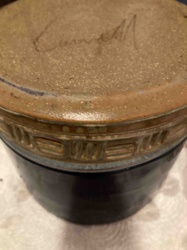
Authenticity is challenging without physical examination. While the organic form and reactive glazes are characteristic of mid to late 20th-century studio pottery, the absence of marks prevents precise attribution. Factors impacting value include its good condition and unique artistry, suggesting it could function as both a decorative and potentially functional art object. However, the lack of a known maker significantly restricts its value compared to pieces by recognized ceramic artists.
In the current market for unsigned studio pottery, similar decorative bowls with appealing glazes and good condition typically fall within a modest range. Demand exists for unique handcrafted items, but without provenance or artist attribution, rarity is hard to establish definitively. To confirm age and origin, I would require an in-hand examination to assess clay body, firing techniques, and any subtle markings. Scientific testing of the glaze composition could also provide clues. Full authentication would ideally involve provenance documents, if available. Based on visual assessment alone, its value is primarily decorative.